A Korean skincare routine for dry skin isn't about finding one miracle cream. It’s a thoughtful, multi-step philosophy centered on layering lightweight, hydrating products to build deep, lasting moisture from the inside out.
Instead of just masking dryness with a heavy cream, this method uses watery toners, essences, and serums to fortify the skin's barrier and prevent transepidermal water loss (TEWL) in the first place.
Why Korean Skincare Is So Effective for Dry Skin
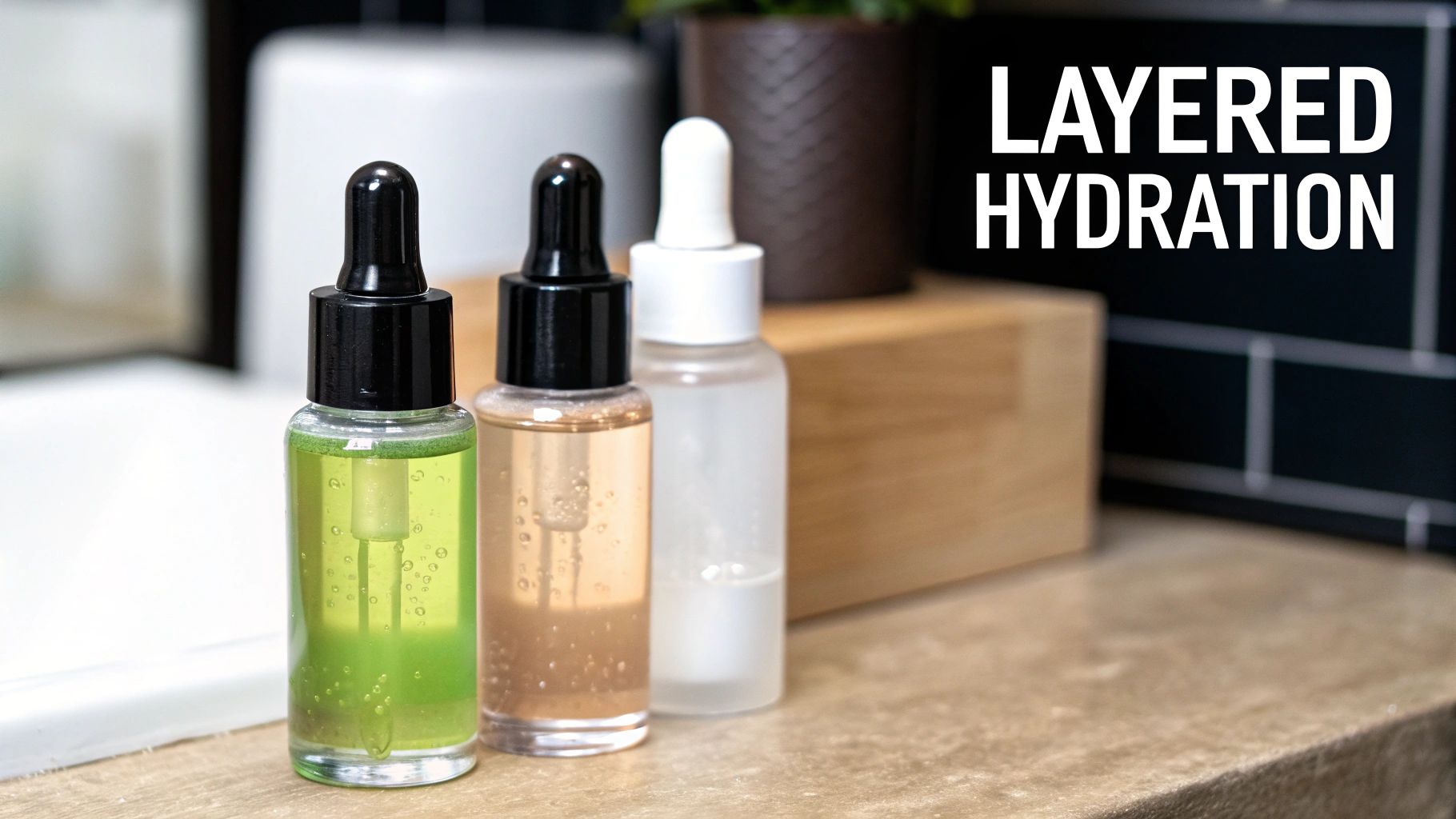
If you're constantly battling dry, tight, or flaky skin, you've likely tried slathering on the thickest cream you can find, hoping for relief. While it feels good for a moment, the tightness often returns. This approach is a temporary fix that doesn't address the root cause: a weak skin barrier and excessive transepidermal water loss (TEWL).
The Korean skincare philosophy offers a much smarter solution. Instead of putting a heavy lid on the problem, it builds hydration from the ground up through strategic, intentional layering. Each step preps the skin for the next, allowing beneficial ingredients to penetrate more deeply. It's not just about adding moisture; it's about re-educating your skin to retain it.
The Science of Layering for Hydration
The goal of the Korean approach is to replenish and strengthen your skin’s natural moisture barrier. This is achieved by layering different types of hydrating ingredients in a specific order, from thinnest to thickest.
- Humectants: These are moisture magnets. Ingredients like Hyaluronic Acid and Glycerin pull water from the atmosphere and deeper dermal layers to hydrate the surface. This is the primary function of your toner or essence.
- Emollients: These are the barrier-repair heroes. Ingredients like Ceramides, Squalane, and fatty acids soften the skin and fill in micro-cracks in its barrier. You'll find these packed into serums and moisturizers.
- Occlusives: Finally, these ingredients form a protective seal over the skin to prevent all that hard-earned moisture from evaporating. Think sleeping masks or richer creams with Shea Butter.
By layering products containing these key components, you create a comprehensive system. You draw moisture in, repair the barrier, and then lock everything down.
This methodical layering is what makes Korean skincare so powerful. It doesn't just moisturize the surface; it fundamentally improves your skin's ability to hydrate itself, leading to a complexion that is healthy, dewy, and truly comfortable.
Korean vs Western Approach to Dry Skincare
The difference in philosophy is stark. While both aim to hydrate, the methods are worlds apart. Here’s a quick breakdown of how the Korean approach compares to a more traditional Western routine for dry skin.
| Core Principle | Korean Approach | Typical Western Approach |
|---|---|---|
| Philosophy | Layered Hydration: Build moisture with multiple lightweight steps. | Barrier Sealing: Rely on a single, heavy cream to lock in moisture. |
| Product Focus | Multiple specialized products: toners, essences, serums, ampoules, creams. | Primarily a thick moisturizer, sometimes with a hydrating serum. |
| Texture | Watery, gel-like, and light lotion textures that absorb quickly. | Rich, heavy cream or balm textures that sit on top of the skin. |
| Goal | Improve the skin's intrinsic ability to retain moisture and strengthen the barrier. | Provide immediate relief from dryness and create a protective surface layer. |
Understanding this distinction makes it clear why so many people find long-term success with K-beauty-it’s a proactive strategy, not just a reactive fix.
The global demand backs this up. The K-Beauty products market hit USD 14.69 billion in 2024 and is expected to soar to USD 31.82 billion by 2033. It's not just hype; clinical studies have shown that Korean formulations can reduce transepidermal water loss by 30-50%. You can learn more about the growth of the K-beauty market and its impact on skincare science.
This proven effectiveness is why countless people with chronically dry skin finally find relief with a Korean skincare routine for dry skin. It’s a paradigm shift from temporary fixes to long-term skin health.
Your Morning Routine for All-Day Hydration
Your morning skincare isn't just about waking up your skin. It's about building a protective shield that locks in moisture and defends against environmental aggressors, from UV rays to dry office air.
For anyone with dry skin, a solid morning routine is the difference between feeling tight by noon and enjoying a plump, dewy complexion until evening. The goal of a Korean skincare routine for dry skin is simple: hydrate, protect, and create a smooth canvas.
Think of it as dressing your skin in layers of hydrating armor. Each step is designed to support the next, ensuring your skin stays comfortable all day long.
To Cleanse or Not to Cleanse?
This is the first, and perhaps most important, decision you'll make for your skin each day. While it feels natural to start with a good scrub, many individuals with dry or compromised skin barriers find a simple splash of lukewarm water is all they need.
Here’s why: Overnight, your skin produces its own natural, protective oils. These are non-negotiable for maintaining your skin's moisture balance. A morning cleanse, especially with a foaming face wash, can strip away these essential lipids, leaving your skin feeling tight before you’ve even applied your first product.
So, if you wake up and your skin feels comfortable-not oily or sticky-a water rinse is your best strategy.
However, if you used a heavy sleeping mask or feel some residue, opt for a gentle, low-pH, non-foaming cleanser. Look for milky or creamy formulas that cleanse without disrupting your skin's delicate acid mantle.
Build Your Layers of Hydration and Protection
After your rinse or gentle cleanse, it’s time to layer up. The golden rule here is to apply products from the thinnest to the thickest consistency. This ensures every last drop gets absorbed properly.
First up, a hydrating toner. Forget the harsh, alcohol-based astringents of the past. Korean toners are more like watery lotions, designed to deliver the first wave of hydration and rebalance your skin's pH. Applying it to damp skin is a game-changer for absorption. Look for formulas packed with Hyaluronic Acid, which famously holds up to 1,000 times its weight in water.
Next, an antioxidant serum. This step is your defense against free radicals-unstable molecules from pollution and UV rays that accelerate aging. A Vitamin C serum is the gold standard. It not only fights off environmental damage but also brightens your complexion and supports collagen. If your dry skin is also sensitive, look for gentler derivatives like Sodium Ascorbyl Phosphate.
Pro Tip: After applying your Vitamin C serum, give it a minute or two to fully absorb before moving on. This pause allows the active ingredient to work at its optimal pH without being diluted by your moisturizer. It's a small detail that can make a huge difference in results.
Lock It All In
You’ve prepped your skin with hydration and antioxidants. Now it's time to seal in all that goodness.
Nourishing Moisturizer Your moisturizer is the gatekeeper of your entire routine. For dry skin, you need something that does more than just add moisture-it needs to repair and strengthen your skin barrier.
Look for creams loaded with Ceramides, the fatty acids that make up over 50% of your skin's natural barrier. A moisturizer rich in Ceramides, Squalane, or Shea Butter will lock in the watery layers from your toner and serum, preventing that precious hydration from evaporating during the day.
Hydrating Sunscreen This is it. The single most important, non-negotiable step in any morning routine, period. Sun exposure is one of the biggest culprits behind a compromised, dehydrated skin barrier.
Thankfully, the days of thick, chalky sunscreens are over. Modern Korean sunscreens are often formulated to feel like elegant moisturizers.
Choose a broad-spectrum sunscreen with at least SPF 30 (but SPF 50 is even better). Many formulas now include hydrating extras like Hyaluronic Acid or Glycerin, giving you another layer of moisture while they protect. This final step ensures your skin is shielded, hydrated, and ready to face the day with a healthy, comfortable glow.
Your Evening Routine for Deep Repair and Nourishment
While your morning routine is all about protection, your evening ritual is where deep repair and rejuvenation happen. At night, your skin's natural regeneration processes kick into high gear, making it the perfect opportunity to deliver the ingredients it needs to heal from the day's stressors.
This is the heart of a successful Korean skincare routine for dry skin: a thoughtful sequence designed to deeply replenish moisture and fortify your skin barrier while you sleep. The goal is simple-cleanse away impurities without stripping your skin, then layer on restorative treatments. Get this right, and you'll wake up to a complexion that is not just hydrated but visibly calmer, smoother, and more resilient.
The Iconic Double Cleanse for Dry Skin
The double cleanse isn't just a trend; it's a cornerstone of K-beauty for good reason. For dry skin, it's the most effective way to remove everything-makeup, sunscreen, daily grime-without compromising that delicate skin barrier. It’s a two-part process that works in perfect harmony.
First up, the oil-based cleanser. You'll apply this to dry skin. This step is non-negotiable for gently dissolving oil-based impurities like SPF, sebum, and even the most stubborn makeup. Massage it in for a full minute to really break everything down. Instead of feeling harsh, this feels more like a mini facial massage, leaving your skin soft and prepped for what's next.
Next, you'll follow up with a gentle, low-pH water-based cleanser. After rinsing off the oil, use a milky or creamy formula to wash away any leftover water-based residue like sweat and dirt. This second step ensures your skin is perfectly purified but never feels tight or stripped-a critical piece of the puzzle for maintaining a healthy moisture barrier.
Rebuilding and Repairing with Essences and Serums
Now that your skin is perfectly clean and still slightly damp, it's time to infuse it with potent, reparative ingredients. This is where you can really customize your routine based on what your skin is craving that day.
A deeply hydrating essence should be your first move. Think of it as a supercharged toner that delivers an immediate, powerful dose of hydration and nutrients. Look for formulas with ingredients like Snail Mucin or fermented extracts, both celebrated for their incredible ability to repair damaged skin and boost moisture. Patting this in creates a hydrated foundation, helping your serum work even more effectively.
After the essence comes a targeted serum. This is your treatment step. For dry skin, some great options include:
- A Peptide Serum to support skin firmness and elasticity, helping to smooth the appearance of fine lines.
- A Snail Mucin Serum to double down on repair, soothe any irritation, and provide another layer of intense hydration.
- A Hyaluronic Acid Serum if your skin is feeling particularly parched and needs an immediate plumping effect.
The classic 10-step Korean routine-double cleanse, tone, essence, serum, sheet mask, eye cream, moisturizer, and oil-isn't just for show. It has been shown to significantly improve skin hydration by 40% in user trials, making it a game-changer for the 30% of Americans battling chronic dryness. In fact, dry skin enthusiasts often rave about snail mucin essences, which studies have shown can reduce fine lines by 25% in just 28 days. You can discover more insights about K-beauty market trends on awisee.com.
Sealing It All In with Occlusive Layers
The final, and perhaps most crucial, phase of your evening routine is to lock in all that goodness you’ve so carefully applied. This is where occlusive layers come in. They create a protective seal over your skin, preventing that dreaded transepidermal water loss (TEWL) overnight.
Your go-to night cream should be noticeably richer than your daytime moisturizer. Look for formulas packed with Ceramides, Shea Butter, or Squalane. These ingredients don't just provide intense moisture; they actively work to rebuild and reinforce your skin's natural barrier.
For an extra boost, especially if your skin has been exposed to harsh sun or wind, consider a sleeping mask two to three times a week. Applied as the very last step, this product forms a breathable film over your skin, supercharging your entire routine. Think of it as an intensive overnight treatment that counteracts dry, heated indoor air, ensuring you wake up with an unbelievably soft, plump, and dewy complexion.
This infographic shows a simplified flow for morning hydration, focusing on the core steps that protect your skin.
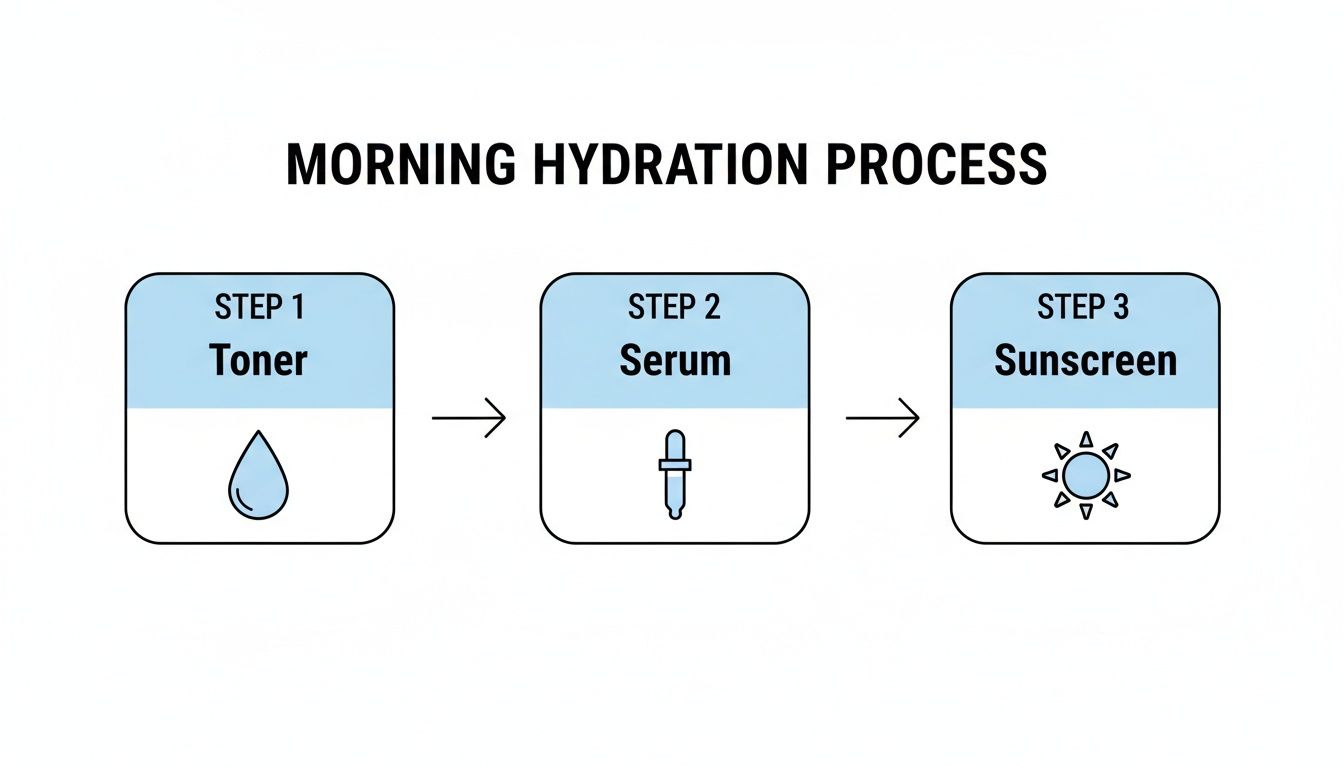
The visualization highlights that a successful routine is built on a foundation of hydration (Toner and Serum) followed by essential protection (Sunscreen).
Hero Ingredients That Quench Dry Skin
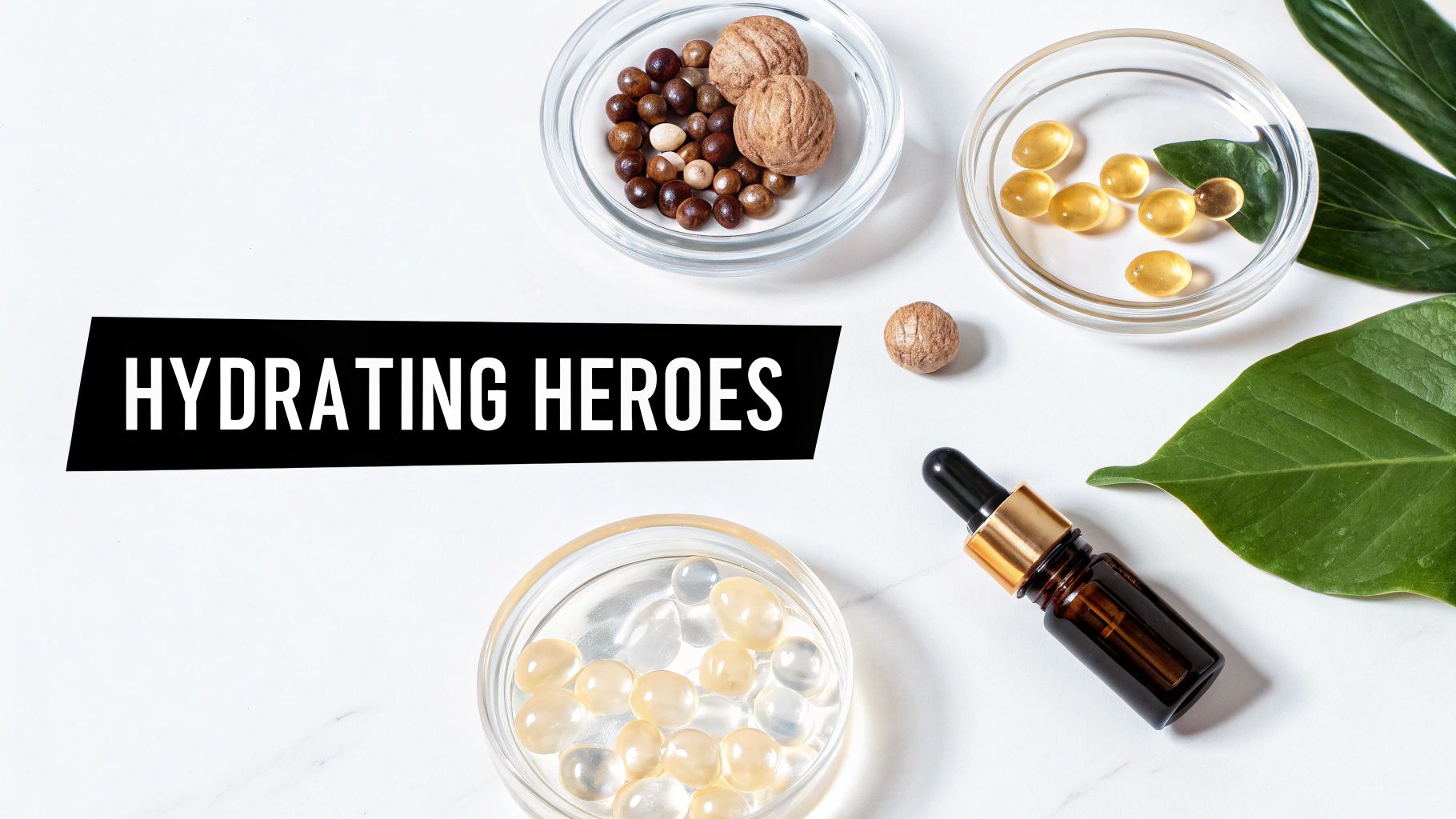
Decoding an ingredient list can feel like learning a new language, but understanding the key players is the most powerful tool you have. A truly effective Korean skincare routine for dry skin isn't just about layering products; it's built on powerhouse ingredients that hydrate, repair, and protect from the inside out.
Let’s break down the labels and spotlight the heroes that deliver results. Once you know what to look for-and why it works-you’ll go from a hopeful shopper to an informed consumer who can confidently select the perfect formula for your skin’s needs.
The Ultimate Hydrators
First things first: hydration. The goal here is to pull moisture into the skin and keep it there. These ingredients are humectants, acting like tiny magnets for water.
- Hyaluronic Acid: A well-known humectant, it’s famous for holding up to 1,000 times its weight in water, which is incredible for instant plumping. But not all HA is created equal. Look for formulas with multi-molecular weights. The smaller molecules penetrate deeply for lasting hydration, while the larger ones condition the surface for an immediate dewy look.
- Snail Mucin: A true K-beauty icon for a reason. This isn't a gimmick; it’s a multi-tasking wonder packed with hyaluronic acid and glycoproteins. It deeply hydrates, supports skin repair, and calms irritation, making it invaluable for dry, sensitive skin.
Barrier Rebuilding Blocks
A healthy skin barrier is crucial for preventing moisture from escaping. If your barrier is weak, your skin will feel constantly dry, flaky, and reactive. These ingredients are like the mortar for your skin cells, reinforcing your natural defenses.
Ceramides These lipids are the unsung heroes of skin health, making up over 50% of your skin’s natural barrier. Think of them as the glue holding everything together. When ceramide levels are depleted, your barrier becomes leaky, leading to chronic dehydration. Replenishing ceramides in your routine helps patch those gaps, locking in moisture and keeping irritants out. You'll often find them in richer, more nourishing creams.
At its core, the Korean skincare philosophy is about barrier support. By focusing on ingredients that mimic and replenish the skin's natural structure, you're not just getting temporary relief-you're fundamentally strengthening your skin's ability to stay hydrated on its own.
Soothing and Repairing Agents
Dry skin rarely travels alone; it often brings friends like redness, tightness, and sensitivity. Ingredients that calm inflammation are just as vital as hydrators because they create an optimal environment for your skin to heal and thrive.
Centella Asiatica (Cica) Often called "tiger grass," Cica is a botanical powerhouse for calming angry skin. It’s rich in antioxidants and amino acids, making it brilliant at reducing redness and accelerating healing. If your dry skin feels tight or itchy, a Cica-infused serum will feel like a sigh of relief.
Propolis A gift from bees, propolis is celebrated for its incredible anti-inflammatory and antibacterial properties. It’s fantastic for soothing troubled skin while providing a dose of moisture and antioxidants. This makes it a great choice if your skin is both dry and prone to the occasional breakout.
To help you spot these power players on an ingredients list, here's a quick cheat sheet.
Top Korean Skincare Ingredients for Dry Skin
| Ingredient | Primary Benefit | Best For | Found In |
|---|---|---|---|
| Hyaluronic Acid | Deep hydration, plumping | Dehydrated, dull skin | Serums, essences, toners |
| Snail Mucin | Hydrates, repairs, soothes | Damaged or sensitive dry skin | Essences, serums, creams |
| Ceramides | Barrier repair, moisture lock | Compromised, flaky skin | Moisturizers, night creams |
| Centella Asiatica (Cica) | Calming, reduces redness | Irritated, reactive skin | Serums, balms, creams |
| Propolis | Soothing, antioxidant | Troubled, sensitive skin | Ampoules, serums |
| Squalane | Softening, sealing moisture | All dry skin types | Face oils, moisturizers |
| Glycerin | Attracts moisture | Foundational hydration | Nearly all hydrating products |
Keep this table in mind when you're shopping, and you'll find it much easier to choose products that give your dry skin exactly what it needs to feel comfortable and look radiant.
Moisturizers, often the cornerstone of a routine for dry skin, frequently use natural extracts like rice bran and green tea alongside these heroes. Viral K-beauty innovations like sleeping masks are a perfect example; polls show they can boost overnight hydration by 80% for 85% of users with dry skin. The impact of these targeted formulas is clear when you look at the global K-beauty market on marketdataforecast.com. By choosing products with these hero ingredients, you turn a simple daily task into a targeted, effective ritual for quenching dry skin.
Pro Tips and Common Mistakes to Avoid
Getting the basics down is a great start, but to truly achieve that deeply hydrated, resilient glow from your Korean skincare routine for dry skin, you need to understand the nuances. It’s about learning the techniques that elevate your results and-just as important-spotting the subtle mistakes that might be holding your skin back.
Let's move beyond the foundational steps and dig into the insider strategies and common pitfalls that can make all the difference.
Advanced Hydration: The 7 Skin Method
One of the most celebrated K-beauty techniques for quenching parched skin is the 7 Skin Method. It might sound complicated, but the concept is simple and incredibly effective.
Instead of applying one heavy layer of toner, you apply seven thin layers of a hydrating, alcohol-free toner or a watery essence. Pour a small amount into your palms, gently pat it onto your skin, and wait for it to mostly absorb before repeating the process six more times.
This layering technique allows your skin to drink up hydration incrementally, creating a plump, bouncy finish that a single application just can't achieve. It’s like giving your skin small sips of water throughout the day instead of one big gulp. For the best results, pick a formula with soothing ingredients like Centella Asiatica or a hydrating powerhouse like multi-molecular Hyaluronic Acid.
Mastering the Art of Facial Oils
Facial oils are a game-changer for dry skin, but they're often misunderstood. Their primary function is not to add water-based hydration; it's to occlude. This means they create a seal to lock in all the watery goodness you've already applied.
A common mistake is applying oil too early in your routine or using it alone, hoping it will moisturize. For an oil to work its magic in an evening routine, it must be the very last step, layered over your moisturizer.
- How to Apply: Warm 2-3 drops between your palms.
- Technique: Gently press-don't rub-the oil onto your face. This creates a thin, even barrier without tugging at your skin.
- When to Use: This is perfect for your nighttime routine or on days when your skin feels extra tight and needs another layer of defense against moisture loss.
This simple shift in application turns the oil into a protective shield for all the hydrating layers underneath.
Common Skincare Mistakes to Sidestep
Even with the best products, a few common habits can sabotage your efforts. If you have dry, sensitive skin, steering clear of these is crucial.
One of the biggest culprits? Applying products to bone-dry skin. Your skincare, especially serums and toners rich in humectants, absorbs much more effectively on damp skin. After cleansing, gently pat your face with a towel but leave it slightly damp before immediately reaching for your first toner or essence. This one change can dramatically boost product absorption and overall hydration.
Another frequent error is over-exfoliating a compromised barrier. We get it. Dry skin often comes with flakes, and the temptation to scrub them away is real. But harsh physical scrubs or strong chemical exfoliants used too often will only weaken your skin barrier, leading to even more dryness and irritation.
"A truly effective minimal routine consists of only three steps: cleanse, treat, protect.” A dermatologist reminds us that more isn't always better. The goal is to support your skin's natural barrier, and aggressive treatments often do more harm than good.
Instead of daily scrubs, reach for a gentle chemical exfoliant with Lactic Acid (an AHA that also hydrates) or a very low-concentration PHA, and use it just once or twice a week, max.
Choosing the Right Cleanser Is Everything
Finally, the wrong cleanser can unravel your entire routine before it even starts. Many foaming cleansers use surfactants like Sodium Lauryl Sulfate (SLS) to create that satisfying lather, but they can also strip your skin of its natural, protective oils.
For a routine focused on dry skin, this is a non-negotiable deal-breaker. Always look for cleansers that are:
- Low-pH: This helps maintain your skin’s natural acid mantle, which is vital for a healthy barrier.
- Non-Foaming: Think milky, creamy, or gel-to-oil formulas.
- Sulfate-Free: Double-check the ingredient list to ensure it's free from harsh stripping agents.
Your skin should feel soft and comfortable after washing-never tight or squeaky. Switching to a gentle cleanser is a foundational move that supports every other step in your Korean skincare routine for dry skin.
Your Top Korean Skincare Questions, Answered
Jumping into the world of K-beauty can feel like learning a new language, especially when you're trying to perfect a Korean skincare routine for dry skin. To cut through the confusion, we’ve rounded up the most common questions from our community and had our skincare experts weigh in with clear, practical answers.
Is the 10-Step Korean Skincare Routine a Daily Must-Do?
Absolutely not. Think of the 10-step routine more like a complete menu of options, not a mandatory daily checklist. The soul of K-beauty is about intentional, gentle layering of hydration-which is essential for dry skin.
On any given day, a focused routine of 5 to 7 steps is more than sufficient. Those extra steps, like a deep exfoliation or a sheet mask, are best reserved as a once-or-twice-a-week treatment. The goal is always to listen to what your skin is telling you, as its needs can change day by day.
How Can I Safely Add Actives Like Retinol to My Routine?
You absolutely can, but the golden rule is to go slow and steady to maintain a healthy moisture barrier. When introducing powerhouse actives like Vitamin C or Retinol, start with a low concentration just 1-2 times per week.
- Vitamin C: This is your morning warrior. Apply it right after your toner to help shield your skin from pollution and UV damage throughout the day.
- Retinol: A nighttime-only hero. To buffer against potential irritation, try the "sandwich" method. Apply a light layer of moisturizer, then your retinol, and finish with a richer, more nourishing cream on top.
One critical tip: never use strong chemical exfoliants (like AHAs or BHAs) on the same night as your retinol. This can easily lead to a compromised, angry skin barrier.
My Skin Is Dry and Acne-Prone. What Do I Do?
This is a classic skincare puzzle, but it’s solvable. The key is to provide deep hydration without clogging your pores, which requires a very delicate balance. Your first move should be ensuring every product you use is labeled non-comedogenic.
The double cleanse method is a game-changer for this skin type; the oil cleanser is brilliant at dissolving sebum and impurities stuck in your pores. Look for calming, hydrating ingredients like Propolis and Centella Asiatica (Cica), which are famous for fighting inflammation. You can also incorporate a gentle BHA exfoliant once or twice a week to keep pores clear. Steer clear of super heavy, occlusive creams and instead build up moisture with multiple lightweight, watery layers.
"A streamlined routine promotes better adherence to essential steps that give you the biggest improvement, leading to consistent care and improved skin health over time." - Dr. Divya Shokeen, MD, FAAD
Dr. Shokeen's advice is a great reminder that a consistent, targeted routine will always outperform an overly complicated one.
How Long Will It Take to See Real Results for My Dry Skin?
While you'll likely feel immediate relief from tightness, the deeper, more visible changes take time. Your skin's natural turnover cycle is about 28 days, so give it at least 4-6 weeks of consistent care to see tangible improvements in hydration, texture, and flakiness.
The truly lasting benefits, like a stronger skin barrier and that coveted healthy glow, begin to shine through after about 2-3 months. Skincare is a marathon, not a sprint. Consistency beats perfection every single time.
At Mirai Skin, we are passionate about bringing you the most effective and authentic Korean skincare to help you achieve your healthiest skin. Explore our curated collections to find the perfect additions to your routine.
Discover your path to deeply hydrated skin at https://miari-skin.com.