Mugwort is a true game-changer in skincare, celebrated for its incredible ability to soothe inflammation, reduce redness, and provide powerful antioxidant protection. This ancient Korean herb, a cornerstone of "hanbang" medicine, is a savior for calming stressed, sensitive, and acne-prone complexions, making it one of the most respected ingredients in modern K-Beauty.
The K-Beauty Ingredient Calming Stressed Skin

If you’re a devoted follower of Korean skincare, you’ve likely witnessed mugwort’s rise from a traditional remedy to a celebrated hero ingredient. But this isn't just another passing trend. For centuries, Artemisia-the scientific name for mugwort-has been a cornerstone of hanbang (traditional Korean medicine), used to heal and bring the body back into balance.
Today, that same ancient wisdom is captured in sophisticated K-Beauty formulas designed to bring peace to troubled skin.
Think of mugwort as a firefighter for your complexion. It expertly extinguishes the flames of irritation, calms the redness from breakouts, and defends against the environmental aggressors that lead to premature aging. Its power lies in a unique blend of bioactive compounds that work in synergy to soothe, protect, and fortify your skin from within.
Mugwort's Core Skin Benefits At a Glance
To give you a quick snapshot, here’s a breakdown of what makes mugwort such an effective skincare ally. This table summarizes its key benefits and the skin types that stand to gain the most from incorporating it into their routine.
| Benefit | How It Works | Best For Skin Types |
|---|---|---|
| Calms Inflammation & Redness | Contains compounds like artemisinin that inhibit pro-inflammatory signals in the skin, reducing visible irritation. | Sensitive, Acne-Prone, Rosacea-Prone, Reactive |
| Provides Antioxidant Protection | Rich in flavonoids and vitamin E that neutralize free radicals from UV rays and pollution, preventing cellular damage. | All Skin Types, especially Mature or City-Dwellers |
| Offers Antibacterial Support | Naturally helps manage the growth of acne-causing bacteria on the skin's surface without stripping it. | Oily, Combination, Acne-Prone |
| Strengthens the Skin Barrier | Helps fortify the skin's natural defenses, leading to better moisture retention and reduced sensitivity over time. | Dry, Dehydrated, Compromised Barrier, Sensitive |
Essentially, mugwort doesn't just put a band-aid on skin issues; it helps restore homeostasis so your skin can function at its best.
For anyone struggling with persistent redness, hormonal acne, or a compromised skin barrier, incorporating mugwort can feel like hitting the reset button. It brings a sense of equilibrium back to your skin, promoting a clearer, calmer, and more resilient complexion.
This guide moves beyond surface-level hype. We'll explore the science, history, and practical applications of this botanical powerhouse, giving you the knowledge to integrate it into your routine with confidence. We’ll start by looking at its journey from an ancient medicinal herb to the star of today’s most effective K-Beauty essences, masks, and creams.
From Ancient Remedy to Skincare Star: The Story of Mugwort
Long before it was bottled in chic serums, mugwort (Artemisia) was a cornerstone of traditional Korean medicine, or hanbang. For generations, this humble herb was the go-to remedy for everything from digestive woes to angry skin, often brewed into teas or applied as a soothing compress. Its deep roots in Korean culture speak volumes about its gentle yet powerful nature.
That ancient wisdom is precisely what fuels today's most advanced K-Beauty formulas. Modern science has simply confirmed what Korean ancestors knew all along: mugwort is a master at calming and restoring the skin. Its journey from a folk remedy to a global skincare obsession is a perfect example of how K-Beauty blends heritage with innovation.
Think of Mugwort as a Firefighter for Your Skin
To truly understand what makes mugwort so effective for skin, picture it as a firefighter for your complexion. When your skin has an emergency-a sudden breakout, a patch of redness, or irritation from stress-mugwort arrives to manage the crisis.
Just as a firefighter extinguishes a blaze, mugwort’s potent anti-inflammatory compounds get to work, calming redness right at the source. It doesn’t just mask the problem; it addresses the underlying inflammation that drives so many common skin issues. This ability to bring fast, effective relief is what makes it a holy grail for reactive and sensitive skin.
Not All Mugwort Is Created Equal
The term "mugwort" actually refers to a family of plants in the Artemisia genus. While they all share calming properties, different species are selected for specific skincare benefits, each with a unique profile of active compounds.
- Artemisia Princeps (Japanese Mugwort): Often called Korean mugwort or ssuk, this is the variety you'll see most in K-Beauty. It’s renowned for its incredible soothing and purifying abilities, making it ideal for irritated or acne-prone skin.
- Artemisia Annua (Sweet Wormwood): This type is prized for its high concentration of artemisinin, a compound with potent healing and protective benefits that help repair damaged skin.
- Artemisia Capillaris (Capillary Mugwort): A true champion at calming redness and flushing, this species is especially effective for managing the visible signs of sensitivity and environmental stress.
Knowing these distinctions helps explain why you’ll see various Artemisia types on ingredient lists. Brands select specific varieties to target precise concerns, whether it's general calming or intensive repair.
At its heart, mugwort is a master regulator. It doesn’t force your skin into submission with harsh chemicals. Instead, it works with your skin’s natural functions to restore balance, strengthen its defenses, and build a state of calm resilience.
This unique ability to both soothe and strengthen is why mugwort has captured the skincare world's attention. Its popularity has exploded, especially within the global K-beauty market. According to recent market analyses, products featuring mugwort have seen a massive spike in demand. In fact, consumer sentiment data shows that 75% of reviewers with sensitive skin reported calmer complexions after adding it to their routines. You can see more on its meteoric rise by exploring the trends of mugwort essence on Accio.com. This isn't just hype; it's backed by a long history of traditional use and real, visible results.
The Science Behind Mugwort's Soothing Power
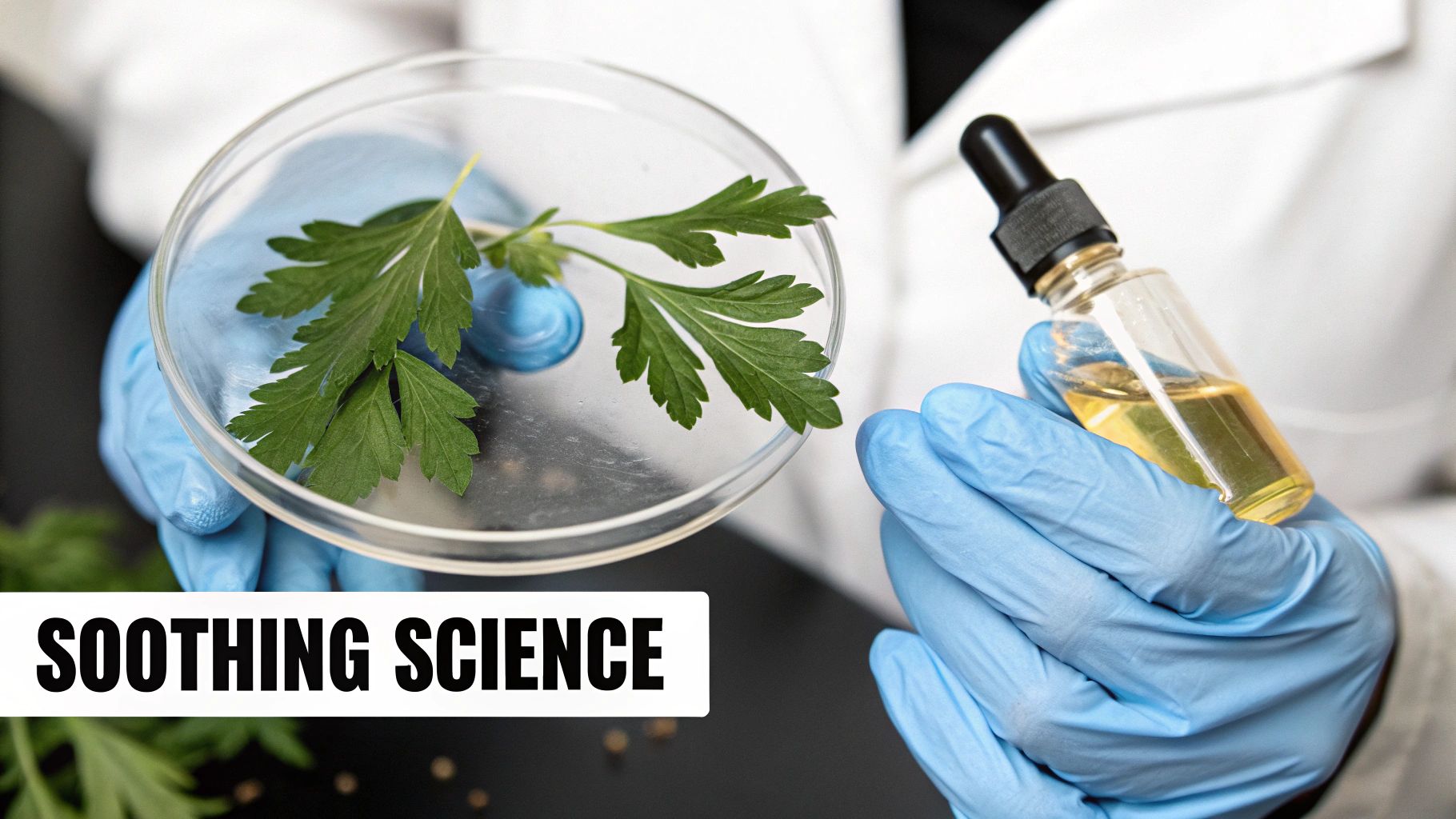
While centuries of traditional use tell a powerful story, modern science allows us to zoom in and understand exactly why mugwort is such a calming force for stressed skin. Its soothing reputation isn't just folklore; it's rooted in a complex synergy of bioactive compounds working at a cellular level.
These natural molecules are the tiny engines driving the visible reduction in redness and irritation we see on the surface. When you apply a mugwort essence, you're delivering a targeted dose of botanical relief that's been validated by scientific discovery. This is all about understanding the specific components within the plant that deliver the incredible mugwort benefits for skin.
Unpacking Mugwort's Bioactive Arsenal
At the heart of mugwort's power are key compounds that act as its first responders for inflammation. Two of the most studied are eupatilin and jaceosidin. These aren't just complex names on an ingredient list; they are potent anti-inflammatory agents that actively interrupt the skin's stress signals.
Think of inflammation as a fire alarm in your skin. When irritants like pollution, harsh products, or acne bacteria trigger it, your skin sends out distress signals called cytokines. Eupatilin and jaceosidin act like skilled technicians, calming these signals and effectively silencing the alarm. This action helps stop redness and sensitivity before they spiral, bringing your skin back to a state of peace.
At a cellular level, mugwort functions as a master negotiator. It doesn't just suppress symptoms; it helps regulate the skin's inflammatory response, preventing it from overreacting to daily stressors. This proactive approach is key to maintaining long-term skin health and resilience.
This targeted anti-inflammatory action is what makes mugwort especially effective for skin conditions rooted in chronic irritation, such as acne, rosacea, and eczema. It offers a gentle yet powerful way to soothe the skin without compromising its delicate barrier.
The Antioxidant Shield Against Daily Damage
Beyond its anti-inflammatory prowess, mugwort is also a rich source of antioxidants. Daily life exposes our skin to a constant barrage of environmental aggressors-UV radiation, blue light from our screens, and urban pollution. These factors generate unstable molecules known as free radicals.
Imagine free radicals as tiny, chaotic pinballs bouncing around inside your skin cells. As they ricochet, they cause damage to healthy cells, which leads to premature aging, dullness, and a weakened skin barrier. This entire process is called oxidative stress.
Mugwort provides a powerful defense system against this daily assault. It’s packed with antioxidants like flavonoids and vitamin E that neutralize these free radicals, stopping them in their tracks. This "free radical scavenging" is one of the most important mugwort benefits for skin because it protects your cellular integrity from the inside out.
- Flavonoids: These plant-based compounds are excellent at absorbing UV radiation and stabilizing free radicals before they can harm your collagen and elastin.
- Vitamin E (Tocopherol): A classic antioxidant, vitamin E not only fights oxidative stress but also helps nourish and moisturize the skin, further supporting its protective barrier.
By providing this robust antioxidant shield, mugwort helps your skin stay healthier, brighter, and more resilient. It’s not just calming existing irritation; it’s actively preventing future damage. This dual-action approach-soothing and protecting-is what elevates mugwort from a simple calming ingredient to a comprehensive skin health solution.
How Mugwort Fortifies Your Skin Barrier
Think of your skin barrier as a well-built brick wall. Your skin cells (corneocytes) are the bricks, and the lipids-a natural mortar made of ceramides, cholesterol, and fatty acids-hold everything snugly together. A strong wall keeps hydration locked in and pollution and irritants locked out.
But when that lipid mortar starts to weaken, tiny cracks appear. This is what we call a compromised barrier, and it's the root cause of so many common frustrations like chronic dryness, sensitivity, and redness.
This is where the real magic of mugwort benefits for skin comes into play. Instead of just applying a temporary patch to the symptoms, mugwort works to rebuild and reinforce this crucial defense system, helping your skin become stronger and more resilient from the inside out.
Reinforcing the Lipid Matrix
Mugwort’s secret to barrier support lies in its rich profile of skin-loving fatty acids. These nutrients help replenish your skin’s own lipid supply, essentially "re-mortaring" the gaps between your skin cells to patch up those tiny cracks.
By strengthening this lipid matrix, mugwort performs two critical jobs at once:
- It locks in moisture. A fortified barrier dramatically reduces transepidermal water loss (TEWL)-the technical term for water evaporating from your skin. This is key to keeping your skin plump, hydrated, and dewy.
- It locks out irritants. A seamless, healthy barrier is far better at preventing environmental aggressors like pollution, allergens, and bacteria from penetrating the skin and triggering inflammation.
This dual-action approach means that with consistent use, your skin becomes less reactive and better able to handle daily stress. It’s less about just calming flare-ups and more about building a complexion that’s inherently stronger and less prone to irritation in the first place.
Boosting Natural Hydration Pathways
Mugwort doesn't just reinforce the physical wall; it also helps optimize your skin’s internal hydration network. A healthy complexion depends on moving water efficiently between cells and producing its own moisturizers, known as Natural Moisturizing Factors (NMFs).
Recent studies have shown how certain types of mugwort can influence these very processes. One study found that an essence from Chinese mugwort (Artemisia argyi) actually boosted the expression of key genes responsible for hydration. It upregulated the AQP3 gene, which controls the water channels in your skin cells, and the HAS2 gene, which synthesizes hyaluronic acid. In short, it helps your skin produce more of its own internal moisturizers. You can read more about these hydration findings to see the science behind its water-locking function.
This means mugwort isn't just adding surface-level moisture. It’s helping your skin become more self-sufficient at staying hydrated.
From a Weak Barrier to a Resilient One
To truly appreciate the difference mugwort can make, let’s compare a compromised barrier to a fortified one. Making this shift is the key to finally achieving calm, healthy-looking skin.
A Compromised Skin Barrier Might Experience:
- Constant tightness, even right after moisturizing.
- Increased sensitivity and redness from new products or even a change in weather.
- Flakiness, rough texture, and a dull, lackluster appearance.
- More frequent breakouts, since bacteria can easily penetrate the barrier.
A Mugwort-Fortified Skin Barrier Looks and Feels:
- Soft, supple, and comfortably hydrated.
- Less reactive and visibly calmer overall.
- Smooth and glowing.
- Better at defending itself, leading to clearer, more balanced skin.
By focusing on the health of your skin barrier, mugwort provides a long-term solution for sensitivity and dryness. It’s not a quick fix; it’s a strategic ingredient that helps you build a fundamentally stronger, more resilient complexion over time.
For anyone who feels like they’re in a constant battle with sensitive or dehydrated skin, adding mugwort to your routine can be a true turning point. It helps restore the very foundation of your skin’s health, making every other product in your routine work more effectively and leading to a complexion that is finally, beautifully balanced.
Integrating Mugwort Into Your Skincare Routine
Understanding what mugwort does is the first step. Knowing exactly how to weave it into your daily routine is where the real transformation happens.
The beauty of this ingredient is its versatility. It appears in various product formats, from feather-light essences that prep the skin to rich creams that seal everything in. Choosing the right one depends on your specific skin concerns and current routine. A well-chosen product can integrate seamlessly, boosting your skin's resilience and calm.
Choosing Your Mugwort Product Format
Different formulations serve different purposes, especially within a K-Beauty routine. Think of it as building a team where each player has a specific role. Selecting the right format ensures you get the most significant mugwort benefits for skin by targeting your needs head-on.
Here’s a breakdown of the most common product types and how they function:
- Essences & Toners: These are your daily drivers for soothing care. Their watery, lightweight texture allows for deep penetration, delivering a steady dose of anti-inflammatory goodness right after cleansing. They're perfect for layering and creating a calm foundation for the rest of your routine.
- Serums & Ampoules: When you need to address more targeted issues like stubborn redness or active breakouts, a concentrated mugwort serum or ampoule is your best bet. These formulas contain a higher potency of the active ingredient to tackle specific problems directly.
- Wash-Off Masks: Think of these as an intensive calming treatment. A mugwort mask is ideal for a weekly reset or an emergency S.O.S. session when your skin feels particularly stressed, irritated, or inflamed.
- Creams & Moisturizers: A mugwort-infused cream is a fantastic final step, offering both soothing benefits and barrier support. It locks in all the hydration from your previous steps and creates a protective shield, making it a great choice for dry, sensitive, or compromised skin.
Layering Mugwort With Other Actives
One of mugwort's best traits is that it’s a total team player. Its gentle, restorative nature makes it an amazing partner for other powerful ingredients, helping to buffer potential irritation while letting the other actives perform more effectively.
You can confidently layer mugwort products with popular actives. For instance, using a calming mugwort toner before a potent Vitamin C serum can help minimize potential sensitivity. Pairing it with Niacinamide creates a powerful synergy for balancing oil and repairing your skin barrier.
Pro Tip: When layering, always follow the golden rule of skincare: apply products from the thinnest to the thickest consistency. This means your watery mugwort essence or toner goes on first, followed by serums, and you finish with your moisturizer. This ensures optimal absorption for each product.
This diagram shows how mugwort works in three key stages to fortify your skin's natural defenses.

It highlights a clear progression from hydrating the skin, to reinforcing its structure, and finally protecting it from external aggressors.
Tailored Tips for Your Skin Type
To get the most out of mugwort, it helps to use it strategically based on your skin's primary concerns-whether that's daily maintenance or acute damage control.
For Oily, Acne-Prone Skin:
A lightweight mugwort essence used daily is fantastic for regulating sebum and keeping inflammation in check without clogging pores. Add in a wash-off mask once or twice a week to deeply purify and soothe any active breakouts.
For Dry or Dehydrated Skin:
Try layering a hydrating mugwort toner under a rich cream with ceramides. This duo is a powerhouse for boosting moisture retention, helping to repair the lipid barrier and reduce that tight, flaky feeling.
For Sensitive or Reactive Skin:
Mugwort should be your go-to. Applying a soothing essence morning and night helps maintain balance and prevent flare-ups. Keep a wash-off mask on hand for those moments when your skin reacts to environmental triggers or just feels angry.
By picking the right format and integrating it thoughtfully, you can build a calmer, stronger, and more resilient complexion. Discover your ideal mugwort solution by exploring the curated K-Beauty selections at Mirai Skin.
Targeting Acne and Eczema With Mugwort
While mugwort is a fantastic all-around skin soother, it truly excels when addressing two of the most stubborn skin conditions: acne and eczema.
If you feel caught in an endless cycle of breakouts or flare-ups, mugwort offers a smarter path forward. It gets to the heart of the problem by addressing the root causes-inflammation and a weakened skin barrier-instead of just masking symptoms. This is where you see the most profound mugwort benefits for skin, especially when it’s reactive and compromised.
Calming Acne and Post-Breakout Redness
Acne isn't just a clogged pore; it's an inflammatory condition. The redness, swelling, and discomfort that accompany a breakout are all signs that your skin’s immune system is in overdrive. This is where mugwort steps in to play mediator.
Thanks to its natural antibacterial properties, it helps keep acne-causing bacteria in check. At the same time, its powerful anti-inflammatory compounds work to calm the visible swelling and redness of active pustules and papules, helping them heal faster and with less irritation.
Mugwort is a game-changer for that stubborn redness that lingers long after a pimple has flattened. By soothing this post-inflammatory erythema (PIE), it helps your complexion return to a clear, even tone much more quickly.
Strengthening Skin Prone to Eczema
At its core, eczema (atopic dermatitis) is a condition of a severely compromised skin barrier. For those with eczema, the "mortar" holding their skin cells together is inherently weaker, leading to chronic dryness, itching, and inflammation. Mugwort tackles this issue head-on by helping rebuild the skin’s natural defenses.
Recent science validates this beautifully. Japanese mugwort extract, for example, has been shown to improve barrier function by signaling the skin to produce more of its own essential building blocks.
In skin with atopic lesions, the levels of crucial proteins like filaggrin (FLG) and loricrin (LOR) can plummet by 70-90%. But when mugwort extract is applied topically, it helps normalize their production, directly improving dryness and fortifying the skin’s structure. You can learn more about mugwort's effect on skin barrier proteins in this detailed study.
This is a significant finding. It means mugwort helps rebuild the barrier from the inside out, leading to skin that stays better hydrated, feels less itchy, and is far more resilient against the environmental triggers that cause flare-ups. It’s a long-term strategy for managing eczema-prone skin, not just a temporary fix.
Frequently Asked Questions About Mugwort
Can I Use Mugwort Skincare Every Day?
Absolutely. One of the best qualities of mugwort is its gentle, soothing nature, which makes it perfect for daily use-both morning and night. Unlike some harsh actives that can stress the skin, mugwort consistently supports skin health without causing irritation.
For sensitive or reactive skin, daily use is actually a significant advantage. It helps maintain a calm complexion and steadily strengthens the skin barrier over time, making it an ideal staple in any thoughtful K-Beauty routine.
How Is Mugwort Different From Centella Asiatica (Cica)?
While both are K-Beauty superstars for calming troubled skin, they shine in slightly different areas. Cica is renowned for its incredible wound-healing abilities and is a true savior for repairing a severely damaged barrier. Mugwort, on the other hand, is the expert at dialing down general redness, soothing irritation, and delivering powerful antioxidant and anti-inflammatory relief.
Think of it this way: Cica is the dedicated "repair crew" you call when your skin barrier is seriously compromised. Mugwort is the "anti-inflammatory specialist" that keeps everyday irritation and redness in check. They work beautifully together for comprehensive skin-soothing care.
How Long Does It Take to See Results?
Some of the most immediate mugwort benefits for skin, like reduced redness and a feeling of calm, can be noticeable after just a few uses. This is especially true if you’re using a concentrated product like a wash-off mask or a potent essence.
For more significant changes-like a stronger skin barrier, a noticeable reduction in acne, and better overall resilience-consistency is key. Consistent use over 2 to 4 weeks typically allows your skin enough time to respond, rebuild its defenses, and show real, lasting improvement.
At Mirai Skin, we believe in the power of authentic, results-driven ingredients. Mugwort embodies the K-Beauty philosophy of achieving a healthy, balanced complexion through gentle yet effective care. Discover our curated collection of Korean skincare essentials and find the perfect addition to your routine today.
Explore our authentic K-Beauty products at https://miari-skin.com.