If you're caught in a cycle of persistent redness, breakouts that overstay their welcome, or an oil slick that emerges by midday, you're not alone. This frustration is a common battle. It's precisely here that the profound wisdom of Korean skincare intervenes-not with harsh, stripping treatments, but with a calming, rebalancing hero: the green tea toner.
The K-Beauty Philosophy for Calm, Clear Skin
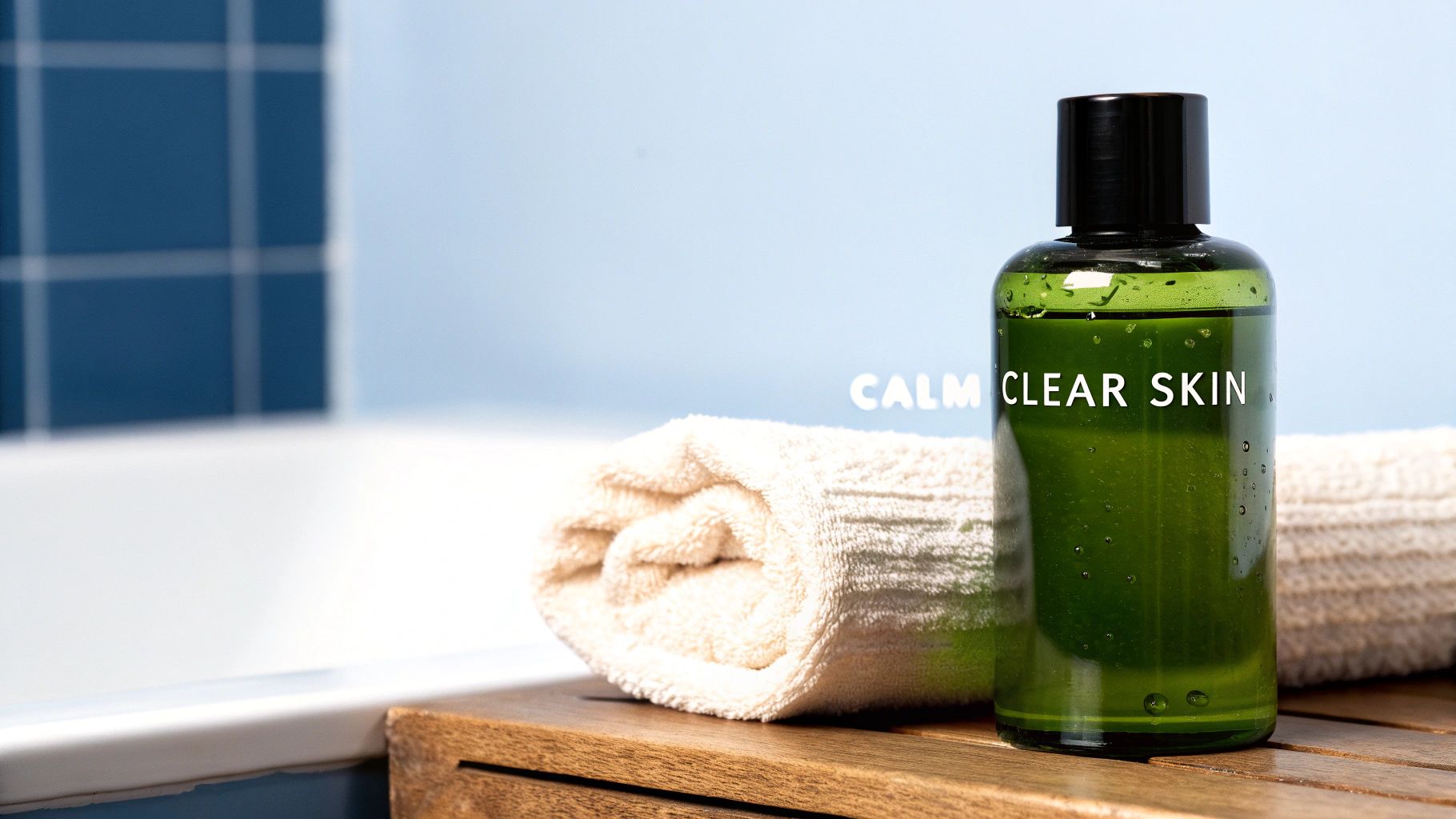
In the world of authentic K-Beauty, achieving "glass skin" isn't about masking imperfections. It's a deeply rooted philosophy focused on cultivating a healthy, resilient skin ecosystem. A green tea toner is a cornerstone of this principle, acting as a gentle yet potent force to restore your skin's natural harmony.
Consider it the essential reset after cleansing. It immediately begins to soothe irritation, regulate the excess sebum that can lead to congestion and breakouts, and infuse your skin with powerful antioxidants. This step transcends routine; it’s an embrace of consistent, intelligent, and gentle care.
Why Green Tea Is a Staple K-Beauty Ingredient
Korean skincare connoisseurs have long revered green tea for its remarkable, multifaceted benefits. This isn't a fleeting trend; it’s a time-honored ingredient celebrated for its ability to address multiple skin concerns simultaneously. This multitasking prowess is why it has earned its status as a hero ingredient in countless authentic K-Beauty formulations.
Now, the global skincare community is taking note. The increasing demand for natural, antioxidant-rich products has caused the market to skyrocket.
The global tea-based skincare market, which includes green tea toners, was valued at around USD 258.9 million in one recent year and is projected to hit nearly USD 399.5 million by 2030.
This growth confirms what K-Beauty has long understood: green tea delivers tangible, calming results. You can discover more insights about the green tea skincare market on ResearchAndMarkets.com.
What This Guide Will Cover
This guide will deconstruct everything you need to know about this K-Beauty staple, empowering you to use a green tea toner for results you can see and feel. We'll delve into:
- The Science: Unpacking the active compounds, like EGCG, that make green tea so effective.
- Your Skin Type: Identifying the perfect green tea toner formulation for your unique complexion.
- Application Methods: Mastering K-Beauty techniques to maximize absorption and efficacy.
- Label Literacy: How to decode ingredient lists to spot authentic, high-quality products.
What Makes Green Tea a Skincare Superhero
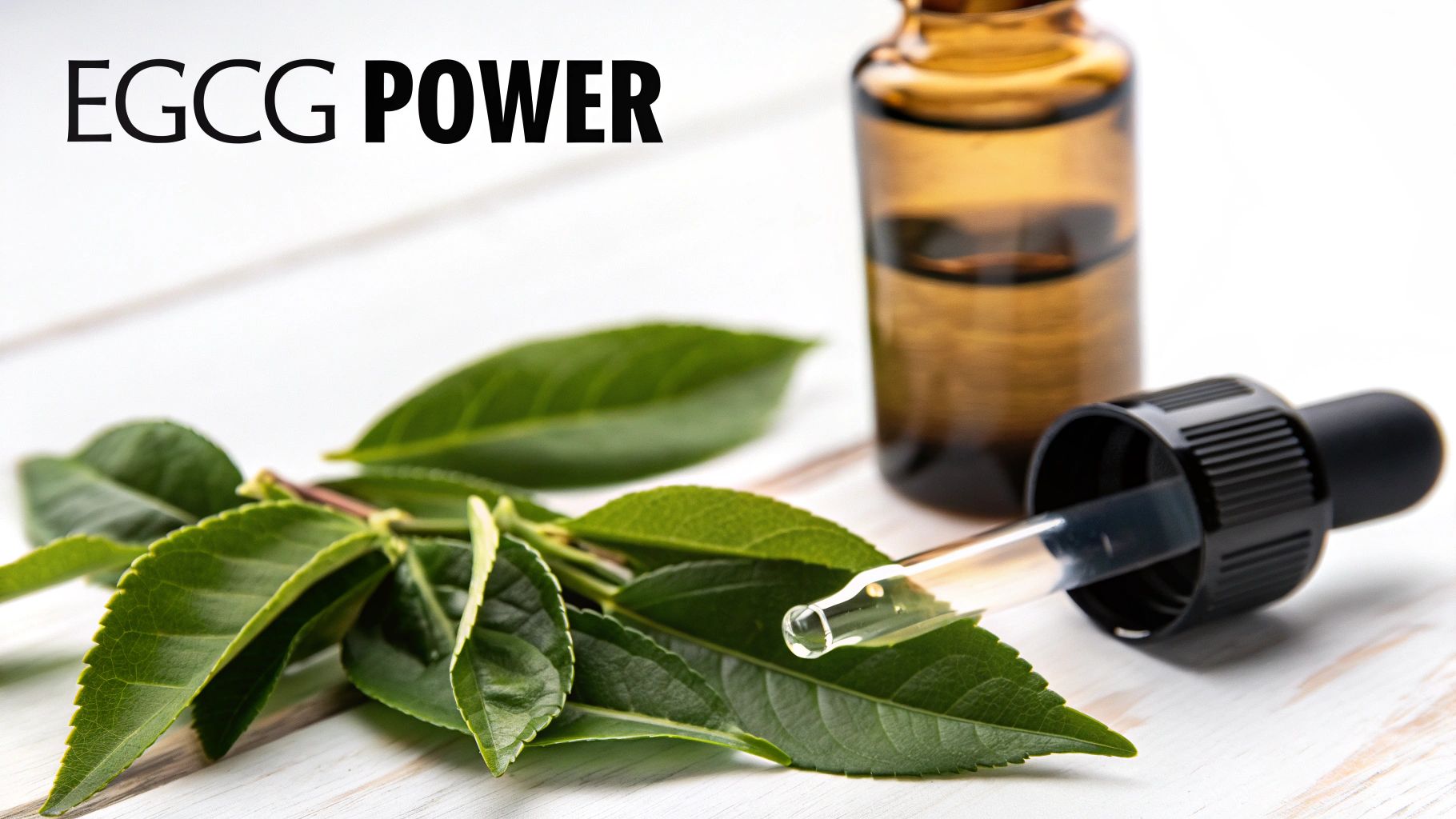
So, what is the science behind green tea's celebrated status? It’s far more than a soothing beverage. Think of it as a comprehensive support system for your skin, packed with potent, evidence-backed compounds that deliver real results.
At the core of its power are polyphenols, a class of antioxidants that act as personal bodyguards for your skin cells. They work diligently to neutralize oxidative stress from environmental aggressors-like pollution and UV radiation-before it can accelerate signs of aging, such as fine lines and loss of firmness.
The Powerhouse Polyphenol: EGCG
Within the polyphenol family, one compound reigns supreme: Epigallocatechin Gallate, or EGCG. This is the key bioactive responsible for the majority of green tea's profound skin-calming abilities. If polyphenols are your security team, EGCG is the head of the detail.
EGCG is a master at mitigating inflammation, which is the root cause of countless skin concerns, including redness, irritation, and inflammatory acne. By down-regulating this inflammatory response, a green tea toner helps restore skin to a calm, balanced state.
In fact, green tea is the leading player in the global tea-based skincare market, claiming about 50% of the total market share. Its massive popularity comes from the proven anti-aging and anti-inflammatory effects of compounds like EGCG. You can read more about the tea-based skincare market on FutureMarketInsights.com.
More Than Just Antioxidants
While EGCG captures the spotlight, green tea's efficacy is bolstered by a team of other key compounds. Each plays a specific role, working in synergy to balance and protect your skin.
- Tannins: These compounds possess natural astringent properties. In a well-formulated K-Beauty toner, tannins help refine the appearance of pores and regulate sebum production-a significant benefit for oily and acne-prone skin that won't cause dryness or stripping.
- Caffeine: The same compound that provides a morning boost can also invigorate your skin. Applied topically, caffeine promotes vasoconstriction, which can temporarily reduce puffiness and calm redness for a brighter, more even complexion.
This unique biochemical synergy is what makes a green tea toner so effective. It offers a multi-pronged strategy for calming, rebalancing, and protecting your skin, rather than simply addressing a single issue.
Key Active Compounds in Green Tea and Their Skin Benefits
| Active Compound | Primary Benefit for Skin |
|---|---|
| EGCG (Polyphenol) | Provides powerful antioxidant defense against environmental damage and significantly calms inflammation and redness. |
| Tannins | Help to balance oil production and visibly tighten pores, making it ideal for oily and combination skin types. |
| Caffeine | Works to reduce puffiness and soothe skin, contributing to a brighter and more revitalized complexion. |
It’s this synergy that makes green tea not just an ingredient, but a true skincare superhero.
Finding the Perfect Green tea toner for Your Skin
A green tea toner is not a one-size-fits-all solution. Its true potential is unlocked when you select a formula that synergizes with your skin's specific needs. The core of K-Beauty philosophy is about achieving harmony; this means choosing a smart formulation where green tea’s benefits are amplified by other targeted, efficacious ingredients.
Oily and Acne-Prone Skin
For those dealing with excess sebum and frequent breakouts, a green tea toner can be transformative. The natural tannins in green tea act as a gentle astringent, helping to regulate oil production without the harsh, stripping sensation associated with alcohol-based toners. This helps keep pores clear and less prone to congestion.
For this skin type, look for a green tea toner fortified with other clarifying ingredients.
- BHA (Beta Hydroxy Acid): An oil-soluble exfoliant like Salicylic Acid is the perfect partner for green tea. It penetrates deep into pores to dissolve the sebum and debris that lead to blackheads and acne.
- Heartleaf (Houttuynia Cordata): A revered K-Beauty botanical, heartleaf is known for its potent anti-inflammatory and purifying properties, making it excellent for calming active breakouts.
Sensitive and Combination Skin
For skin that is easily reactive or presents a classic combination of an oily T-zone and dry cheeks, the objective is balance and soothing. Green tea’s potent anti-inflammatory properties, driven by its high EGCG content, are exceptional for reducing redness and calming irritation. It helps bring equilibrium to a complexion in flux.
For this skin type, finding a formula that respects the skin's delicate barrier is paramount. The right green tea toner will hydrate dry areas while gently managing sebum in the T-zone, leaving the complexion feeling comfortable and unified.
Look for formulas that pair green tea with barrier-supporting partners like Centella Asiatica (Cica) or Mugwort (Artemisia). In Korean skincare, these ingredients are legendary for their ability to repair the skin barrier and reduce reactivity.
Dry and Mature Skin
It is a common misconception that toners are only for oily skin. For dry and mature complexions, a hydrating green tea toner provides a critical layer of antioxidant protection against the environmental aggressors that accelerate signs of aging, such as fine lines and dullness.
The key is to find a toner that combines green tea’s protective benefits with potent hydrators. When paired with ingredients like Hyaluronic Acid, Glycerin, or Snail Mucin, the formula helps to plump the skin, support barrier function, and lock in essential moisture. This powerful combination ensures skin feels refreshed and resilient, never tight or stripped.
Mastering K-Beauty Toner Application Methods
To fully harness the benefits of your green tea toner, it's time to move beyond a simple swipe with a cotton pad. Korean skincare emphasizes intentional application-techniques designed to maximize absorption, enhance hydration, and ensure active ingredients penetrate effectively. Your toner is a delivery system for potent botanicals.
Correct application ensures the antioxidants in your green tea toner can properly fortify the skin. This step perfectly preps your complexion for subsequent serums and moisturizers, transforming a basic step into a cornerstone of your routine.
The Classic Tap Tap Method
This is the foundational technique in nearly every K-Beauty routine. Instead of wiping product away with a cotton round, this method ensures your skin fully absorbs the toner.
- Dispense: Pour a quarter-sized amount of your green tea toner into clean palms.
- Distribute: Gently rub your palms together to warm and spread the liquid.
- Press and Tap: Lightly press your hands onto your cheeks, forehead, and chin. Follow with a gentle tapping or "piano-playing" motion across your entire face with your fingertips.
This gentle patting motion not only enhances absorption but also stimulates microcirculation, bringing a healthy, natural glow to the skin's surface.
The 7 Skin Method for Deep Hydration
For days when your skin feels particularly dehydrated or compromised, the 7 Skin Method is a K-Beauty staple. The name is a direct translation-"skin" is a common term for toner in Korea. The technique involves applying seven thin layers of a hydrating toner in succession.
While a single, thick layer of product can feel occlusive, this method allows the skin to absorb thin, watery layers incrementally. It plumps the skin with moisture from within, creating a dewy, revitalized appearance without any greasiness.
To try it, apply your green tea toner using the Tap Tap Method. Before it fully dries, apply another layer. Repeat this process up to seven times. You will notice a significant improvement in your skin's softness and suppleness.
DIY Toner Masking for Targeted Soothing
If you're experiencing localized redness or an inflamed blemish, a DIY toner mask is your secret weapon for concentrated relief. This is a quick and highly effective method to soothe inflammation exactly where it's needed.
- Soak: Take several thin, plain cotton pads and saturate them with your green tea toner until they are fully damp but not dripping.
- Apply: Place the soaked pads directly onto the irritated areas of your face.
- Wait: Let them sit for 5-10 minutes, similar to a sheet mask.
- Finish: Remove the pads and gently tap any remaining essence into your skin. Do not rinse.
How to Read a K-Beauty Toner Label Like an Expert
Navigating a K-Beauty ingredient list shouldn't be intimidating. Learning to decode a label is the most powerful tool for selecting a truly effective green tea toner and distinguishing a knowledgeable consumer from a casual one.
The first rule is to examine the top of the ingredient list. In Korean skincare, ingredients are listed in descending order of concentration. For a high-quality product, you want to see Camellia Sinensis Leaf Water or Camellia Sinensis Leaf Extract among the first few ingredients-not buried at the end. This placement is a clear indicator that you're getting a potent, antioxidant-rich formula, not a product using "green tea" merely for marketing.
Identifying Powerhouse Partners
Beyond green tea itself, a well-formulated K-Beauty toner will include synergistic ingredients that amplify its soothing and balancing effects. Think of them as the supporting cast that enhances the star ingredient's performance.
Spotting names like Centella Asiatica (Cica), Artemisia (Mugwort), or Houttuynia Cordata (Heartleaf) high on the list is an excellent sign. These are calming heroes in their own right, and they work beautifully with green tea to reduce redness, soothe irritation, and support a healthy skin barrier. Their presence indicates a formula designed for tangible results.
Spotting Potential Red Flags
Equally important is knowing what to avoid. Seeing simple alcohols, such as Alcohol Denat. or SD Alcohol, high on the ingredient list can be a red flag for many skin types. While they can aid in penetration, they can also be drying and irritating over time, counteracting the calming benefits of the green tea.
Another ingredient to be wary of is "Fragrance" or "Parfum." While not always problematic, synthetic fragrances are a common sensitizer and add no therapeutic benefit to your skin. An authentic K-Beauty green tea toner prioritizes performance over perfume.
To help you shop with confidence, here's a quick reference for scanning labels.
Green Tea Toner Ingredient Checklist
| What to Look For (Green Flags) | What to Avoid (Red Flags) |
|---|---|
| Camellia Sinensis (Green Tea) Leaf Water/Extract in the top 5 ingredients. | Alcohol Denat. or SD Alcohol listed high up on the list. |
| Soothing partners like Centella Asiatica (Cica), Artemisia (Mugwort), or Houttuynia Cordata. | "Fragrance" or "Parfum" listed prominently, especially if you have sensitive skin. |
| Hydrators like Glycerin, Hyaluronic Acid, or Panthenol. | A very short ingredient list, which may indicate a less sophisticated formula. |
| Antioxidants such as Niacinamide or Vitamin E (Tocopherol). | A long list of essential oils, which can be irritating for some. |
This checklist is about recognizing the markers of a thoughtful, high-quality formulation. The more green flags you see, the more confidence you can have in the product.
With the global demand for effective herbal skincare growing, label literacy is more critical than ever. In fact, the herbal skin toner market-where green tea is a top performer-is projected to grow at a CAGR of 8.40% to reach an estimated value of around USD 3.8 billion. You can learn more about the herbal toner market on HTF Market Intelligence.
Once you've chosen a great toner, how you apply it makes all the difference in targeting your specific goals, whether that's boosting hydration or providing targeted soothing relief.
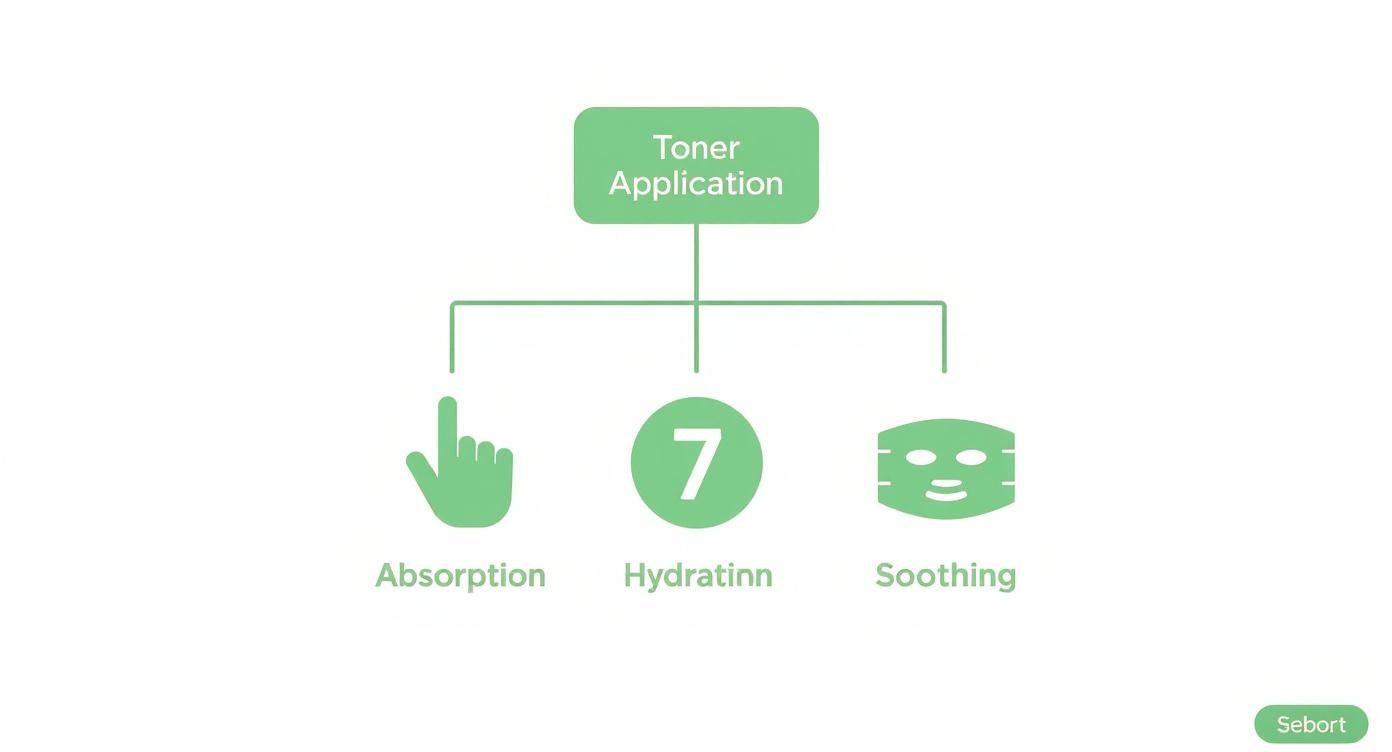
The key takeaway is that how you apply your toner is just as important as the one you choose. This allows you to tailor the benefits to whatever your skin is craving that day.
Green Tea Toner FAQs
Can I Use a Green Tea Toner Every Day?
Yes, absolutely. For optimal results, daily use is essential. A well-formulated green tea toner is not a harsh, occasional treatment; it is a gentle, balancing step designed for consistency.
Think of it as a daily antioxidant shield for your skin. Consistent use helps maintain skin equilibrium, regulate sebum, and provide a steady defense against environmental aggressors. For most individuals, twice daily-morning and night, immediately after cleansing-is the ideal frequency.
Will a Green Tea Toner Make My Skin Purge?
It is highly improbable. Skin purging is typically triggered by ingredients that accelerate cellular turnover, such as retinoids or high-concentration chemical exfoliants (AHAs/BHAs). A green tea toner's primary function is the opposite: to soothe and reduce inflammation.
As a natural anti-inflammatory, it is far more likely to calm an existing breakout than to cause one. If you experience new irritation after introducing a toner, scrutinize the full ingredient list for other potential culprits.
Key Takeaway: A true green tea toner is a skin mediator. Its core function is to reduce inflammation and restore calm, making it a safe addition for even sensitive or reactive skin types without the risk of a purge.
Is It Safe to Use With Vitamin C or Retinol?
Yes, and this is a highly effective combination. Using a hydrating green tea toner before applying potent actives like Vitamin C or Retinol can enhance their performance. The toner preps the skin by providing a layer of hydration, which can facilitate more effective absorption of these ingredients.
Furthermore, the calming properties of green tea can help mitigate the potential irritation associated with stronger actives. This is a smart, supportive strategy for maintaining skin barrier health while targeting specific concerns like hyperpigmentation or fine lines.
How Long Does It Take to See Results?
While skincare is a long-term commitment, some benefits of a green tea toner are almost immediate. A reduction in redness and a feeling of calm, balanced hydration can be noticeable after just a few applications.
For more significant changes, such as improved sebum regulation or a decrease in breakouts, consistency is paramount. Allow at least 4 to 6 weeks of daily use to see the full effects. This timeframe gives your skin a complete renewal cycle to respond to the toner's balancing and anti-inflammatory benefits.
Ready to discover the perfect K-Beauty staples for your routine? At Mirai Skin, we've curated a collection of 100% authentic Korean skincare products, including expertly formulated green tea toners to help you achieve calm, balanced skin. Explore our collection and find your perfect match today on Mirai Skin.
Article created using Outrank
Related Reading
- best retinol serums
- Korean face masks
- best Korean anti-aging products