Dealing with persistent facial redness can feel like your skin is in a constant state of rebellion. The secret to brokering peace often lies in the very first step of your routine: selecting a gentle, effective cleanser for redness. This is where the Korean skincare philosophy truly shines-its core principle is to nurture the skin barrier, not strip it.
Your First Step Toward Calmer Skin
The right cleanser is far more than just a face wash; it’s a foundational treatment for reactive skin. Think of it as a conditioning agent that calms irritation and removes impurities without aggression. It establishes a serene baseline for your entire ritual, priming your skin to better absorb the soothing serums and reparative moisturizers that follow.

When skin is reactive, its protective barrier is almost always compromised. Imagine this barrier as a meticulously constructed brick wall protecting a fortress. Harsh cleansers act like a sledgehammer, creating micro-fissures that allow irritants in and let precious moisture escape. This breach is a primary trigger for the inflammation and visible redness you’re trying to resolve.
The K-Beauty Philosophy on Cleansing
Korean skincare wisdom champions a far more sophisticated approach. Instead of assaulting the skin with harsh surfactants, the goal is to support and rebuild its natural defenses. A proper cleanser for redness is formulated to respect this delicate equilibrium from the outset.
This philosophy is built on several core principles:
- Barrier Fortification: Utilizing ingredients that actively repair and reinforce the skin's lipid layer.
- Gentle Surfactants: Choosing cleansing agents that lift away impurities without stripping away the natural oils your skin needs to remain healthy.
- Soothing Actives: Incorporating potent botanical extracts to reduce inflammation directly within the cleansing step.
By selecting a cleanser that aligns with these principles, you are not merely cleaning your face-you are actively participating in its healing process. This foundational step is non-negotiable for achieving a calm, resilient complexion.
This guide will empower you to look beyond marketing claims and understand what your skin truly requires. We’ll deconstruct ingredient lists and explain the science behind gentle cleansing so you can confidently choose a product that supports your skin’s journey back to health.
Understanding the Root Causes of Facial Redness
Before you can effectively calm inflammation, you must understand what fuels it. Facial redness is not a superficial issue; it’s a clear signal from your skin that its delicate homeostasis has been disrupted. The key to managing it is identifying the underlying triggers.
Think of your skin's outermost layer, the stratum corneum, as a perfectly constructed brick wall. Your skin cells (corneocytes) are the bricks, and natural lipids (like ceramides and fatty acids) are the mortar holding everything together. This structure, known as the skin barrier, has two critical functions: to lock in moisture and to keep out irritants.
When this barrier is robust, your skin feels calm, hydrated, and can effectively defend itself against daily stressors. But when it's damaged, microscopic cracks form in that lipid mortar.
The Compromised Skin Barrier
A compromised barrier is almost always the primary culprit behind persistent redness and sensitivity. When your skin’s defenses are weakened, it’s an open invitation for external aggressors-like pollution, allergens, and harsh skincare ingredients-to penetrate and cause inflammation.
Simultaneously, this weakened state allows for accelerated evaporation of hydration from your skin, a process known as transepidermal water loss (TEWL).
This double-whammy triggers an inflammatory cascade from your skin’s immune system. Your body directs increased blood flow to the area to combat what it perceives as a threat, resulting in visible redness, flushing, and heat. This is precisely why an effective cleanser for redness must prioritize barrier repair above all else.
Your skin isn’t being “difficult”-it’s communicating. Redness is often a distress signal indicating that your protective barrier needs gentle support, not an aggressive intervention.
Common Redness Triggers
While a damaged barrier is the root of the problem, numerous factors can initiate or exacerbate the damage. Pinpointing your personal triggers is a crucial step toward restoring your skin's equilibrium. With the global skincare market booming, more and more people are looking for targeted solutions. If you're curious, you can find out more about the growth of the skincare industry to see just how big this trend is.
Here are some of the most common triggers that weaken the skin barrier:
- Environmental Stressors: Sun exposure (UV radiation), extreme temperatures, low humidity, and even strong winds place significant stress on your skin's defenses.
- Over-Exfoliation: It's easy to overdo it. Using harsh physical scrubs or strong chemical exfoliants (AHAs/BHAs) too frequently can physically abrade the protective lipids that hold your skin barrier together.
- Harsh Cleansing: High-pH or sulfate-heavy cleansers are notorious for stripping the skin of its essential, natural oils. This leaves it feeling tight, vulnerable, and irritated.
- Underlying Conditions: Conditions like rosacea and eczema involve chronic inflammation and a predisposition to a weaker skin barrier, making gentle care an absolute necessity. An estimated 415 million people worldwide have rosacea, highlighting the widespread need for specialized care.
Once you understand that redness originates with a compromised barrier, it becomes clear why choosing the right cleanser is your first and most important line of defense. A calming, barrier-supporting cleanser does more than just wash your face-it helps rebuild your skin’s foundational strength from the very first step of your routine.
How to Choose Your Gentle Cleansing Champion
Navigating the world of cleansers can feel overwhelming. But for redness-prone skin, selecting the right product isn't just about achieving cleanliness-it's about maintaining calm and stability. The objective isn’t to find one magic bullet, but to understand what your unique skin requires.
Think of it like this: you wouldn't use a rough brush on delicate silk. Similarly, easily irritated skin demands a cleanser that can perform its function without inducing further stress. The perfect cleanser for redness is one that respects your skin's boundaries.
Finding Your Perfect Cleanser Texture
Your first key decision is texture. This isn’t merely about sensory preference; the formulation directly impacts its interaction with your skin. Each type offers distinct benefits, so matching it to your skin's needs is paramount.
Here’s a quick reference guide to help you choose the best cleanser formulation based on your specific skin type and redness concerns.
Matching Your Cleanser Type to Your Skin Needs
| Cleanser Type | Best For Skin Type | Key Benefit for Redness | Texture Profile |
|---|---|---|---|
| Cream or Milk | Dry, Dehydrated, Sensitive | Cleanses without stripping natural oils, leaving a nourishing, emollient film. | Rich, lotion-like, and comforting. |
| Gel | Combination, Oily, Acne-Prone | Provides a deep clean feeling without disrupting the moisture barrier. | Lightweight, refreshing, and often hydrating. |
| Oil or Balm | All skin types, especially for makeup/SPF removal | Melts away impurities with minimal friction, preventing physical irritation. | Silky oil or solid balm that emulsifies with water. |
This table helps narrow down the options, making it easier to find a texture that works with your skin, not against it.
Cleanser Formulations Explained
-
Cream or Milk Cleansers: These are the skincare equivalent of a cashmere blanket. Their rich, comforting texture is ideal for dry, tight, or severely sensitive skin. They gently lift away impurities while depositing a layer of moisture, so your face feels soft and supple, not stripped.
-
Gel Cleansers: If your skin is oily or combination yet still experiences redness and reactivity, a gel cleanser is an excellent choice. These lightweight formulas are designed to remove excess sebum and grime without compromising the lipid barrier, offering a fresh, clean feeling that’s still gentle.
-
Oil Cleansers and Balms: A cornerstone of the K-Beauty double cleansing method. Oils and balms are experts at dissolving stubborn makeup, sunscreen, and daily buildup. For redness-prone skin, their greatest advantage is the slip-they allow for a thorough cleanse without harsh rubbing, making them an ideal first step in an evening routine.
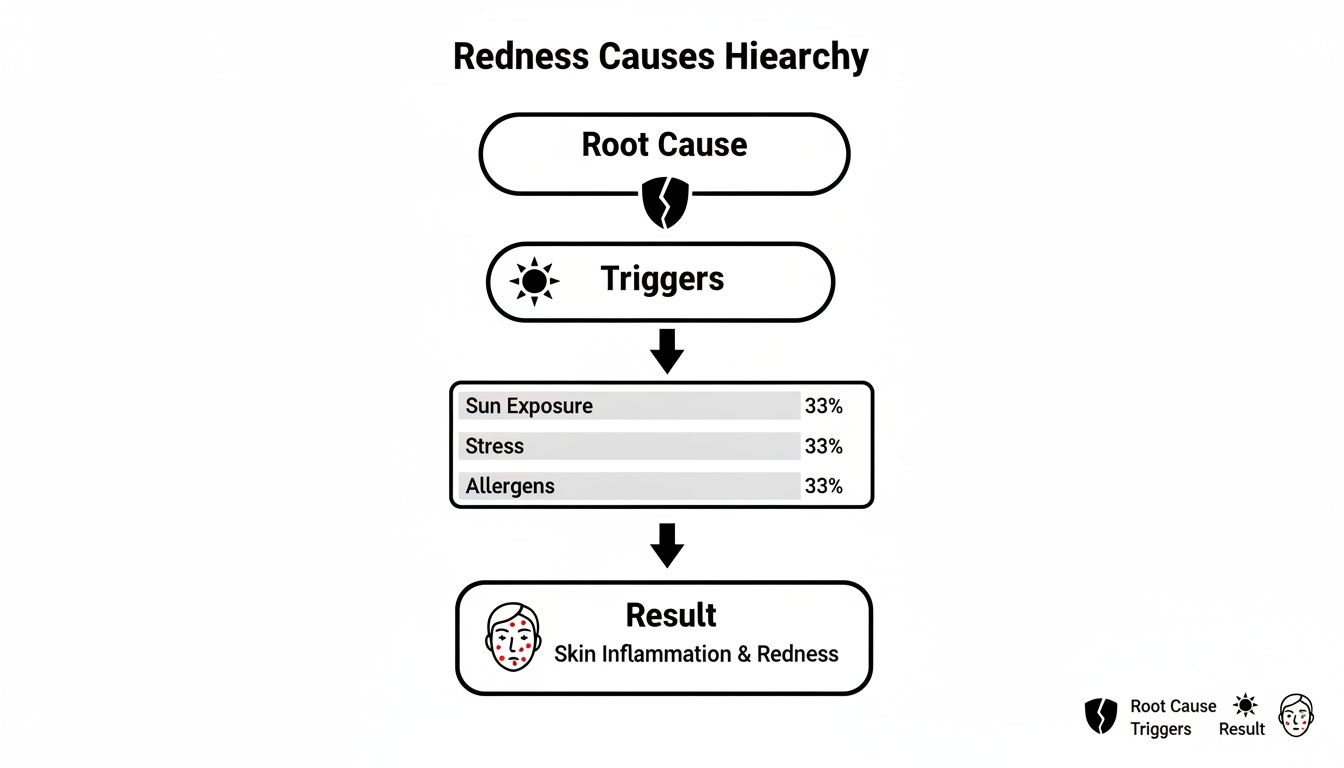
This chart reinforces the concept: redness is not just a surface issue. It often begins with a weakened skin barrier. That’s why your cleanser, the very first product in your routine, plays such a crucial role in either helping or harming your skin's natural defenses.
Why Your Cleanser's pH Level Is Crucial
Let's delve into the science. Beyond texture, the single most critical factor for a gentle cleanser is its pH level.
Healthy skin is naturally acidic, maintaining a pH of approximately 5.5. This acidic film, known as the acid mantle, is your skin's intrinsic defense mechanism. It inhibits the proliferation of harmful bacteria, seals in moisture, and maintains overall balance.
The problem? Many traditional cleansers-especially high-foaming formulas-are alkaline (with a pH of 8 or higher). Using one creates a pH shock, stripping away the protective acid mantle and leaving your skin tight, dry, and vulnerable to irritation. For skin already battling redness, this is a recipe for disaster.
Choosing a low-pH cleanser (around 5.5) isn't just a beneficial feature; it's a non-negotiable requirement for calming redness. It cleanses in harmony with your skin's natural state, ensuring your barrier remains strong, resilient, and better equipped to handle stressors.
Once you grasp these two concepts-texture and pH-you can see through marketing noise. You'll be able to analyze a product and know if it’s truly going to support your skin. To explore authentic Korean cleansers that prioritize skin health, check out the collection at Mirai Skin.
The Soothing K-Beauty Ingredients Your Skin Craves
When searching for the ideal cleanser for redness, the ingredient list is your most valuable resource. Korean skincare formulations are renowned for their focus on botanicals and barrier-supporting compounds that don't just clean-they actively calm the skin. Knowing what to look for empowers you to choose a product that acts as a first responder to irritation.
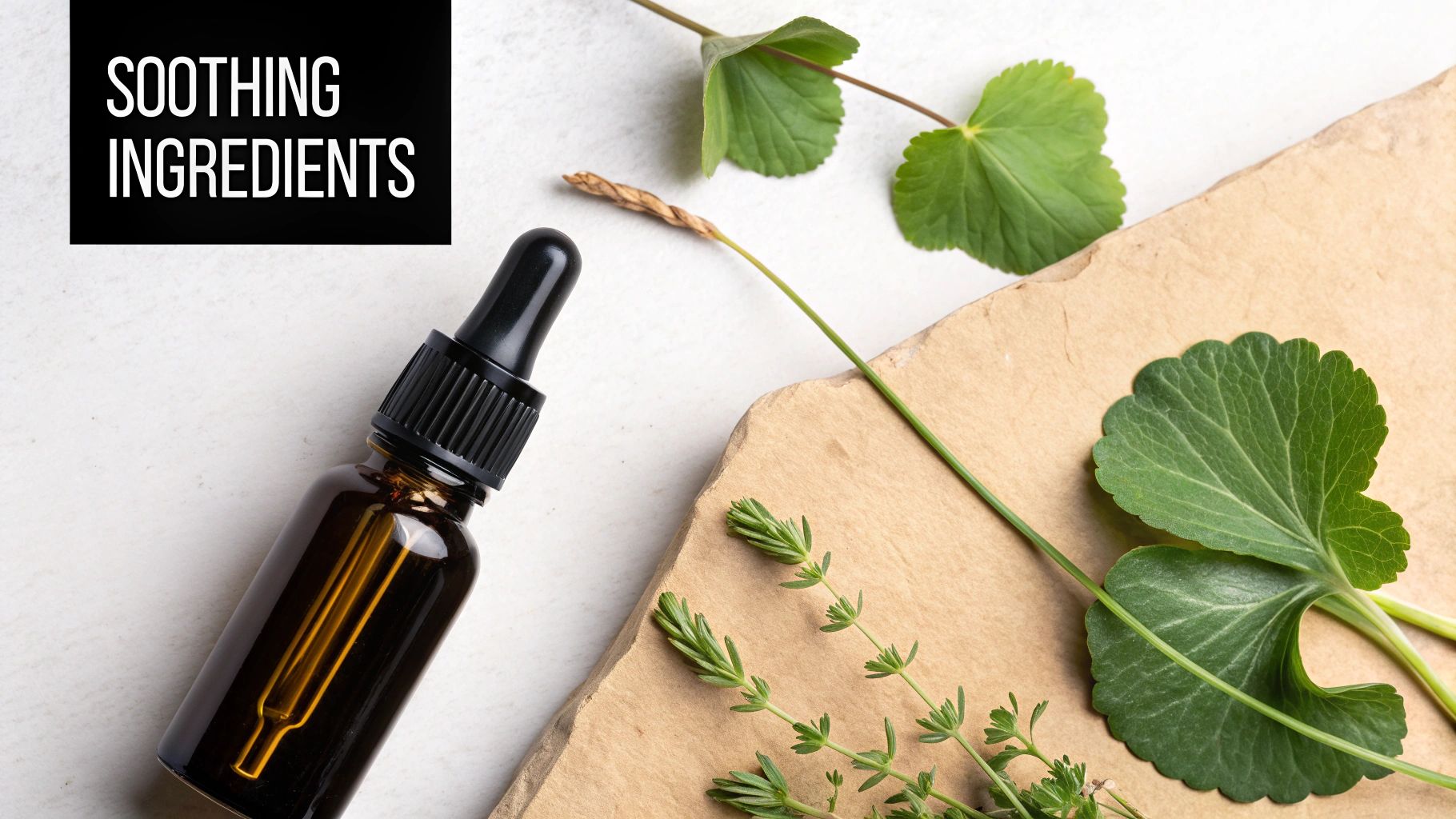
Think of these ingredients as the peacekeepers in your routine. Their function is to reduce inflammation, strengthen your skin's defenses, and create a calm environment where your skin can heal and thrive. This represents a significant paradigm shift from cleansers that simply strip everything away.
The Calming Champions of K-Beauty
You’ll start to notice a few hero ingredients appearing consistently in the best K-Beauty cleansers for sensitive skin. These aren't just trendy additions; they're backed by a long history of traditional use and modern science for their potent soothing abilities. Spotting them on a label is the first step to finding your holy grail.
Here are the key allies to look for:
- Centella Asiatica (Cica): Often called "tiger grass," this botanical is the undisputed superstar for calming distressed skin. It's rich in madecassoside and asiaticoside, compounds that reduce inflammation, repair the skin barrier, and promote healing, making it essential for anyone dealing with redness.
- Heartleaf (Houttuynia Cordata): A true powerhouse for its soothing and anti-inflammatory benefits. Heartleaf is particularly effective for skin that is both red and prone to breakouts, as it helps calm irritation while offering gentle clarifying properties.
- Mugwort (Artemisia): This traditional Korean herb acts like a gentle herbal compress for your skin. It’s loaded with antioxidants and possesses potent anti-inflammatory properties that help reduce redness and sensitivity almost instantly.
- Green Tea (Camellia Sinensis): More than just a soothing beverage, Green Tea is filled with polyphenols-powerful antioxidants that protect skin from environmental stressors and are excellent for reducing inflammation and calming irritation.
These ingredients work in synergy with your skin, not against it. Their goal is to provide immediate relief while contributing to long-term resilience, making your skin less reactive over time.
Barrier-Builders for Long-Term Strength
While calming botanicals address immediate irritation, other ingredients work behind the scenes to rebuild and fortify your skin's protective barrier. Ultimately, a stronger barrier is less susceptible to the triggers that cause redness in the first place.
Here are the essential builders to identify on an ingredient list:
- Panthenol (Pro-Vitamin B5): This is a superior humectant, meaning it draws moisture into the skin and locks it in. Well-hydrated skin is stronger skin. Panthenol also has incredible soothing properties that help reduce feelings of itchiness and discomfort.
- Ceramides: Think of these as the natural "mortar" holding your skin cells together. Incorporating them into a cleanser helps replenish what's been lost due to irritation, effectively patching the gaps in your skin's protective wall.
By learning to recognize these soothing and strengthening ingredients, you can confidently scan any ingredient list and know if you’ve found a true cleanser for redness. Ready to find a formula that will nurture your skin back to a state of calm? Explore the curated collection of authentic Korean skincare at Mirai Skin.
Common Cleanser Ingredients That Trigger Redness
Knowing what to look for in a cleanser is crucial, but knowing what to avoid is just as important. Many popular cleansers contain ingredients that can quietly sabotage sensitive, redness-prone skin, hiding in plain sight on the label. Think of yourself as a detective for your own face-learning to spot the culprits is the key to preventing flare-ups.
This isn't about creating a "bad list" to fear. It’s about equipping you with the knowledge to choose a cleanser for redness that genuinely supports your skin barrier instead of degrading it. Let's examine the most common offenders.
Harsh Surfactants and Stripping Agents
The primary culprits are aggressive cleansing agents, often responsible for the rich, bubbly lather many of us were taught to associate with being "clean." For reactive skin, however, that satisfying foam often comes at the cost of barrier integrity.
- Sulfates (SLS/SLES): Sodium Lauryl Sulfate (SLS) and Sodium Laureth Sulfate (SLES) are powerful detergents. They excel at removing grime and oil, but they are indiscriminate-they also strip away the essential lipids that keep your skin barrier healthy and intact. Using them on your face is akin to using a harsh dish soap on delicate fabric; it's simply too aggressive.
That tight, "squeaky-clean" feeling post-cleanse is not a positive sign. It's your skin signaling that its protective acid mantle has been compromised, leaving it vulnerable to irritation and redness.
Another ingredient to watch for is denatured alcohol. While certain fatty alcohols can be beneficial, denatured alcohol is incredibly drying and can weaken an already fragile skin barrier, exacerbating redness.
Hidden Irritants in Formulations
Beyond overtly stripping agents, numerous other common additives can trigger redness and sensitivity. They might seem benign, but for easily provoked skin, they can be a significant source of inflammation.
-
Synthetic Fragrances: When you see "fragrance" or "parfum" on an ingredients list, it can represent a proprietary blend of dozens of chemicals, many of which are known allergens. Opting for fragrance-free formulas is always the safest strategy for sensitive skin.
-
Certain Essential Oils: While natural, not all are gentle. Potent essential oils like peppermint, eucalyptus, menthol, and citrus oils contain aromatic compounds that can easily irritate skin that is already struggling with redness.
By learning to recognize these triggers, you’re taking a proactive step toward maintaining a calm, happy complexion. To explore cleansers that are thoughtfully formulated without these common irritants, check out the K-Beauty collection at Mirai Skin.
Your Gentle Cleansing Ritual for Calm Skin
Finding the perfect cleanser for redness is an excellent first step, but how you wash your face is equally critical. Even the gentlest formula can be undermined by an aggressive cleansing technique. The goal is to transform your daily wash from a chore into a calming ritual that treats your skin with the respect it deserves.
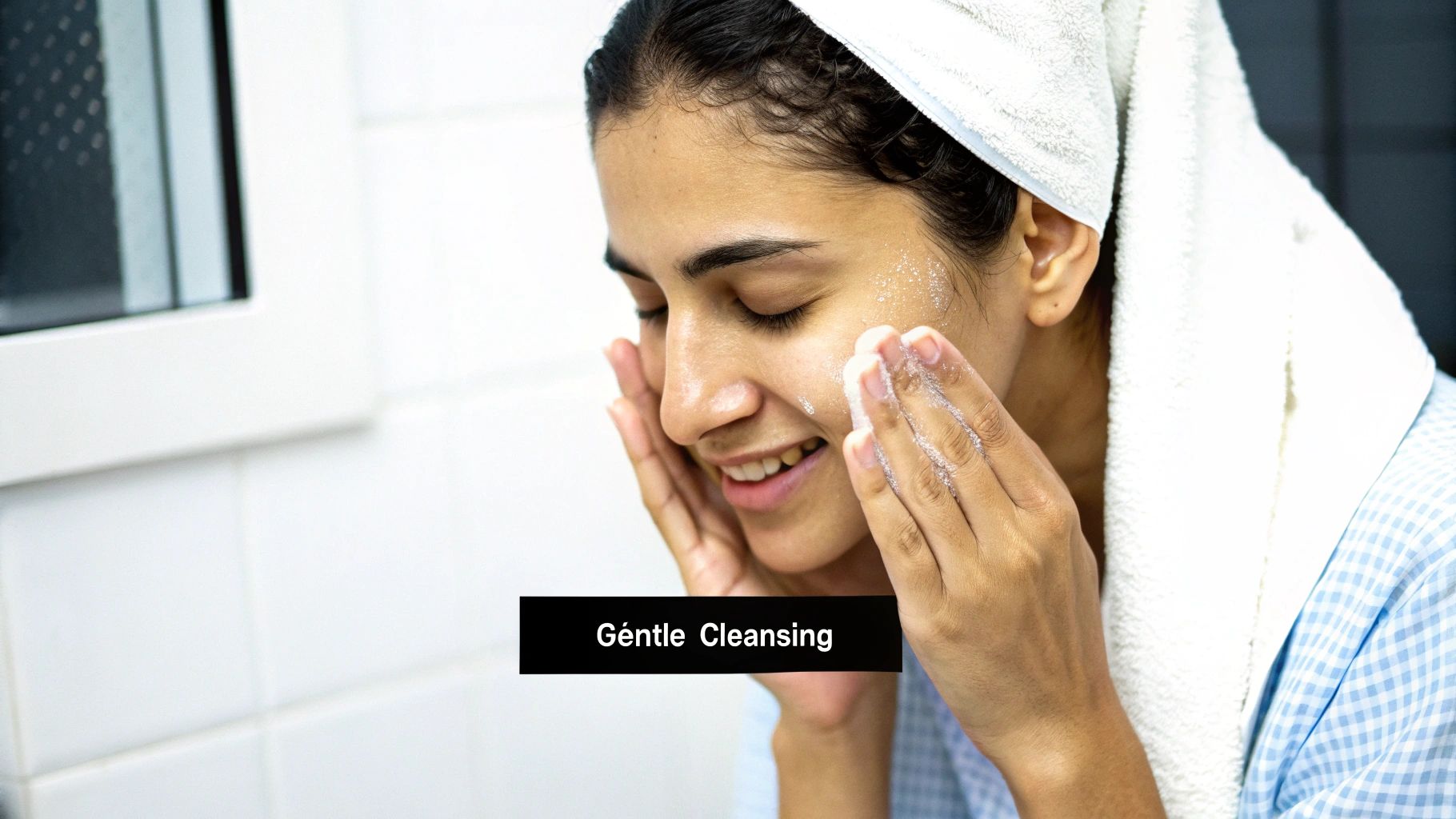
This isn’t about adding complex steps to your routine. It’s about being mindful. Just a few small adjustments to your method can lead to a significant reduction in irritation and help you build a stronger, more resilient skin barrier over time.
The Art of the Gentle Cleanse
To maximize your cleanser's soothing potential, follow these simple but powerful steps. Think of it less like scrubbing and more like a gentle dialogue with your skin.
-
Use Lukewarm Water: Extreme temperatures are major culprits for redness. Hot water can strip oils and cause vasodilation (widening of blood vessels), while cold water can be a shock to the system. Always use lukewarm water.
-
Apply with Fingertips: Dispense a small amount of cleanser onto your fingertips and gently massage it onto damp skin. Use light, circular motions-no harsh rubbing. Avoid abrasive tools like rough washcloths or mechanical brushes.
-
Rinse and Pat Dry: Ensure you thoroughly rinse away all traces of the cleanser, then gently pat your face dry with a clean, soft towel. Aggressive towel-rubbing creates friction and can cause immediate irritation.
This gentle approach is non-negotiable for sensitive skin. Your objective is to lift away impurities without disturbing the delicate equilibrium of your skin’s protective barrier.
For Makeup and SPF: The Double Cleanse
If you wear makeup or sunscreen (and daily sunscreen use is crucial), the Korean double cleansing method is a game-changer. This two-step process achieves a thorough cleanse without ever stripping the skin.
First, use an oil-based cleanser or a cleansing balm. Massage it onto dry skin to dissolve and melt away makeup, SPF, and excess sebum. Then, add a splash of water to emulsify it before rinsing clean.
Follow that with your gentle, water-based cleanser for redness to wash away any remaining residue. Your skin is now perfectly clean, calm, and prepared for the next steps in your skincare ritual.
Your Cleanser Questions, Answered
Finding the right cleanser when your skin is sensitive and red can feel tricky. Let's clear up some of the most common questions to help you feel confident on your journey to calmer skin.
How Quickly Will I See a Reduction in Redness?
While a gentle, soothing cleanser will make your skin feel better right away, a visible, lasting reduction in redness usually takes about 2 to 4 weeks of consistent use.
Think of it less like an overnight fix and more like nursing your skin barrier back to health. This timeframe gives it the space it needs to heal and rebalance itself. Patience is everything here!
Can I Use a Redness-Specific Cleanser on Oily Skin?
Absolutely. In fact, it’s often a perfect match. Redness is a sign of inflammation, which can go hand-in-hand with breakouts and excess oil.
Look for a low-pH gel cleanser with calming K-Beauty ingredients like Heartleaf or Green Tea. It will tackle the inflammation behind the redness without stripping your skin, which helps stop your face from producing even more oil to compensate.
Key Takeaway: A rich, bubbly lather isn't a sign of a better clean. For sensitive skin, it often indicates the presence of harsh sulfates (like SLS) that can disrupt your skin's protective barrier. Effective cleansers for redness are often low-foaming, with creamy or milky textures that cleanse gently.
Is Double Cleansing Safe for Highly Sensitive Skin?
Yes! When done right, it's one of the most thorough yet gentle ways to wash your face. The secret is using the right products and avoiding aggressive rubbing.
- First Cleanse: Start with a fragrance-free cleansing oil or balm. Gently massage it onto dry skin to melt away makeup, SPF, and daily grime.
- Second Cleanse: Follow up with your mild, hydrating water-based cleanser to wash off any remaining residue, leaving your skin perfectly clean and comfortable.
Ready to find a cleanser that nurtures your skin back to a state of calm? Explore the curated collection of authentic Korean skincare at Mirai Skin. https://miari-skin.com