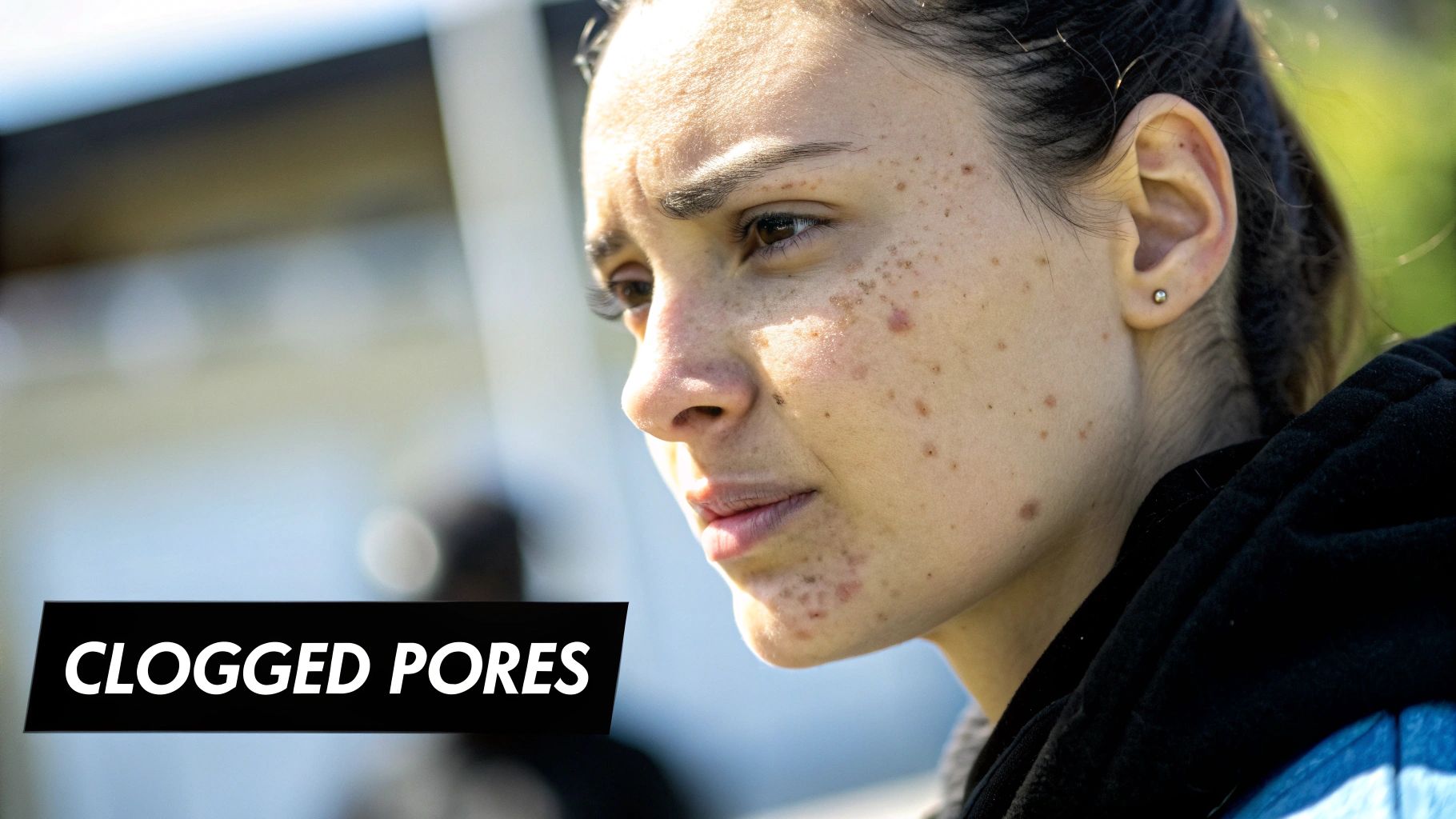
We’ve all heard the term “clogged pores,” but what’s actually happening underneath the skin? At its simplest, a clogged pore is like a tiny traffic jam. It happens when sebum-your skin's natural oil-gets trapped with a buildup of dead skin cells inside a hair follicle, creating a blockage. This is the very beginning of frustrating issues like blackheads, whiteheads, and even some types of acne.
The Hidden Traffic Jam Inside Your Pores
Think of your pores as small channels designed to let sebum and sweat escape, keeping your skin moisturized and healthy. Most of the time, this system works perfectly. But the flow can get disrupted, and the main culprit is usually an overproduction of sebum. What starts as a helpful hydrator can quickly turn into a pore-clogging mess.
When this extra oil mixes with dead skin cells that haven't shed properly-a process called hyperkeratinization-they form a stubborn plug. This blockage creates the perfect oxygen-free environment for bacteria to multiply, which often leads to the inflammation and breakouts we all want to avoid. Getting to the root of why this happens is the first step toward achieving the clear, smooth complexion that authentic Korean skincare is famous for.
At its core, a clogged pore is a simple mixture of oil and dead skin cells. The complexity comes from the numerous factors that can trigger this buildup, from hormonal shifts to the very products sitting on your bathroom shelf.
Key Factors Behind Clogged Pores
This frustrating skin concern is rarely caused by just one thing. It's usually a combination of factors, both internal and external, that creates the perfect storm for congestion. We can break these triggers down into two main categories, which we’ll explore throughout this guide.
- Internal Causes: These are the biological processes happening inside your body. Think genetics, hormonal fluctuations, and even stress, all of which can send signals to your sebaceous glands to go into overdrive.
- External Causes: These are elements from your environment and daily habits. This includes everything from comedogenic (pore-clogging) skincare ingredients and pollution to simply not cleansing your face thoroughly enough.
By understanding which of these factors are impacting your skin, you can start to build a smart, targeted K-Beauty routine. The goal isn't to strip your skin into submission, but to use gentle, intelligent care that respects your skin's natural balance while keeping those pores clear.
Exploring the Internal Causes of Clogged Pores
To truly get to the bottom of clogged pores, you have to look deeper than just the surface. While things like makeup and pollution play their part, the real story often starts from within, rooted in your skin's own biology.
Think of it like a delicate internal system. When signals get crossed-whether from hormones, stress, or your own genetics-that system gets thrown off balance. This is where the two main culprits come into play: an overproduction of your skin’s natural oil and a slowdown in its self-cleaning process.
The Problem of Excess Sebum
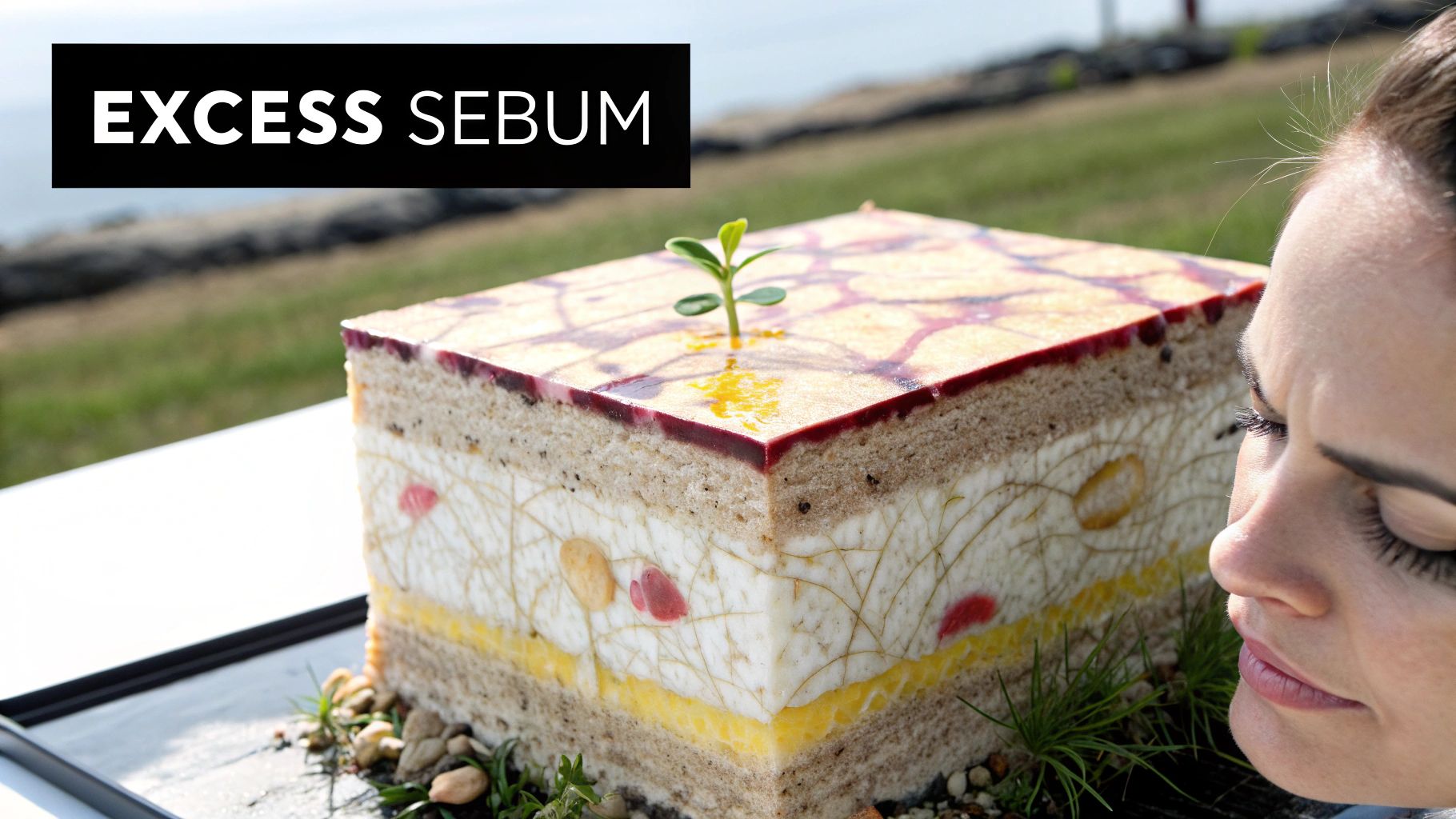
First, let's talk about sebum. This is the natural oil your skin produces, and it’s actually a good thing. It creates a waterproof barrier, locks in precious moisture, and shields you from daily environmental stressors. But, as with most things in life, too much of a good thing can cause problems.
When your sebaceous glands go into overdrive, this protective oil becomes the primary ingredient for a clog. It creates a slick environment where dead skin cells, instead of flaking away naturally, get trapped. Hormonal fluctuations are a huge trigger here, especially androgens, which can make sebum thicker and ramp up production. This is exactly why breakouts are so common during puberty, around your menstrual cycle, or when you're under a lot of stress.
Genetics also have a major say in your baseline oil production. If your parents dealt with oily skin, there's a good chance you will, too. This just means your skin is naturally more prone to the conditions that create clogged pores, making a consistent and gentle routine all the more important.
Did you know that excess sebum is one of the top reasons people get clogged pores? It's a key factor in why over 90% of people experience acne at some point, often starting with simple pore blockages. A fascinating multi-ethnic study even found major differences in pore size linked to ethnicity, which often relates to sebum levels. The research showed that pores can get significantly larger with age, highlighting why managing them is a lifelong game. You can check out the full study on skin pores across different populations for more insights.
When Dead Skin Cells Stick Around
The second piece of the puzzle is something called follicular hyperkeratinization. It sounds complicated, but it's really just a fancy term for a traffic jam in your pores. It happens when the dead skin cells (keratinocytes) that line your pores don't shed properly.
Normally, your skin renews itself about every 28 days. Old cells are pushed to the surface and flake off without you ever noticing. But when this process gets disrupted, the cells become "sticky." They build up inside the pore, mix with all that excess sebum, and form a dense, waxy plug. This little plug is called a microcomedone-the very first stage of a blackhead or whitehead.
This is the exact internal mess that effective Korean skincare ingredients are designed to solve. Instead of harsh scrubbing, the K-beauty philosophy focuses on gently dissolving the "glue" holding those dead cells together and regulating oil to get your skin's natural rhythm back on track.
To give you a clearer picture, here's a quick breakdown of how these internal factors work together to create congestion.
Internal Causes Of Clogged Pores At A Glance
This table summarizes the primary biological factors that contribute to pore congestion from within.
| Internal Factor | How It Contributes to Clogged Pores | Common Triggers |
|---|---|---|
| Excess Sebum Production | Creates an oily environment that traps dead skin cells, forming a plug. | Hormonal fluctuations (puberty, menstrual cycle), stress, genetics. |
| Follicular Hyperkeratinization | Dead skin cells become "sticky" and build up inside the pore instead of shedding. | Genetic predisposition, hormonal influences. |
| Hormonal Changes | Androgens can increase sebum production and make it thicker. | Puberty, menstrual cycles, pregnancy, polycystic ovary syndrome (PCOS). |
| Genetics | Predisposes individuals to larger pores, higher sebum output, and irregular cell turnover. | Inherited traits from parents. |
By understanding these root causes, you can stop fighting your skin and start working with it.
Addressing both the oil overproduction and the cellular buildup is the key to managing clogged pores from the inside out. It's the core philosophy behind so many of the balanced K-Beauty routines you can find at trusted sources like Mirai Skin, which always prioritizes restoring harmony over using aggressive, stripping products.
How Your Daily Habits and Environment Affect Your Pores
While your body’s internal workings lay the groundwork for clogged pores, it’s often your daily habits and environment that decide the final outcome. The good news? These are the factors you have the most control over, giving you a powerful way to steer your skin toward clarity. Think of your skin as a clean canvas; what you put on it-and what it touches-matters more than you might think.
From the makeup in your cosmetics bag to the air you breathe, plenty of outside influences can lead to blockages. Understanding these external triggers is the first step to making smarter choices for your skin's health.
The Impact of Your Skincare and Makeup Choices
One of the most common culprits behind clogged pores is probably sitting on your vanity right now. Many cosmetics and even some skincare products contain comedogenic ingredients, a technical term for ingredients known to block pores. Things like heavy foundations, certain silicones, and some types of oils can form an invisible film on the skin, trapping sebum and dead cells underneath.
When you wear makeup for hours on end without a thorough cleanse, you're essentially rolling out the welcome mat for congestion. Over time, this constant blockage can even stretch your pores, making them look bigger and more obvious. This is where the K-Beauty philosophy of prevention really shines-it all starts with a closer look at your product labels.
A crucial first step is choosing products labeled non-comedogenic. This means the formula has been specifically tested and shown to be less likely to clog pores, allowing your skin to breathe and function as it should.
Daily Habits and Environmental Stressors
Beyond what you put on your skin, small, seemingly innocent habits can transfer oil, dirt, and bacteria right onto your face. These actions build up over time, creating stubborn skin issues that can be tricky to trace back to their source.
Your environment plays a huge role, too. Pollutants and tiny bits of debris in the air can settle on your skin all day long, mixing with your natural oils and sweat to create a grimy film that slips easily into your pores.
Here are a few key external factors to keep on your radar:
- Improper Cleansing: Not washing your face well enough, especially after wearing makeup or sweating, leaves a layer of impurities behind. The Korean double cleansing method was designed to solve this exact problem-first, an oil cleanser melts away makeup and sebum, then a water-based cleanser washes away any leftover residue.
- Frequently Touching Your Face: Think about all the surfaces your hands touch throughout the day. Each time you rest your chin in your hand or poke at a blemish, you're transferring those germs and oils directly to your delicate facial skin.
- Dirty Pillowcases and Phones: Any surface that regularly touches your face is a potential hotspot for pore-clogging buildup. Oils from your hair and skin, plus any leftover product, gather on your pillowcase every single night.
- Environmental Pollution: Particulate matter from city air and other environmental toxins can land on your skin, contributing to inflammation and congestion.
By becoming more mindful of these external triggers, you can take simple, practical steps to protect your skin. It’s not about being perfect, but about building consistent, healthy habits that give your skin its best chance to stay clear. At Mirai Skin, we curate authentic K-Beauty products, like gentle yet effective cleansers, that help you wash away these daily impurities and maintain a radiant, healthy-looking complexion.
How to Identify Different Types of Clogged Pores
Knowing what causes clogged pores is only half the battle. The next critical step is correctly identifying which kind of clog you’re dealing with. Not every bump on your skin is the same, and becoming a "skin detective" is the key to choosing treatments that actually get the job done.
Most clogged pores fall under the umbrella of comedones, but they come in two very distinct forms.
Understanding the difference is much simpler than it sounds. It all boils down to one simple question: is the pore open to the air, or is it sealed shut? This single detail changes how it looks, feels, and how you should treat it.
Blackheads (Open Comedones)
First up are blackheads, which skincare pros call open comedones. These are pores that have become plugged up with a mix of sebum and dead skin cells, but the top of the pore remains open to the surrounding environment. This exposure to air is what gives them their trademark look.
A common myth is that the dark color is trapped dirt. It's not! The black dot is actually the result of oxidation. Think about what happens when you cut an apple and leave it on the counter for a few minutes-it turns brown. The exact same chemical reaction happens to the gunk inside an open pore when it hits the oxygen in the air.
Whiteheads (Closed Comedones)
On the other hand, we have whiteheads, or closed comedones. Here, the same plug of oil and dead skin is trapped, but it’s covered by a very thin layer of skin. This little "roof" seals it off from the air.
Because the contents aren't exposed to oxygen, the oxidation process never happens, leaving the bump a white or flesh-colored dot. That thin top layer also makes whiteheads a bit trickier to treat, since skincare ingredients have to get through it first. And whatever you do, don't squeeze them. It’s an easy way to cause inflammation, push bacteria deeper, and end up with a post-inflammatory hyperpigmentation (PIH) scar.
This quick chart breaks down the key differences to help you spot what's what.
Blackheads vs. Whiteheads: What Is The Difference?
| Characteristic | Blackheads (Open Comedones) | Whiteheads (Closed Comedones) |
|---|---|---|
| Appearance | Dark, blackish dots on the skin's surface. | Small, white or flesh-colored bumps. |
| Pore Status | The pore is open to the air. | The pore is sealed by a thin layer of skin. |
| Cause of Color | The trapped sebum and skin cells oxidize and turn black. | The contents are not exposed to air, so they remain white. |
| Texture | Usually flat against the skin, sometimes slightly raised. | A distinct, raised bump. |
| Best Approach | Ingredients that dissolve oil deep in the pore, like BHA. | A combination of surface exfoliants (AHA) and oil-solvents (BHA). |
At the end of the day, a clogged pore is a clogged pore. But knowing whether it's open or closed helps you pick the right tools for the job.

As you can see, the path to a clogged pore is often paved by our daily products, the environment we live in, and even the little habits we don't think twice about.
Key Takeaway: The only real difference between a blackhead and a whitehead is air exposure. A blackhead is an open clogged pore that has oxidized, while a whitehead is a closed one that hasn't.
Now you can see why recognizing your comedones is so important. A K-Beauty routine for blackheads might lean heavily on a BHA (like salicylic acid) that can get deep into the pore and dissolve oil. But for stubborn whiteheads, you might get better results by pairing a BHA with a gentle AHA to first clear away that top layer of dead skin. With this knowledge, you can confidently find the perfect solutions for your skin's unique needs.
A K-Beauty Blueprint for Clearer Skin
Knowing what clogs your pores is half the battle. The other half-the part that actually gets you results-is knowing how to treat and prevent them.
This is where the K-Beauty philosophy really shines. It offers smart, gentle, and consistent solutions that respect your skin's natural balance. Forget harsh scrubs and stripping toners that leave your skin crying out for help. We’re talking about strategic cleansing, targeted exfoliation, and powerhouse ingredients that work with your skin, not against it.
The absolute cornerstone of any solid K-Beauty routine is the double cleanse. First, you go in with an oil-based cleanser. This is genius because it effortlessly dissolves makeup, sunscreen, and all that excess sebum-the very things that form those stubborn plugs in the first place.
Then, you follow up with a gentle, water-based cleanser to whisk away any lingering residue. The result? Skin that’s perfectly clean and prepped for your next steps, without that tight, stripped feeling.
Gentle Exfoliation With Chemical Exfoliants
Once your skin is spotlessly clean, it's time to deal with the buildup of dead skin cells. While gritty physical scrubs can feel satisfying, they’re often too aggressive and can cause micro-tears. Chemical exfoliants are a much smarter, gentler alternative.
These liquid exfoliants work by dissolving the "glue" holding dead skin cells together, allowing them to shed naturally. It’s a quiet, effective way to reveal smoother, clearer skin hiding underneath.
There are two main types K-Beauty devotees swear by:
- Alpha Hydroxy Acids (AHAs): Think glycolic and lactic acid. These are water-soluble, meaning they work on the skin's surface to slough away that top layer of dull, dead skin. They're fantastic for tackling closed comedones and giving you a brighter look.
- Beta Hydroxy Acids (BHAs): This is almost always salicylic acid, and it’s a true pore-clearing hero. Because it's oil-soluble, it can travel deep inside the pore lining to dissolve hardened sebum and cellular gunk. It is the undisputed gold standard for fighting blackheads.
By working a gentle exfoliant into your routine a few nights a week, you’re actively preventing the traffic jam of dead cells that leads to clogged pores.
Pro-Tip: Consistency trumps intensity every time. Over-exfoliating can wreck your skin barrier, leading to irritation and-you guessed it-even more oil. Start slow, maybe twice a week, and pay attention to what your skin is telling you.
Powerhouse Ingredients for Pore Management
Beyond cleansing and exfoliating, a truly effective routine needs ingredients that tackle the problem at its source. Korean skincare is famous for its focus on potent, targeted formulas that deliver real, visible results without drama.
Keep an eye out for these trusted ingredients to round out your routine:
- Niacinamide: This is the ultimate multitasker. It helps get sebum production under control, which minimizes the oil that leads to clogs in the first place. As a bonus, it strengthens your skin barrier and makes pores appear smaller.
- Retinol: A derivative of Vitamin A, retinol is a game-changer for cell turnover. It speeds up the rate at which your skin sheds dead cells, making sure they don't stick around long enough to cause trouble.
- Snail Mucin: A K-Beauty icon for a reason. Snail mucin is incredibly hydrating and reparative. It helps calm the inflammation that comes with breakouts and supports the skin's healing process for a smoother, more even texture.
When you build a routine around these kinds of ingredients, you’re playing both offense and defense. You’re not just clearing existing clogs but creating an environment where they’re far less likely to form. That’s the heart of K-Beauty: proactive, intelligent care for long-term skin health, which you can explore further with the authentic product selections at Mirai Skin.
A Few Common Questions We Hear All the Time
Even with a solid grasp of what causes clogged pores, a few questions always seem to surface. Getting straight answers is the key to setting the right expectations and building a skincare routine that actually works. Let’s clear up some of the most common ones.
Think of this as rounding out your knowledge, so you can make smarter choices for your skin with total confidence.
Can You Permanently Shrink Your Pores?
This is probably the number one question we get, and the honest-to-goodness answer is no-you can't change your genetic pore size for good. But what you can do is make them appear much, much smaller.
Imagine a pore is like a little fabric bag. When it's clean and empty, it sits tight and flat. But stuff it full of sebum and dead skin cells, and it stretches out, becoming way more noticeable. The goal, then, is to keep that bag empty. By consistently cleaning out your pores with ingredients like BHA and retinol, you stop them from stretching, which dramatically minimizes how they look.
Does Diet Really Affect Clogged Pores?
Yes, it absolutely does. The connection between what we eat and how our skin behaves is clearer than ever. While a single greasy burger isn’t going to give you blackheads overnight, your long-term dietary habits can definitely tip the scales.
Studies have shown that high-glycemic foods-think sugary sodas, white bread, and processed snacks-can spike your insulin levels. That hormonal surge can tell your glands to produce more sebum, which is the very oil that starts a clog. On the flip side, a diet packed with antioxidants and healthy fats helps support your skin from the inside out.
Key Takeaway: Your skincare routine is your first line of defense, but think of a skin-friendly diet as a powerful teammate in the game of keeping pores clear.
How Long Does It Take to Actually Unclog Pores?
Patience is everything here. While a good clay mask can give you that instantly clean, satisfying feeling, real and lasting results don't happen overnight. You have to be consistent.
When you stick to a targeted routine with active ingredients like salicylic acid (BHA), you can start seeing a real difference in as little as 2-4 weeks. For more stable, significant changes, you’ll want to give it 2-3 months. This timeline makes sense because it aligns with your skin's natural renewal cycle, which is about 28 days. As fresh, healthier skin cells come to the surface, you'll see a genuine improvement in your skin's clarity and texture.
At Mirai Skin, we truly believe that understanding your skin is the first step to loving it. By learning the science behind clogged pores and choosing authentic, results-driven K-Beauty, you can achieve the clear, radiant complexion you’ve always wanted. Explore our curated collection of pore-clearing essentials today.