Those marks usually show up when the rest of your skin is doing fine. The breakout is gone, the texture is better, the routine is expensive enough, and yet the brown or red-brown shadows stay put. That’s where a lot of people start looking at rosehip oil for pigmentation.
In K-Beauty, rosehip oil has lasted because it fits the long-game approach. It isn’t a peel-level reset, and it isn’t a substitute for sunscreen, niacinamide, or pigment-specific treatment serums. What it does well is support skin that’s trying to heal evenly. Used in the right place in a routine, it can help post-acne marks, mild sun staining, and general uneven tone look calmer and more refined over time.
That’s also why it gets misunderstood. Some people expect a few drops of oil to erase melasma or old pigmentation on its own. Others dismiss it completely because it’s “just an oil.” The truth sits in the middle. Rosehip oil can be useful, but it works best as a supporting ingredient inside a layered routine, which is very much the Korean skincare mindset.
Why Rosehip Oil is a Staple for Pigmentation Routines
You clear the active breakout, then the real maintenance phase starts. The spot is flat, your skin texture is better, but a brown mark still catches the light on the cheek or along the jaw, especially after cleansing or in direct daylight.

Rosehip oil earns its place here because pigmentation-prone skin often needs two things at once. It needs steady corrective care, and it needs a barrier that can tolerate that care without getting more reactive. In Korean routines, that balance matters. A formula can be helpful for uneven tone, but if it leaves skin irritated, dry, or inflamed, it often slows progress.
Why it keeps showing up in pigmentation routines
Rosehip oil contains fatty acids, antioxidant compounds, beta-carotene, and vitamin A-related compounds. That profile makes it useful for skin dealing with post-acne marks, mild sun staining, or a dull, uneven tone that sits alongside dehydration.
Its real strength is support.
I reach for it most often in routines that already include proven pigment-focused steps, such as niacinamide in a serum, snail mucin for hydration and recovery, and daily sunscreen. In that setup, rosehip oil helps reduce the dry, tight, overworked feeling that can show up after exfoliants or retinoids. Skin usually looks calmer, more supple, and more even over time because the routine is easier to stay consistent with.
The K-Beauty way to use it
K-Beauty rarely treats one concern in isolation. Pigmentation is a good example. The goal is not only to fade existing marks, but also to lower irritation, support skin repair, and limit the triggers that keep discoloration hanging around.
Rosehip oil fits that philosophy well. A few drops pressed over a hydrating toner and a niacinamide or snail mucin layer can soften dryness and reduce the roughness that makes dark spots look more obvious. It does less than a dedicated brightening active in direct pigment control, but it often improves the overall routine by making skin more comfortable and less reactive.
That trade-off matters. Oily or congestion-prone skin may prefer using rosehip oil only at night or only on drier areas, while dry or retinoid-treated skin can usually handle it more generously. Used that way, rosehip oil is not the treatment doing all the heavy lifting. It is the supporting layer that helps the rest of the routine work better.
How Rosehip Oil Actually Fades Dark Spots
Marketing around botanical oils gets vague fast. Rosehip oil deserves a more exact explanation, because its value comes from a few specific components that are indeed relevant to uneven tone.

Vitamin A helps move pigment upward and out
Rosehip oil contains vitamin A-related compounds, including retinoid activity often discussed in relation to skin renewal. That matters because lingering pigment becomes less visible as surface cells turn over more efficiently.
Healthline notes that rosehip oil’s vitamin A content helps reduce hyperpigmentation by speeding cellular turnover to lighten dark spots, while its high vitamin C content supports more even tone (Healthline on rosehip oil benefits for hyperpigmentation).
If you already use retinol, this is an important nuance. Rosehip oil isn’t a replacement for a dedicated retinoid serum. Think of it more as a softer supportive layer with some overlapping benefits.
Vitamin C and antioxidants help interrupt the cycle
Pigmentation isn’t only about what’s already visible. It’s also about what keeps getting triggered. UV exposure and inflammation can keep the skin in a loop where marks darken, persist, or return.
Rosehip oil is valued partly because rosehips are described as having vitamin C levels surpassing oranges or lemons in the verified material. Along with other antioxidants, that helps protect skin from oxidative stress while supporting a brighter, more even finish.
Fatty acids matter more than many people realize
This is the part many ingredient-focused shoppers skip. Pigmentation-prone skin often has a barrier problem hiding underneath it.
Essential fatty acids, especially omega-6 linoleic acid, help support the barrier and can be useful when dark marks are connected to acne, irritation, or aggressive treatments. When the skin is less inflamed and better moisturized, post-inflammatory marks tend to look less active and routines become easier to tolerate.
Practical rule: If your pigmentation routine leaves your skin tight, flaky, or reactive, adding stronger actives usually isn’t the answer. Barrier support often improves the result more than another exfoliant.
What rosehip oil does well, and what it doesn’t
Here’s the clearest way to frame it:
| Situation | How rosehip oil fits |
|---|---|
| Post-acne marks | Useful supportive option, especially when skin is also dehydrated or easily irritated |
| Mild sun spots | Can help as part of a consistent brightening routine |
| Uneven tone after over-exfoliation | Often a smart recovery step because it supports barrier repair |
| Deep melasma | Usually not enough on its own |
| Fresh inflamed breakouts | May be fine for some people, but routine simplicity matters more than adding another product |
Rosehip oil helps most when the problem is stubborn but not severe, and when the skin still needs comfort. That’s why it fits so naturally into Korean routines built around layering instead of forcing results.
Integrating Rosehip Oil into Your K-Beauty Routine
You finish your evening routine with a brightening serum, then add a full dropper of rosehip oil because your skin looks dull and marked. The next morning, your cheeks feel comfortable, but your T-zone looks heavy and your sunscreen pills. That is usually an application problem, not proof that rosehip oil is wrong for your skin.

K-Beauty routines tend to get better results from rosehip oil when it is treated as a support step. It helps the rest of a pigmentation routine stay tolerable and consistent, especially if you are already using niacinamide, snail mucin, or a mild retinoid.
Start with patch testing, even if your skin usually tolerates actives
Rosehip oil is often marketed as gentle, but skin that is dealing with breakouts, over-exfoliation, or a damaged barrier can react to almost anything new.
Patch test for a few days along the jaw or behind the ear. Look for itching, heat, small clogged bumps, or redness that lasts beyond a few minutes. If your skin is already irritated from acids or retinoids, wait until it calms down before adding another layer.
Place it near the end of the routine
In most Korean routines, rosehip oil sits after your water-based steps. That means after toner, essence, and serum. Then you decide whether you need cream on top based on your skin type and the season.
A practical night routine looks like this:
-
Cleanser
Remove sunscreen, makeup, and the day’s residue first. -
Hydrating toner or essence
Give the skin water. Oil helps reduce water loss, but it does not replace hydration. -
Treatment step
Apply a serum such as niacinamide for uneven tone or snail mucin for recovery support. -
Rosehip oil
Use a small amount and press it over the areas that need extra support. -
Moisturizer, if needed
Dry, mature, or retinoid-treated skin often benefits from a cream on top. Oily skin may not.
That order matters because rosehip oil is there to support the routine around it, not compete with it.
Use less than you think
For most faces, 2 to 3 drops is enough. Four can work if your skin is dry or you are applying it down the neck as well. More than that usually increases shine and heaviness without improving pigmentation results.
I usually suggest starting every other night if the skin is combination or clog-prone. Dry or barrier-impaired skin often handles nightly use well. Adjust based on how your skin behaves after a week, not after one application.
Press it in so the layers underneath stay put
A long oil massage can shift your serum, create friction, and leave the face looking greasier than it needs to.
Rub the drops between your palms first. Press over the cheeks, temples, or jawline where marks tend to linger. Go lighter around the nose and chin if those areas clog easily.
This small technique change makes a difference in layered routines.
Night use is usually easier
Rosehip oil can be used in the morning, but night is usually the cleaner fit. It pairs well with repair-focused routines and is less likely to interfere with sunscreen film formation or makeup wear.
A quick visual on texture and placement helps:
A routine template for different skin types
Dry or barrier-damaged skin
Use a hydrating toner, then snail mucin or a peptide serum, then rosehip oil, then cream. This setup is useful when dark marks sit alongside tightness, flaking, or irritation from stronger treatments.
Combination skin with post-acne marks
Keep application targeted. Niacinamide serum first, then 1 to 2 drops of rosehip oil mainly on the cheeks, jawline, or other areas where post-acne marks linger. You do not need to coat the whole face.
Oily skin that still wants rosehip oil
Use it sparingly and watch placement. Two drops is often enough, and every other night may suit your skin better than daily use. If it starts to feel heavy, reduce the amount or reserve it for the perimeter of the face instead of the T-zone.
One product example in this category is AROMATICA Organic Rosehip Oil 30ml, available through Mirai skin, which carries Korean skincare sourced through verified Korean distributors. The more important point is packaging and formula quality. Choose an oil that stays stable, feels lightweight enough for repeated use, and fits the rest of your routine.
Pairing Rosehip Oil with Other Skincare Actives
Rosehip oil gets more interesting when you stop treating it like a solo treatment. In K-Beauty, the better question is usually, “What should I pair it with so my skin heals more evenly?”

Pair it with niacinamide for a steadier brightening routine
This is one of the most practical combinations. Niacinamide fits well in water-based serums, helps support the barrier, and is often easier to tolerate than more aggressive pigment actives.
Use niacinamide first, then seal with rosehip oil. The serum does the treatment work close to the skin, and the oil helps reduce moisture loss while softening the overall routine.
For people whose pigmentation follows acne or irritation, this pairing often makes more sense than stacking acid after acid.
Layer it over hydrating steps
Rosehip oil performs better when the skin underneath is hydrated. If you apply it to dry, untreated skin, it can feel nice but won’t deliver the same balanced result.
A smart sequence is:
- Hydrating toner or essence for water content
- Hyaluronic acid serum for moisture binding
- Rosehip oil to help keep that hydration in place
That’s especially useful in air-conditioned environments or during travel, when pigmentation often looks more obvious because the skin is dull and dehydrated.
Snail mucin and rosehip oil make sense together
Snail mucin is common in Korean routines for skin that needs recovery, softness, and a smoother surface look. Rosehip oil layers well over it because the textures don’t usually compete.
This is a good pairing for:
- Post-acne marks
- Rough texture plus uneven tone
- Skin recovering from over-exfoliation
Use snail mucin first. Let it settle. Then apply a small amount of rosehip oil on top.
A note for darker skin tones
General recommendations can be problematic. Some dermatologists caution that rosehip oil may not be ideal for darker skin tones (Fitzpatrick IV-VI) if irritation triggers or worsens post-inflammatory hyperpigmentation. The same guidance points to niacinamide or licorice extracts as potentially safer or more effective choices for these skin types (Juicy Chemistry’s discussion of rosehip oil and darker skin nuance).
That doesn’t mean no one with deeper skin should use it. It means the margin for irritation matters more.
If your skin develops PIH easily, the goal isn’t to use every brightening ingredient available. The goal is to use the calmest routine that still gets results.
Three routine recipes that work in real life
The post-acne support routine
Morning: gentle cleanser, niacinamide serum, lightweight moisturizer, sunscreen.
Night: cleanser, hydrating toner, snail mucin, rosehip oil.
The dry, uneven tone routine
Morning: rinse or gentle cleanse, hydrating essence, moisturizer, sunscreen.
Night: cleanser, hydrating serum, rosehip oil, cream.
The cautious beginner routine
Use your normal routine and add rosehip oil only at night, two or three times a week at first. If your skin stays calm, increase slowly.
This is the bigger K-Beauty principle. Don’t chase pigmentation by making your routine harsher than your skin can handle.
What to Look For When Buying Rosehip Oil
With rosehip oil, quality changes the experience fast. A weak, oxidized, or badly packaged oil can feel heavy, smell off, or do very little.
Extraction method matters
The strongest technical point in the verified data is extraction. Supercritical fluid extraction with CO2 preserves over 77% of polyunsaturated fatty acids and the trans-retinoic acid associated with pigmentation correction, outperforming other methods (Alyaka’s technical overview of rosehip oil extraction).
If you’re comparing products, extraction isn’t a marketing side note. It directly affects what remains in the oil.
Concentration tells you how the product is meant to be used
In K-Beauty serums, rosehip oil is often formulated at 5 to 20%, and concentrations above 20% can irritate 5 to 10% of sensitive skin users according to the same verified source.
That gives you a practical way to shop:
| Product type | What it usually means |
|---|---|
| Pure oil | More flexible, but easier to overapply |
| Serum with rosehip oil | Usually easier to layer and often more beginner-friendly |
| Cream with rosehip oil | Better if your skin is dry and you want a simpler routine |
Packaging is not a small detail
Rosehip oil is delicate. Look for:
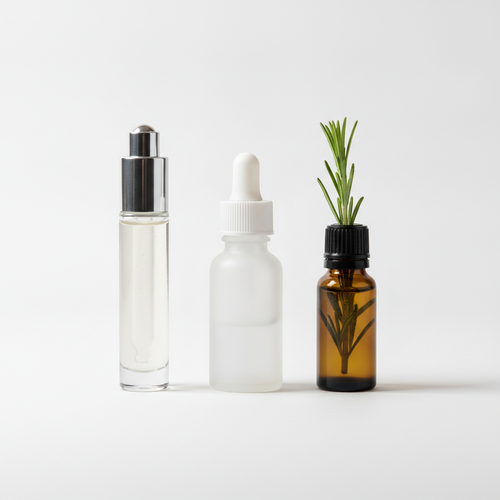
- Dark glass packaging to help protect the oil from light
- Tightly sealed dispensers that reduce air exposure
- Fresh-smelling product with an earthy, natural scent rather than something stale or sharply rancid
If a rosehip oil sits in clear packaging or smells obviously off, skip it. Pigmentation care already requires patience. You don’t want to spend weeks on a compromised formula.
Choose based on your skin, not just the ingredient list
A pure oil sounds appealing, but not every skin type enjoys it. If you’re oily, acne-prone, or new to facial oils, a serum or emulsion containing rosehip oil may be easier to tolerate than applying straight oil every night.
The smartest buy is usually the one you’ll use consistently, in the right amount, without second-guessing your skin every morning.
Your Rosehip Oil Questions Answered
How long does rosehip oil take to help pigmentation
You start a new oil, use it for a week, then check the mirror for a quick change in post-acne marks. That is usually too soon.
Pigment fades on skin time, not product-launch time. Rosehip oil can support a brighter, more even look over several weeks of consistent use, especially with newer post-inflammatory marks. Older sun spots usually take longer. Melasma often needs the most patience and the most structure.
Results also depend on the routine around it. Broad-spectrum sunscreen in the morning, a pigment-focused serum such as niacinamide, and steady barrier care all shape how well rosehip oil performs.
Can rosehip oil clog pores
It can if the formula is rich for your skin or you use too much.
For acne-prone or oily skin, straight oil is often the part that causes trouble, not rosehip itself in every case. Start small. Two drops for the whole face is enough for many people. If that still feels heavy, choose a serum or light cream that uses rosehip oil as one part of the formula instead of applying pure oil on top.
Watch your skin for closed comedones along the cheeks or jawline. That is usually the first sign to reduce the amount or switch textures.
Is it better in the morning or at night
Night is usually the more practical choice.
It layers more easily over toner, essence, and treatment serums, and it does not compete with sunscreen wear. In the morning, too much oil under SPF can cause pilling or extra shine, especially in humid weather.
A simple K-Beauty order works well here: hydrating toner, essence, niacinamide or snail mucin serum, moisturizer, then a small amount of rosehip oil if your skin needs it.
Can I use it around the eyes
Yes, with restraint.
Apply a tiny amount around the orbital bone, not right up to the lash line. Oils travel, and the eye area is quick to show overload. If you are prone to milia, a light eye cream is usually a safer choice than oil in the inner under-eye area.
Rosehip oil tends to make the most sense on dry outer corners, not as an all-purpose eye treatment.
Is rosehip oil enough for melasma
Usually no.
Melasma responds best to a full pigment strategy: strict daily UV protection, heat awareness, and well-chosen brightening ingredients. In that setup, rosehip oil has value as a support step. It helps keep the barrier comfortable while ingredients like niacinamide do more direct work on uneven tone, and snail mucin adds hydration that makes the routine easier to tolerate.
That pairing reflects a core K-Beauty approach. Use several compatible steps with clear roles instead of expecting one ingredient to carry the whole routine.
What’s the biggest mistake people make
They overload the routine and then blame the oil.
I see this often. Someone adds rosehip oil on top of exfoliating acids, retinoids, vitamin C, and acne spot treatments all in the same week. The skin gets irritated, the barrier becomes less stable, and discoloration lingers longer because inflammation stays in the picture.
Rosehip oil works better in a routine with defined jobs for each step. One main brightening treatment. One barrier-support layer. Sunscreen every morning. Then rosehip oil used in the amount your skin can handle.
Rosehip oil can improve the look of uneven tone over time, but it works best as a supporting step inside a calm, consistent routine built around sun protection, targeted actives, and barrier repair.
If you’re choosing rosehip oil for pigmentation, focus on formula quality, fresh packaging, and how it fits with the rest of your routine. Mirai skin stocks Korean skincare from verified Korean distributors, which makes it useful for comparing rosehip oil products alongside niacinamide, snail mucin, and other routine-building staples.