Dealing with stubborn hyperpigmentation-whether it's post-acne marks, sun spots, or melasma-can be a frustrating journey. But the Korean skincare philosophy offers a powerful, intelligent path to clarity. Instead of relying on harsh, aggressive treatments that can compromise your skin, the K-Beauty approach focuses on healing, protecting, and nourishing your skin back to a state of radiant balance.
Your Path to a Luminous Complexion Starts Here
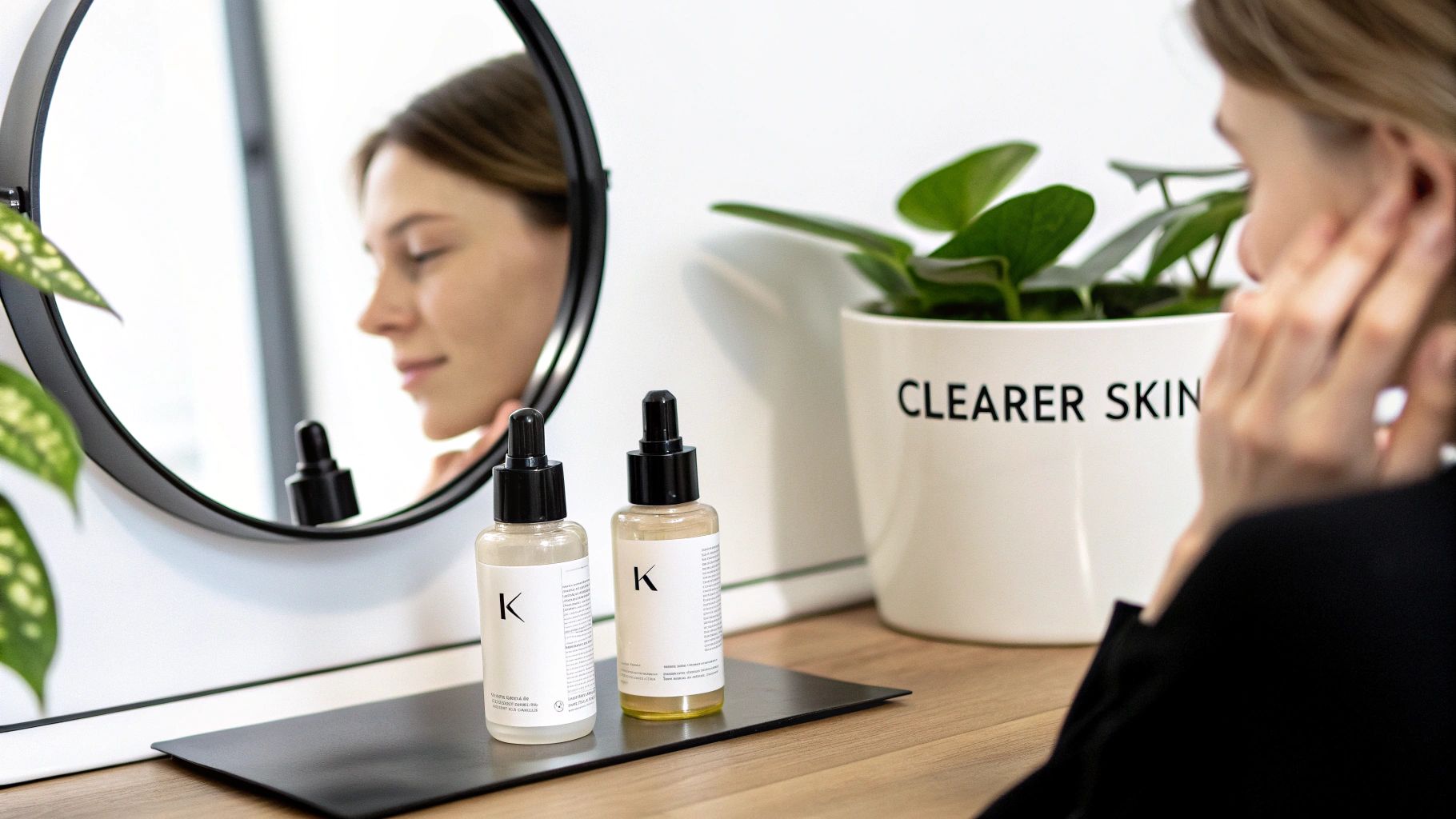
If you're searching for a solution to discoloration from past breakouts, sun exposure, or hormonal shifts, you're part of a massive global movement. The demand for effective hyperpigmentation treatments is surging, with the market valued at USD 5.78 billion and projected to nearly double by 2034. A significant driver of this growth is the increasing sophistication of consumers in the Asia Pacific region, where K-Beauty innovation leads the way. You can read more about these market trends and their drivers.
This expert guide is your roadmap to understanding how the Korean skincare philosophy masterfully addresses hyperpigmentation. Forget the quick-fix mentality that often leads to irritation and a damaged skin barrier. Instead, we'll delve into an approach rooted in patience, consistency, and profound skin nourishment.
The Gentle Power of K-Beauty
At its core, the Korean skincare approach isn't about attacking dark spots; it's about creating an optimal environment for your skin to heal and regenerate. This methodology is built on several key principles that work synergistically to restore balance and revive your natural luminosity.
Here’s what makes the K-Beauty philosophy so effective:
- Barrier-First Healing: The primary focus is calming inflammation and repairing the skin's natural protective barrier. A healthy, resilient barrier is less susceptible to irritation and is your best defense against the environmental and internal stressors that trigger pigmentation.
- Intelligent Layering: K-Beauty routines are renowned for their multiple, lightweight layers of hydrating and treatment-focused products. This technique, known as "skin flooding" or layering, ensures deep ingredient penetration and allows you to target concerns without overwhelming the epidermis.
- Proactive Prevention: While fading existing spots is crucial, preventing new ones from forming is paramount. This involves diligent, non-negotiable sun protection and incorporating smart ingredients that inhibit excess melanin production at its source.
By prioritizing the overall health of your skin, the Korean skincare approach not only diminishes existing hyperpigmentation but also builds resilience against future discoloration. It’s a long-term strategy for achieving and maintaining lasting clarity.
This guide will walk you through the science of melanogenesis, introduce you to the powerhouse ingredients that define Korean skincare for hyperpigmentation, and help you construct a routine that delivers tangible, visible results.
Understanding How Dark Spots Form
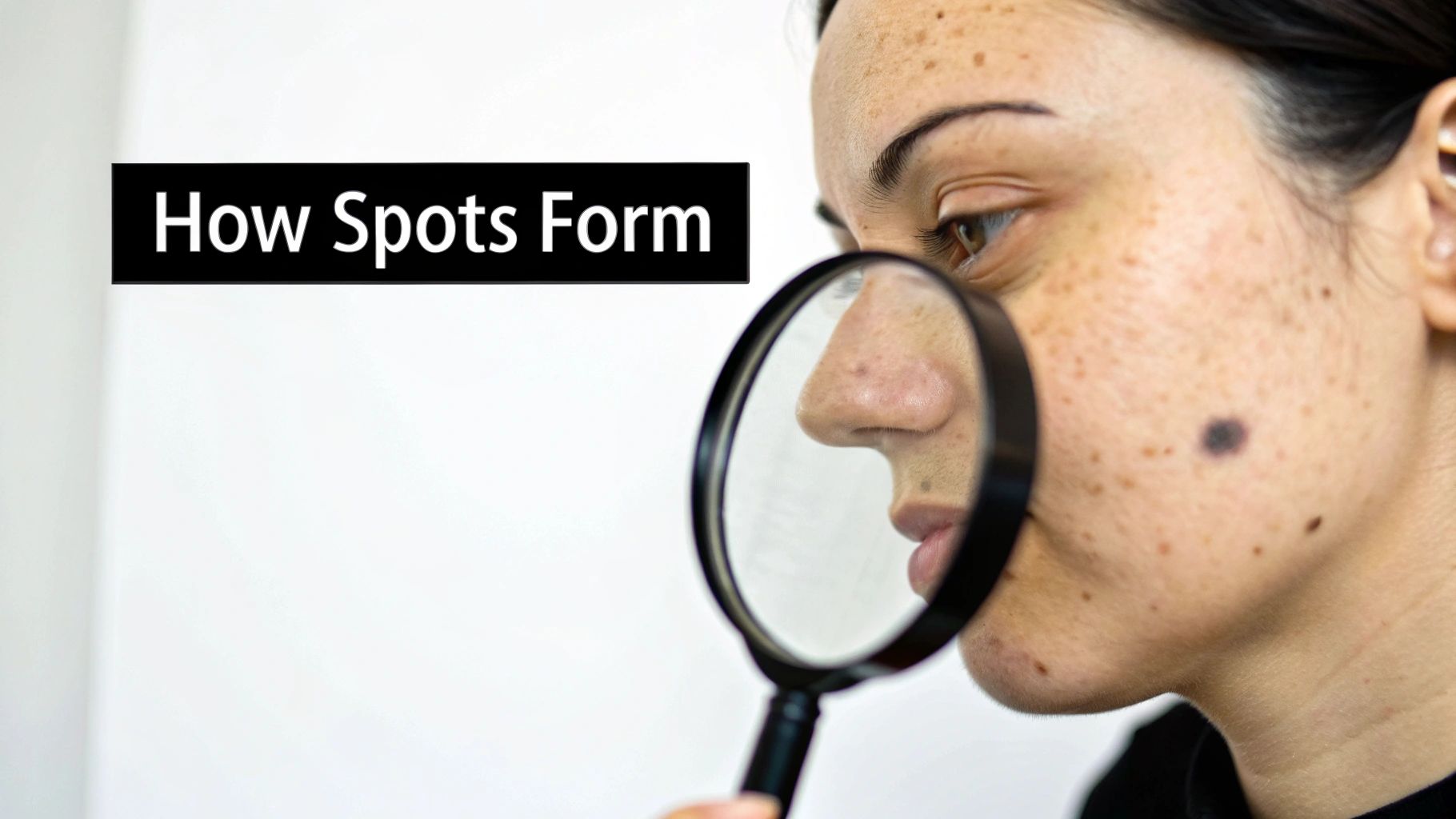
To effectively fade stubborn dark spots, it's essential to understand the biological process happening beneath the skin's surface. Your skin contains specialized cells called melanocytes. Their primary function is to produce melanin-the pigment responsible for the unique color of your skin, hair, and eyes.
Under normal conditions, melanocytes produce melanin at a steady, even rate. However, when triggered by an "alarm signal"-such as UV radiation, inflammation from acne, or hormonal fluctuations-they go into overdrive. This process, called melanogenesis, results in excess melanin being transported to the skin's surface, where it clumps together to form a visible dark spot.
This overproduction of melanin is what we define as hyperpigmentation.
The Main Triggers Behind Dark Spots
While the underlying biology is consistent, hyperpigmentation manifests in several distinct forms. Identifying the specific type you're dealing with is the key to creating a targeted korean skincare hyperpigmentation routine. Knowing the "why" allows you to select the right ingredients to interrupt the specific pigment pathway.
There are three primary types of hyperpigmentation:
- Post-Inflammatory Hyperpigmentation (PIH): These are the discolored marks left behind after an inflammatory event has healed. Common culprits include acne, insect bites, or even aggressive skin treatments. As the skin repairs itself, it can overproduce melanin, leaving a flat red, purple, or brown spot.
- Sun Spots (Solar Lentigines): Often referred to as age spots or liver spots, these are a direct result of cumulative sun exposure. They typically appear as small, well-defined brown macules on sun-exposed areas like the face, hands, and shoulders.
- Melasma: This type presents as larger, symmetrical patches of brown or greyish-brown discoloration, most commonly on the cheeks, forehead, and upper lip. Melasma is notoriously stubborn and is heavily influenced by hormonal changes, making it common during pregnancy (chloasma) or for those using hormonal contraceptives.
Identifying your specific type of hyperpigmentation is a game-changer. It transforms your approach from a generic "dark spot treatment" to a precise strategy, ensuring you use ingredients that target the exact pathway causing your discoloration.
Why Your Skin Type Matters
Your natural skin tone, or Fitzpatrick type, significantly influences how hyperpigmentation presents and how it should be treated. Melanin's primary biological function is to protect the skin's DNA from UV damage.
Deeper skin tones naturally have more active melanocytes. While this provides better intrinsic sun protection, it also makes the skin more susceptible to post-inflammatory hyperpigmentation. A minor blemish that might fade quickly on fair skin can easily leave a dark mark on melanin-rich skin that persists for months.
This is where the gentle, barrier-centric philosophy of Korean skincare excels. Instead of using aggressive treatments that risk further inflammation and potential darkening, the K-Beauty approach prioritizes soothing ingredients and consistent, gentle actives. It’s a methodology that safely and effectively fades discoloration without compromising skin health, making it ideal for all skin tones struggling with hyperpigmentation.
Meet Your K-Beauty Hyperpigmentation Fighters
When it comes to treating hyperpigmentation, the Korean skincare approach is not about a single, aggressive ingredient. Instead, it's about assembling a team of specialists. Each ingredient has a unique mechanism of action, and they work in synergy to gently restore clarity and balance. Understanding these roles is the secret to building an efficacious routine.
This philosophy is making waves globally. The Asia-Pacific region, led by innovators in South Korea, is the fastest-growing market for hyperpigmentation solutions, valued at over USD 1.2 billion. This growth is fueled by the worldwide demand for K-beauty and a growing appreciation for targeted, science-backed ingredients. You can explore the research behind this skincare market growth.
Let's break down the key players you need to know.
Vitamin C: The Antioxidant Protector
Consider Vitamin C (specifically L-Ascorbic Acid and its stable derivatives) your skin’s frontline defense. Its primary mission is to neutralize free radicals generated by UV rays and pollution, which trigger inflammation and signal melanogenesis. By preventing this oxidative stress, Vitamin C is a preventative powerhouse.
Furthermore, Vitamin C directly inhibits the activity of tyrosinase, the key enzyme required for melanin synthesis. Less tyrosinase activity means less excess pigment production, leading to a brighter, more even complexion over time. Its role in collagen synthesis is an added benefit for overall skin health.
Because it's a potent antioxidant, Vitamin C is ideal for your morning routine, where it works synergistically with your sunscreen to provide comprehensive protection against daily environmental aggressors.
Key Takeaway: Vitamin C is your essential defender. It protects against the primary triggers of hyperpigmentation while actively inhibiting melanin production, making it a non-negotiable for anyone concerned with sun damage or dullness.
Niacinamide: The Great Balancer
If Vitamin C is the protector, Niacinamide is the intelligent multi-tasker that regulates multiple skin pathways. This form of Vitamin B3 is a cornerstone of korean skincare hyperpigmentation treatments due to its versatility and exceptional tolerance across all skin types.
Niacinamide has a unique mechanism for addressing hyperpigmentation. Rather than inhibiting tyrosinase, it works by blocking the transfer of melanosomes (pigment packets) from the melanocytes to the surrounding keratinocytes in the epidermis. Think of it as a traffic controller, preventing the excess melanin from reaching the surface where it becomes visible.
This function makes it an excellent partner for other brightening ingredients. Additionally, Niacinamide strengthens the skin barrier, reduces inflammation, and regulates sebum-making it particularly effective for treating the post-inflammatory hyperpigmentation (PIH) that follows acne breakouts.
Tranexamic Acid: The Targeted Interrupter
A more recent but highly effective player, Tranexamic Acid is the specialist for stubborn concerns like melasma and persistent post-inflammatory erythema (PIE). It works by inhibiting plasmin, which helps calm the skin and interrupt the inflammatory pathways that signal melanocytes to produce excess pigment, particularly after UV exposure.
This targeted approach makes it incredibly effective for hormonally-influenced or sun-induced pigmentation that may be resistant to other treatments. It’s a focused solution for some of the most challenging forms of hyperpigmentation.
Gentle Exfoliants: The Resurfacing Crew
Chemical exfoliants like Alpha Hydroxy Acids (AHAs) and Polyhydroxy Acids (PHAs) work on the skin’s surface to accelerate desquamation-the natural shedding of dead skin cells. They gently dissolve the intercellular "glue" holding pigmented cells to the surface, revealing the brighter, more even-toned skin beneath.
- Glycolic Acid: As the AHA with the smallest molecular size, it penetrates effectively to address sun damage and improve overall skin texture.
- Lactic Acid: A gentler AHA that also acts as a humectant, making it an excellent choice for dry or sensitive skin.
- Mandelic Acid: Its larger molecule size ensures slower, more superficial penetration, making it ideal for sensitive and melanin-rich skin prone to PIH.
These ingredients are essential for accelerating the visible fading of existing dark spots while other actives work on a cellular level.
Supporting Stars: Alpha Arbutin and Licorice Root
Beyond the primary actives, Korean skincare is known for incorporating a strong supporting cast of botanical and lab-derived ingredients that enhance the overall brightening effect.
- Alpha Arbutin: A stable, gentle derivative of hydroquinone, Alpha Arbutin also functions as a tyrosinase inhibitor. It is highly effective at fading discoloration without the potential for irritation associated with more aggressive agents.
- Licorice Root Extract: This botanical extract contains glabridin, a compound that both inhibits tyrosinase and provides potent anti-inflammatory benefits. It helps soothe the skin, preventing the formation of new PIH, especially after breakouts.
This multi-pronged strategy-protecting, balancing, interrupting, and resurfacing-is the hallmark of an effective K-beauty approach to achieving lasting skin clarity.
To help you select the right ingredients for your concerns, this table matches the top K-Beauty fighters with the types of discoloration they are best suited to address.
Your Guide to K-Beauty Hyperpigmentation Fighters
| Ingredient | Primary Action | Best For (PIH, Melasma, Sun Spots) | Extra Benefit |
|---|---|---|---|
| Vitamin C | Antioxidant defense, inhibits melanin production | Sun Spots, general dullness | Boosts collagen, enhances SPF protection |
| Niacinamide | Blocks pigment transfer to skin's surface | Post-Inflammatory Hyperpigmentation (PIH) from acne | Strengthens skin barrier, controls oil |
| Tranexamic Acid | Interrupts pigment-triggering pathways | Melasma, stubborn sun spots, post-inflammatory erythema (PIE) | Calms redness and sensitivity |
| Azelaic Acid | Reduces inflammation, slows melanin production | PIH, Melasma | Fights acne, reduces redness |
| Kojic Acid | Inhibits the tyrosinase enzyme | Sun Spots, Melasma | Potent antioxidant properties |
| Retinoids | Speeds up skin cell turnover | All types, especially sun spots and uneven texture | Anti-aging, smooths fine lines |
| AHAs/BHAs | Exfoliates pigmented surface cells | Fading existing spots of all types | Unclogs pores, refines skin texture |
Using this table, you can identify which ingredients align with your specific skin concerns, helping you build a smarter, more targeted routine for clear, even-toned skin.
How to Build Your Anti-Hyperpigmentation Routine
Understanding the key ingredients is the first step. The second, more crucial step, is assembling them into a consistent daily routine. This is the heart of the Korean skincare hyperpigmentation philosophy: a synergistic, well-structured routine will always outperform a collection of products used inconsistently.
A properly constructed routine ensures that each step prepares the skin for the next, maximizing absorption and efficacy. This thoughtful, layered approach is precisely why K-Beauty is so effective at delivering a clear, luminous complexion.
The strategy is built on three core pillars: Protect, Balance, and Resurface.
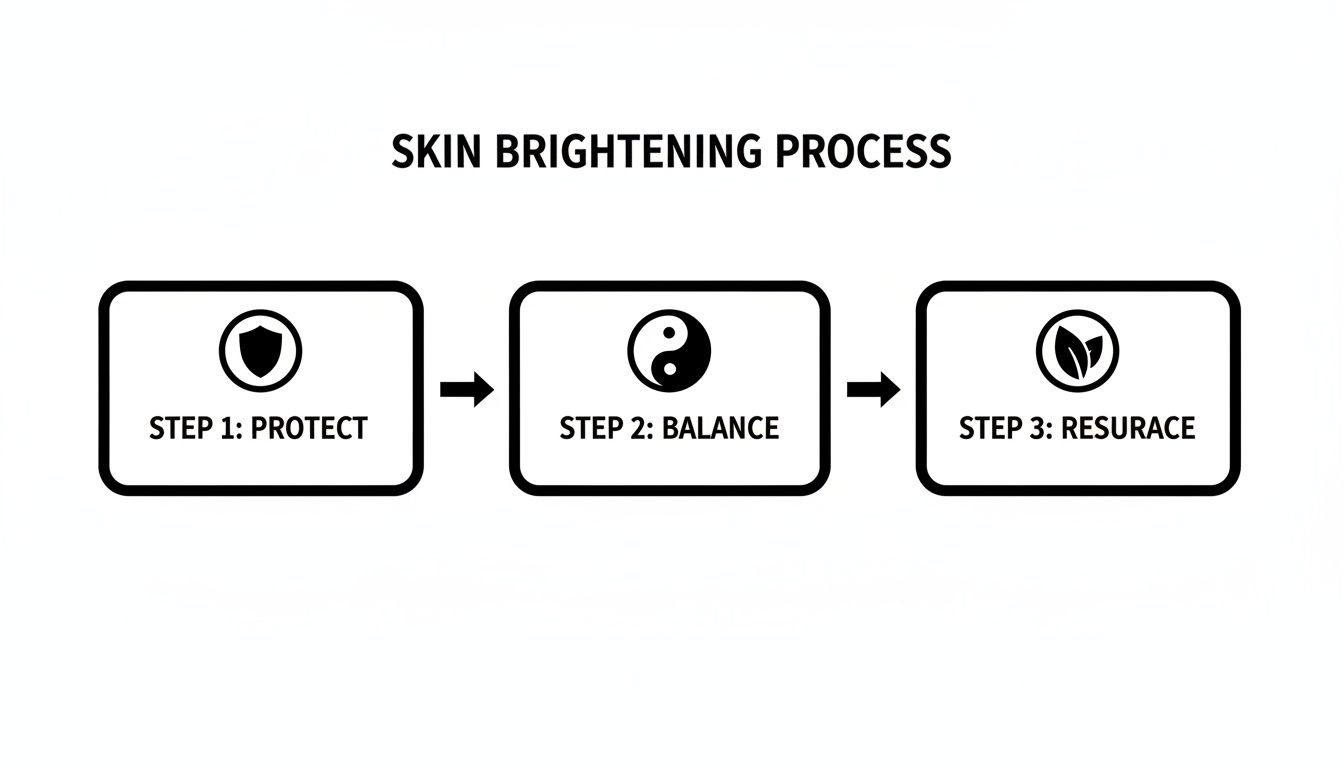
This framework illustrates the synergy required: daily defense against triggers, targeted treatments to restore cellular balance, and gentle resurfacing to reveal brighter skin.
Your Morning Routine: A Blueprint for Protection
The primary objective of your AM routine is to shield your skin from the daily onslaught of UV radiation and environmental pollutants-the main catalysts for melanogenesis.
1. Gentle Cleanse: Start with a hydrating, low-pH cleanser. In the morning, you only need to remove sweat and residual products from the night before without stripping your skin's vital lipid barrier.
2. Hydrating Toner or Essence: This quintessential K-Beauty step is non-negotiable. Applying a watery toner or essence to damp skin immediately boosts hydration, balances your skin’s pH, and primes it for optimal serum absorption.
3. Antioxidant Serum (Vitamin C): Now, introduce your first active. A Vitamin C serum is your AM MVP, serving as a second line of defense beneath your sunscreen. It neutralizes the free radicals that can lead to the formation of new hyperpigmentation.
4. Barrier-Supporting Moisturizer: Lock in hydration and support your skin barrier with a well-formulated moisturizer. Look for ingredients like ceramides, panthenol, or centella asiatica. A strong, healthy skin barrier is less prone to the inflammation that can trigger pigmentation.
5. Broad-Spectrum Sunscreen (Non-Negotiable): This is the single most critical step in any skincare routine, especially one targeting hyperpigmentation. Without it, your other efforts are futile. Apply a generous amount of at least SPF 30 every single day.
Your Evening Routine: A Strategy for Repair and Renewal
At night, your skin enters its natural repair and regeneration cycle. This is the optimal time to use potent treatment products that resurface, renew, and inhibit melanin production while you sleep. The demand for these nighttime heroes is immense, especially in South Korea, where the hyperpigmentation treatment market reached USD 16.6 million in 2023 and is projected to climb to USD 29.2 million by 2030, driven by K-Beauty's global influence. You can discover more insights about this rapidly growing market.
1. Double Cleanse: Begin with an oil-based cleanser to dissolve sunscreen, makeup, and sebum. Follow with a water-based cleanser to thoroughly purify the skin, leaving a clean canvas for your treatment products.
2. Exfoliating Toner (2-3 Times Weekly): On alternate nights, replace your hydrating toner with a gentle chemical exfoliant containing AHAs like glycolic or lactic acid. This step helps slough off pigmented surface cells, enhancing the penetration and efficacy of your serums.
3. Treatment Serum: This is the core treatment step. Apply a targeted serum formulated with ingredients like niacinamide, tranexamic acid, or alpha arbutin to address hyperpigmentation from multiple angles.
Pro Tip: If using retinoids, apply them at this stage to dry skin. As both retinoids and exfoliating acids can be sensitizing, it's best to use them on alternate nights to avoid compromising your skin barrier.
4. Soothing Moisturizer: Finish with a nourishing moisturizer to seal in your active ingredients and support your skin’s overnight recovery process. Remember the golden rule of layering: from thinnest to thickest texture. This ensures each product is properly absorbed for maximum benefit.
The Single Most Important Step for Fading Dark Spots

If you take only one piece of advice from this guide, let it be this: sunscreen is the most critical component of any korean skincare hyperpigmentation routine. All the potent serums and treatments you apply will be fighting a losing battle without daily, dedicated sun protection.
Attempting to fade hyperpigmentation without daily sunscreen is like trying to dry a floor while the shower is still running. UV radiation is the primary trigger for melanogenesis. Every moment of unprotected sun exposure can darken existing spots and stimulate the formation of new ones, effectively undoing all your progress.
Why Sunscreen Is Your Best Defense
Consistent sun protection is the absolute foundation of your routine. By shielding your skin from UV rays, you create a stable environment where your treatment products can effectively work on repairing past damage. You are stopping the problem at its source.
For effective protection, dermatologists universally recommend a broad-spectrum sunscreen with an SPF of 30 or higher. "Broad-spectrum" is essential, as it protects you from both types of damaging UV rays:
- UVA Rays: The "aging" rays. They penetrate deep into the dermis, causing long-term damage like collagen degradation and playing a significant role in hyperpigmentation and melasma.
- UVB Rays: The "burning" rays. They are a primary cause of sunburn and a major trigger for melanin production.
Daily sun protection creates the stable environment necessary for your brightening ingredients to repair existing damage without being constantly undermined by new UV-triggered melanogenesis. It is the ultimate preventative measure.
Mineral vs. Chemical Sunscreens: A Quick Breakdown
When selecting a sunscreen, you will encounter two main categories: mineral and chemical. Neither is inherently superior; the best sunscreen is the one you will wear consistently every single day.
Mineral Sunscreens:
These formulations use physical filters like zinc oxide and titanium dioxide. They work by forming a shield on the skin's surface that reflects and scatters UV rays. They are often preferred by individuals with sensitive or acne-prone skin due to their lower potential for irritation.
Chemical Sunscreens:
These contain organic compounds that absorb UV radiation, convert it into heat, and release it from the skin. They typically offer a more lightweight texture and absorb without leaving a white cast, making them an excellent choice for deeper skin tones.
The K-Beauty Sunscreen Advantage
This is an area where Korean skincare innovation truly excels. For years, Korean brands have been at the forefront of formulating cosmetically elegant sunscreens that feel more like luxurious moisturizers than traditional sunblock. They are beloved globally for their lightweight textures that are far removed from the thick, greasy formulas of the past.
Furthermore, these sunscreens are often fortified with beneficial ingredients like niacinamide, centella asiatica, and hyaluronic acid, providing hydrating and soothing benefits alongside powerful UV protection. Their superior user experience encourages consistent daily application-a cornerstone of the K-Beauty philosophy.
Common Mistakes That Can Make Your Hyperpigmentation Worse
Achieving an even, luminous complexion is as much about avoiding pitfalls as it is about applying the right products. You can have the best korean skincare hyperpigmentation products, but a few common missteps can completely sabotage your progress and even worsen the condition.
One of the most detrimental mistakes is attempting to physically "scrub away" dark spots. This is a myth. Harsh physical scrubs create micro-tears in the skin, leading to inflammation. This irritation is a direct trigger for your skin's defense mechanisms, which can result in more post-inflammatory hyperpigmentation.
The K-Beauty philosophy is rooted in gentle, respectful care. Treating your skin harshly sends it into a state of alarm, which almost always exacerbates discoloration. Real progress comes from calming and supporting the skin, not attacking it.
The Problem of Product Overload
Another common error is piling on too many potent active ingredients simultaneously. While tempting, combining high-strength retinoids, multiple acids, and vitamin C without a strategic approach can overwhelm and compromise your skin barrier.
A damaged barrier cannot effectively protect itself, leading to increased sensitivity, redness, and inflammation-all factors that can worsen hyperpigmentation.
Be particularly cautious with these combinations:
- Retinoids and AHAs/BHAs: Using these in the same routine is often too aggressive for most skin types. It's safer to alternate them on different nights.
- Multiple Strong Acids: Layering glycolic acid, salicylic acid, and lactic acid at once is a recipe for irritation. Stick to one primary exfoliating acid per routine.
Forgetting That Patience is Everything
Perhaps the most common mistake is expecting overnight results. Fading hyperpigmentation is a marathon, not a sprint. Melanin is produced in the deeper layers of the epidermis, and it takes time for the treated cells to migrate to the surface and shed.
Visible, lasting change requires consistency over several months. This is where the Korean skincare mindset excels. By patiently applying your products daily and diligently protecting your skin with sunscreen, you create the optimal environment for healing. Trust the process, and you will be rewarded with the clear, radiant skin you're working towards.
Answering Your Top Hyperpigmentation Questions
Navigating the world of active ingredients and complex routines can spark questions. To help you build your korean skincare hyperpigmentation routine with confidence, we're addressing some of the most common queries from savvy K-Beauty enthusiasts.
How Long Until I See Results?
In Korean skincare, patience and consistency are paramount. While you may notice an initial improvement in skin brightness and hydration within 4-6 weeks, significantly fading established hyperpigmentation is a longer-term process.
For most individuals, achieving a noticeable reduction in dark spots takes a consistent 3-6 months. The exact timeline depends on the depth of the pigment, how long the spot has been present, and-most critically-your diligence with daily sunscreen application.
Can I Use Vitamin C and Niacinamide Together?
Yes, you can and should! This is a powerhouse combination for tackling discoloration. The outdated myth that these two ingredients inactivate each other has been thoroughly debunked by modern cosmetic science. In well-formulated products, they work synergistically.
Think of it as a one-two punch: Vitamin C provides potent antioxidant protection against new damage, while Niacinamide strengthens the skin barrier and inhibits pigment transfer to the skin's surface. Using them in the same routine provides a more comprehensive strategy for achieving an even, glowing complexion.
Is Snail Mucin Good for Fading Dark Spots?
Snail Mucin is an excellent supportive ingredient in a hyperpigmentation routine, but it is not a primary pigment inhibitor like Vitamin C or Tranexamic Acid. Its true strength lies in its remarkable ability to hydrate, calm inflammation, and accelerate skin repair.
Think of Snail Mucin as creating the ideal healing environment. By soothing the skin, especially after an acne breakout, it helps prevent the initial inflammation that leads to post-inflammatory hyperpigmentation (PIH). This allows your potent brightening ingredients to work more effectively on a healthy, resilient canvas.
Ready to build a routine that delivers results? The key is sourcing authentic, high-quality products that are expertly formulated. At Mirai Skin, we've curated a collection of the best K-Beauty has to offer for hyperpigmentation, so you can shop with confidence and begin your journey to clear, radiant skin. Explore our curated hyperpigmentation collection at Mirai Skin today.