If you're wondering how to use a serum, the short answer is to apply a pea-sized amount to damp skin right after cleansing and toning, but always before your moisturizer. It's a simple step, but it ensures these powerful, concentrated formulas can sink in deep to target specific issues like aging, dullness, or dehydration. This is what makes them the absolute cornerstone of any effective K-Beauty routine.
Why Serums Are a Skincare Game Changer
Welcome to the heart of any solid Korean skincare routine: the serum. If you’ve ever felt overwhelmed by all the options or just weren't sure how to get the most out of these potent little bottles, you're definitely not alone. Think of this as your personal guide from the experts at Mirai Skin-we're here to move past the generic advice and really break down how these concentrated elixirs work their magic.
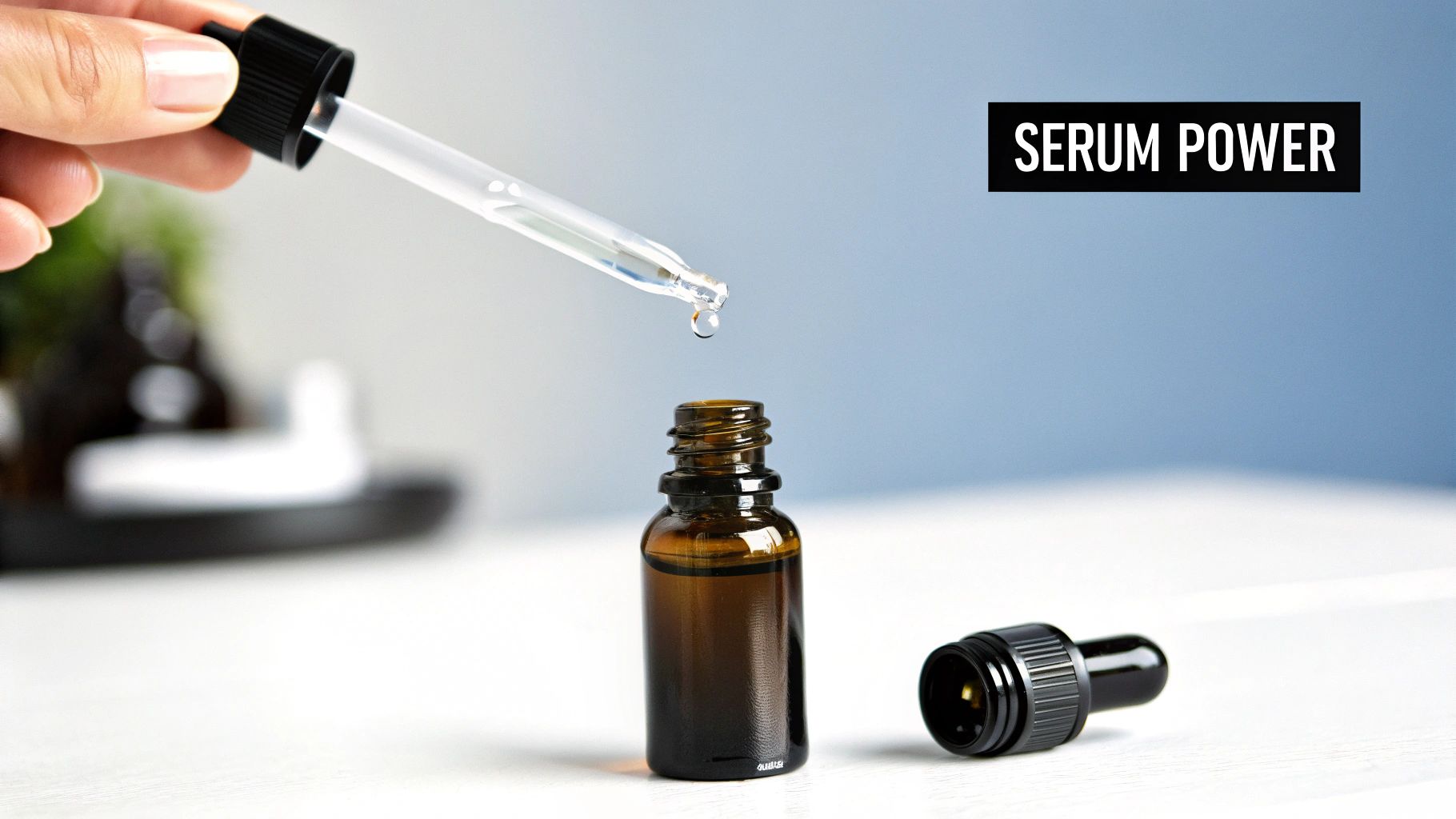
Unlike a moisturizer, which primarily hydrates the skin's surface, serums are built differently. They’re formulated with smaller molecules and a higher concentration of active ingredients like Retinol, Niacinamide, or Snail Mucin. This unique structure allows them to penetrate deeper into the epidermis, delivering targeted, noticeable results where they matter most.
Whether you're looking to soften fine lines, fade post-acne marks, or combat persistent dryness, there’s a serum out there designed specifically for your goals. This focused approach is precisely why serums have become a non-negotiable step in modern, results-driven skincare.
The Power of Targeted Treatment
At their core, serums are problem-solvers. This is the strategic part of your routine where you can get specific and customize your approach with powerhouse ingredients.
- For Anti-Aging: Look for ingredients like Retinol and Peptides. They work to encourage collagen production, accelerate cell turnover, and smooth out your skin's texture.
- For Brightening: Actives such as Niacinamide and Vitamin C are brilliant for fading hyperpigmentation and restoring a luminous, even-toned complexion.
- For Hydration: Powerhouses like Hyaluronic Acid and Snail Mucin are masters at drawing moisture deep into the skin, leaving you with that plump, "glass skin" finish.
The real magic of a serum isn't just in the ingredients list, but in its delivery system. Because they're so lightweight and absorb in a flash, serums are the perfect vehicle to carry potent actives exactly where your skin needs them most, setting the stage for every product you apply afterward.
This guide will walk you through picking the right actives, mastering the correct application order, and perfecting the art of layering. We’re here to help you turn your routine from simple to strategic, so you can finally achieve the visible, glowing results you’ve been looking for.
Choosing the Right Serum for Your Skin Goals
Picking the perfect serum has nothing to do with chasing viral trends-it's about understanding the powerhouse active ingredients inside the bottle. Think of this as your personal ingredient decoder, designed to match your biggest skin concerns to the ingredients that will actually get the job done.
 Vitamin C, and Hyaluronic Acid.">
The market is flooded with options, and it's easy to get overwhelmed. But if you look closer, you'll see that brands formulate for specific needs-like anti-aging, brightening, or hydration. This is a direct response to consumer demand, a trend confirmed by market insights on skincare serum segmentation.
Knowing this simplifies things. Your search for the right serum is really a search for the right key ingredient.
For Tackling Fine Lines and Boosting Firmness
If your main goal is to address signs of aging, like a loss of elasticity or the appearance of fine lines, a few ingredients are non-negotiable. These actives work on a cellular level, encouraging skin renewal and supporting its underlying structure.
- Retinol: This Vitamin A derivative is the gold standard for promoting cell turnover. It helps diminish the look of wrinkles, refines skin texture, and can even help with breakouts.
- Peptides: Think of these as the building blocks for proteins like collagen and elastin. A peptide serum signals your skin to produce more of these firming proteins, leading to a plumper, more youthful appearance.
A classic scenario is someone in their late 30s noticing their skin doesn't bounce back like it used to. By adding a gentle Retinol serum to their nighttime routine a few times a week, they can kickstart that renewal process. A daily peptide serum then provides consistent support for skin firmness.
For Fading Hyperpigmentation and Achieving Radiance
Dullness, sun spots, or those stubborn marks left behind by old breakouts can get in the way of a truly radiant complexion. This is where brightening serums come in; they're formulated to inhibit excess melanin production and lift discoloration.
Pro Tip: When you're targeting hyperpigmentation, consistency is everything. It takes time for dark spots to fade, so using your brightening serum daily-especially in the morning, followed by SPF-is the only way to see real progress.
The two heroes in this category are easily Vitamin C and Niacinamide.
- Vitamin C: This potent antioxidant does more than just protect your skin from environmental damage. It's a superstar at brightening your overall skin tone and fading dark spots. An L-Ascorbic Acid serum is a fantastic pick for your morning routine to get that protection all day long.
- Niacinamide (Vitamin B3): A true multi-tasker, Niacinamide helps reduce the transfer of pigment within the skin, which visibly fades discoloration. It also strengthens the skin barrier, regulates oil, and calms redness, making it a brilliant choice for almost any skin type.
For Deep, Lasting Hydration and a Healthy Barrier
Dehydrated skin often feels tight, looks dull, and can make fine lines appear more prominent. The goal here isn't just to add moisture but to help your skin hold onto it for that coveted "glass skin" glow.
- Hyaluronic Acid: This humectant is famous for its ability to hold up to 1,000 times its weight in water. It pulls moisture from the air and from deeper layers of your skin to the surface, giving you an immediate plumping effect. It’s a perfect fit for every skin type, from dry to oily.
- Snail Mucin: A beloved K-Beauty staple for a reason. Snail Mucin is packed with goodies like glycoproteins, hyaluronic acid, and glycolic acid. It's a champion at hydrating, repairing a damaged skin barrier, and soothing irritation, making it a go-to for anyone with sensitive or compromised skin.
For example, if you have combination skin that feels oily but also tight, that's a classic sign of dehydration. A lightweight Hyaluronic Acid serum applied to damp skin will replenish water levels without feeling heavy or greasy, bringing your complexion back into balance.
Learning how to use serums correctly starts with picking one that aligns with your ultimate skin goals. By reading the label for these key actives, you can confidently select products from the Mirai Skin collection that will deliver real, visible results.
Your Day and Night Serum Application Ritual
Knowing when and how to apply your serum is just as important as the active ingredients inside the bottle. Get the timing, technique, and placement right, and you’ll see a world of difference in your results. Let’s break down how to weave serums into your morning and evening K-Beauty rituals for maximum impact.
The golden rule of skincare layering is simple: apply products from the thinnest consistency to the thickest. Serums are typically lightweight and water-based, so their rightful place is always after cleansing and toning but before heavier creams and moisturizers. This ensures those potent actives can actually penetrate your skin without being blocked by thicker formulas.
The Morning Ritual: Protecting Your Skin
Your morning routine is all about protection. Think of it as putting on armor before you face the day’s environmental stressors, like UV rays and pollution. Your AM serum should be your first line of defense.
This is where antioxidant-rich serums truly shine. An ingredient like Vitamin C is a morning superstar because it helps neutralize the free radicals caused by sun exposure, which in turn boosts the power of your sunscreen. When you use a Vitamin C serum, you’re not just brightening your skin over time-you’re actively protecting it all day long.
Think of your AM serum and your sunscreen as the ultimate power couple. The serum works from within to fight off damage, while the sunscreen provides a crucial shield on the surface. Together, they offer a much stronger defense against premature aging than either could alone.
So, how much do you need? More is definitely not better. For most serums, a single pea-sized amount is plenty to cover your entire face and neck. Overloading your skin can leave a sticky residue, prevent other products from absorbing properly, and ultimately just wastes your precious product.
The way you apply it matters, too. Dispense the serum onto your fingertips, then gently pat or press it into your skin. Aggressively rubbing can pull at your skin and cause unnecessary irritation. That gentle patting motion actually helps with absorption and stimulates blood flow, making your whole routine more effective.
The Nighttime Ritual: Repairing and Restoring
If your morning routine is about defense, your evening ritual is all about repair and regeneration. As you sleep, your skin enters its natural restorative cycle, making it the perfect time to deliver powerful, corrective ingredients.
This is the ideal window for actives that can make your skin more sensitive to sunlight. Ingredients like Retinol, for example, are best used overnight. Retinol is a powerhouse that accelerates cell turnover, helping to build collagen and soften fine lines, but it can degrade in sunlight and increase photosensitivity. Using it at night lets it work its magic undisturbed.
Other fantastic PM options include:
- Exfoliating Acids (AHAs/BHAs): These work to slough off dead skin cells and refine texture, revealing brighter, smoother skin by morning.
- Peptides: These little powerhouses support your skin's natural repair processes, helping to firm and rebuild its structure while you rest.
- Snail Mucin: If your skin barrier needs some love, a snail mucin serum is brilliant for calming inflammation and deeply hydrating overnight.
The application is the same: after cleansing and toning, gently pat a pea-sized amount onto your skin. Here’s a pro tip: avoid applying serums to bone-dry skin. For the best absorption-especially with hydrating heroes like Hyaluronic Acid-your skin should be slightly damp. This allows the serum to lock in that extra moisture, leaving you with a plumper, more hydrated result.
By strategically splitting your serums between your AM and PM routines, you can safely target multiple concerns without overwhelming your skin. It’s a thoughtful approach that ensures every single drop of your authentic Mirai Skin K-Beauty products is working its hardest for that healthy, radiant glow.
Mastering Skincare Layering and Ingredient Pairing
Using more than one serum can be a game-changer for tackling multiple skin concerns at once, but only if you get the layering and pairing right. The art of layering isn't just about slapping products on your face; it's about creating a smart, synergistic routine where every formula helps the others work better without causing irritation.
The most important rule is simple but critical: always apply your serums from the thinnest texture to the thickest.
Think of it this way: a watery Hyaluronic Acid serum needs a clear path to sink into your skin. If you apply a thicker, gel-like Niacinamide formula first, you're essentially blocking the way. Applying them out of order is like trying to water a plant after you've already covered the soil with a plastic sheet-the good stuff just won't get through.
Once you’ve got the texture rule down, it's time to think about the chemistry of your routine: which ingredients play well together, and which ones need to be kept apart.
This visual guide breaks down the core concepts of how to use serums, focusing on the correct amount, application technique, and order.
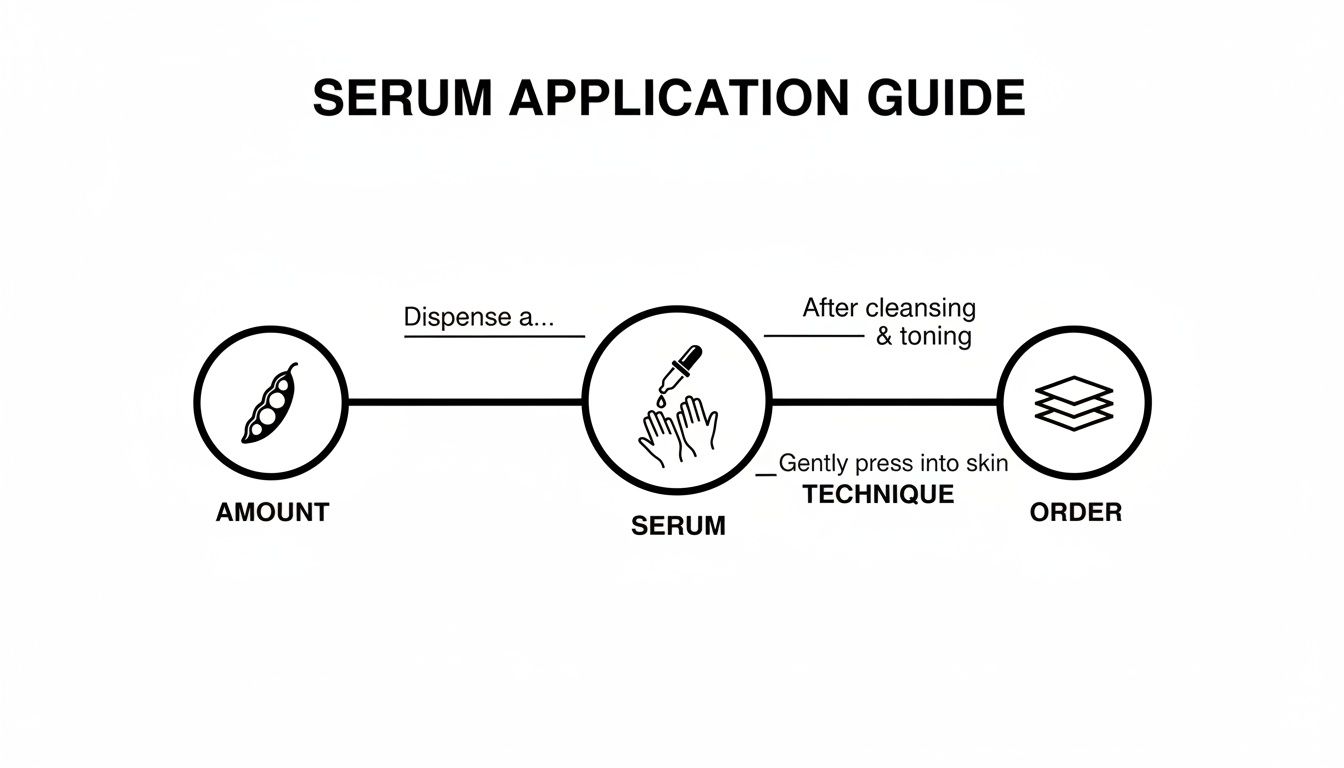
Mastering serum application really comes down to these three simple pillars. An effective routine doesn't need to be complicated.
Building Powerful Ingredient Partnerships
Some ingredient duos are true power couples, amplifying each other's benefits to deliver incredible results. These are the pairings K-Beauty experts swear by for creating balanced, high-performing routines.
- Hyaluronic Acid + Retinol: Retinol is a superstar for boosting cell turnover, but it has a reputation for being drying. Pairing it with Hyaluronic Acid is a classic move to combat that. Just apply your Hyaluronic Acid serum to damp skin first to create a hydrated cushion, then follow up with your Retinol to lock in moisture and buffer potential irritation.
- Vitamin C + Vitamin E & Ferulic Acid: This is the ultimate antioxidant dream team. Vitamin E helps stabilize the notoriously unstable Vitamin C, making it far more effective, while Ferulic Acid actually doubles the protective power of both against environmental damage. Many top-tier Vitamin C serums, like those you’ll find at Mirai Skin, already come formulated with this powerful trifecta.
- Niacinamide + Almost Anything: Think of Niacinamide as the friendly, easygoing team player of the skincare world. It gets along with nearly every active-including Retinol, Vitamin C, and exfoliating acids. Its main job is to support and strengthen the skin barrier, which in turn helps your skin better tolerate those more potent ingredients.
A perfect real-world scenario is someone wanting to tackle both hyperpigmentation and fine lines. They could use a Vitamin C serum in the morning for brightening and antioxidant protection, then use a Niacinamide serum followed by a Retinol serum at night. This smart separation lets each active work its magic without any conflicts.
Navigating Ingredients You Should Not Mix
Just as some ingredients are better together, others need to be kept separate to avoid redness, irritation, or even canceling each other out. Knowing which ingredients to avoid mixing in the same routine is just as important as knowing which ones to pair.
The most common clashes happen between potent actives. For instance, using a high-concentration Vitamin C (especially L-Ascorbic Acid) in the same routine as Retinol can be a recipe for sensitivity. Both are powerful ingredients that can be irritating on their own; using them together can easily overwhelm your skin barrier.
To help you build a safe and effective routine, here’s a quick guide to common ingredient interactions.
Serum Ingredient Compatibility Guide
| Ingredient | Pairs Well With | Use With Caution or Avoid |
|---|---|---|
| Vitamin C | Vitamin E, Ferulic Acid, Hyaluronic Acid, SPF | Retinol (can increase irritation), AHAs/BHAs (can destabilize pH), Benzoyl Peroxide (oxidizes Vit C) |
| Retinol | Hyaluronic Acid, Niacinamide, Ceramides, Peptides | Vitamin C, Benzoyl Peroxide, AHAs/BHAs (risk of over-exfoliation and severe irritation) |
| AHAs/BHAs | Hyaluronic Acid, Niacinamide, Ceramides | Retinol (alternate nights), Vitamin C (can increase sensitivity), other exfoliants |
| Niacinamide | Retinol, Vitamin C, Hyaluronic Acid, AHAs/BHAs | Generally compatible with most ingredients. It's a team player! |
| Benzoyl Peroxide | Niacinamide, Hyaluronic Acid, Ceramides | Retinol (can deactivate it), Vitamin C (can oxidize it), other exfoliants |
This table isn't about scaring you away from great ingredients, but rather about using them smartly. Often, the best solution is simple: use one active in the morning and the other at night, or alternate them on different evenings. This gives each product the space it needs to work effectively without causing chaos for your skin.
By understanding these fundamental rules of layering and pairing, you can confidently move beyond a simple, one-serum routine. You’ll be able to build a multi-step regimen that safely targets your unique skin goals and truly maximizes the benefits of every single product you use.
Common Serum Mistakes and How to Fix Them
Even with the perfect serum in hand, a few simple missteps can get in the way of seeing the results you’re hoping for. Let's walk through the most frequent mistakes people make so you can ensure your investment in authentic K-Beauty truly pays off.
One of the biggest culprits is simply using too much product. It's tempting to think that slathering on more serum will lead to better or faster results, but a pea-sized amount is usually all you need for your entire face. Over-applying not only wastes your precious product but can also leave a sticky residue, overwhelm your skin, and even lead to clogged pores.
Think of it like seasoning a dish-a little goes a long way. This approach respects the highly concentrated nature of these formulas and ensures your skin can properly absorb all the goodness without getting saturated.
Applying Serum to Dry Skin
Here’s a simple change that makes a massive difference: stop applying your serum to a bone-dry face. Your skin is a lot like a sponge; a damp one absorbs water far more easily than a dry, brittle one. The same idea applies here.
Applying a serum, especially a hydrating one with Hyaluronic Acid, to slightly damp skin dramatically boosts its absorption. The water on your skin's surface helps pull the active ingredients deeper, locking in moisture for that plump, dewy glow. A quick spritz of facial mist or just applying your serum immediately after toner is the perfect way to prep your skin.
A common scenario we see is someone complaining that their Hyaluronic Acid serum feels sticky or doesn't seem to be working. In almost every case, they're applying it to dry skin. Making the switch to damp application can single-handedly transform their experience and results.
Inconsistency and Impatience
Another major roadblock is a lack of consistency. Active ingredients like Retinol, Vitamin C, and Niacinamide need time to work their magic on a cellular level. Using a powerful serum sporadically is like going to the gym once a month and expecting to see a six-pack.
Visible results just don't happen overnight. For ingredients that promote cell turnover or fade hyperpigmentation, you need to commit to steady, long-term use-often for at least 4-8 weeks-to see a noticeable improvement. Patience isn't just a virtue; it's a non-negotiable part of an effective skincare routine.
The global demand for these potent formulas is clear, with cultural beauty habits shaping which products become popular. Regional market shares show certain areas dominate serum consumption, which in turn influences the variety of products we see. You can explore more about these global skin care serum trends to understand the bigger picture. This worldwide passion for skincare really underscores why it's so important to use these beloved products correctly for the best outcome.
Improper Storage and Ignoring Expiration Dates
Finally, where you keep your serum matters more than you might think. Many potent and often volatile ingredients, like L-Ascorbic Acid (a form of Vitamin C), are incredibly sensitive to light, air, and heat.
- Store Properly: Keep your serums, especially Vitamin C and Retinol, in a cool, dark place like a cabinet or drawer. The bathroom windowsill is one of the worst spots due to direct sunlight and temperature swings.
- Seal Tightly: Always close the bottle securely after each use. This minimizes exposure to oxygen, which can cause the ingredients to oxidize and become less effective.
- Check the Date: Skincare products have a shelf life. An expired serum won’t just be ineffective; it could cause irritation or breakouts. Look for the Period After Opening (PAO) symbol (a small jar icon with a number like "6M" or "12M") and toss the product once that time has passed.
By avoiding these common pitfalls, you’re not just learning how to use serums more effectively; you're ensuring every drop from your Mirai Skin collection works its hardest to deliver the healthy, radiant complexion you deserve.
Your Top Serum Questions Answered
Even with the best routine, questions pop up. Let's tackle some of the most common ones we hear about serums, so you can feel completely confident in your skincare game.
Understanding how active ingredients work, how long you should wait for results, and what’s normal when you start a new product are the final pieces of the puzzle. Let’s get into it.
How Long Does It Take to See Results From a New Serum?
This is probably the biggest question out there, and the answer is simple: patience is everything in skincare. While some serums give you an instant glow-up, the real magic happens over weeks and months.
- Instantly: Hydrating serums with ingredients like Hyaluronic Acid or Glycerin plump up your skin right away. You’ll see and feel a difference in minutes.
- Within 4-8 weeks: This is the sweet spot for seeing changes from brightening ingredients like Vitamin C or barrier-builders like Niacinamide. Your skin tone should start looking more even and radiant.
- 3-6+ months down the line: Ingredients that truly change your skin’s structure, like Retinol and Peptides, need time to work their magic on cell turnover and collagen. Real improvements in fine lines and firmness take consistent, dedicated use over several months.
The biggest mistake people make is giving up too soon. Stick with a new serum long enough for your skin to go through a few renewal cycles before you decide if it’s working.
Can I Use a Regular Face Serum Around My Eyes?
Great question. The skin around your eyes is incredibly thin and delicate, making it much more sensitive than the rest of your face.
The answer really depends on the serum. Gentle, hydrating formulas with ingredients like Hyaluronic Acid, Peptides, or calming Snail Mucin are usually fine to apply up to the orbital bone (the bone you feel around your eye socket).
But be extremely careful with stronger actives. High-strength Retinol, exfoliating acids (AHAs/BHAs), or potent Vitamin C serums are a no-go for the eye area unless the product is specifically made and tested for it. Using them can cause redness, dryness, and irritation. When in doubt, just stick to a dedicated eye cream.
Is Skin Purging Normal When Starting a New Serum?
Yes, purging can be totally normal, but you need to know how to tell it apart from a bad reaction. Purging happens when you use an active ingredient that speeds up skin cell turnover, like Retinol or an exfoliating acid.
This process pushes all the gunk that was already brewing under the surface-like trapped oil and dead skin cells-to the top, all at once. The result? A temporary breakout in your usual problem areas.
Here's how to spot the difference:
- Purging: Shows up in your typical breakout zones, looks like your usual pimples (whiteheads or blackheads), and heals faster than a normal breakout. It usually lasts about 4 to 6 weeks while your skin gets used to the new product.
- A Bad Reaction: This might look like breakouts in new spots where you don't normally get them. It could also show up as a rash, itchy red bumps, or hives. If your skin is still freaking out after eight weeks or feels severely inflamed, it’s probably irritation. Stop using the product.
Knowing these little details will help you navigate your K-Beauty journey with confidence and get you closer to that amazing, healthy glow.
Ready to build your perfect, results-driven routine? Explore our curated collection of authentic Korean skincare serums at Mirai Skin and find the ideal formula to achieve your skin goals. Discover your new favorite serum today