Frustrated with bumpy, rough, or uneven skin? You’re not alone-and it’s a solvable problem. The path to a smoother complexion isn't about a single magic product, but a consistent routine built on the three core pillars of K-Beauty: exfoliation, deep hydration, and barrier support. Master these, and you'll unlock the door to a naturally radiant, refined surface.
What's Really Causing Uneven Skin Texture?
Uneven skin texture isn’t just one thing. It's the visible outcome of various issues happening beneath the surface. Think of your skin's surface as a delicate fabric-when it's healthy, hydrated, and renewing itself efficiently, the fabric is smooth and reflects light beautifully. But when things get disrupted, that fabric starts to look and feel rough, bumpy, or coarse.
This shift from smooth to textured is incredibly common. It might show up as tiny bumps across your forehead, noticeably larger pores around your nose, or stubborn rough patches on your cheeks. Understanding why this is happening is the critical first step to improving your skin texture naturally and for the long haul.
The Main Culprits Behind Rough Skin
At its core, uneven texture is often a signal that your skin is struggling with one or more of the following issues. These factors can work alone or pile on top of each other, creating a complex situation that requires a thoughtful, targeted approach-something Korean skincare excels at.
-
Dead Skin Cell Buildup: Your skin is designed to shed dead cells on its own, a process called desquamation that typically happens every 28 days. But when this process slows down (due to age, dehydration, or environmental stress), those old cells hang around and pile up. This buildup is a major cause of a dull, rough, and bumpy complexion because it physically blocks the smoother, newer skin underneath from showing through.
-
Chronic Dehydration: Dehydrated skin is thirsty skin. It lacks water, which causes the skin cells to shrivel and collapse, like a deflated balloon. This loss of plumpness makes fine lines look more obvious and creates a crepey, uneven surface. And just to be clear, any skin type can become dehydrated-even oily skin-and it seriously compromises your skin's ability to function at its best.
-
Sun and Environmental Damage: UV radiation is public enemy number one for smooth skin texture. It relentlessly breaks down collagen and elastin, the proteins responsible for keeping your skin firm and bouncy. Over time, this damage leads to enlarged pores, a leathery feel, and a generally uneven surface. On top of that, pollutants and free radicals from the environment add to the problem by causing inflammation and oxidative stress.
A landmark study on skin aging revealed that sun exposure is responsible for up to 80% of the visible signs of aging, including major changes in skin texture. This really drives home why daily sun protection is completely non-negotiable for achieving and maintaining a smooth complexion.
By getting to the root of these causes, you can stop wasting time on temporary fixes. Instead, you can build a smart routine with authentic K-Beauty products that targets the source of the problem, restoring your skin’s natural smoothness and glow from the inside out.
The Foundational K-Beauty Routine for Smooth Skin
If you're dreaming of a smoother, more refined complexion, the secret isn't a single miracle product. It's about embracing a daily ritual that supports your skin's health from the ground up. The classic Korean skincare routine is more than the old "cleanse, tone, moisturize" drill. It’s a thoughtful process of layering gentle, effective ingredients to cleanse deeply, hydrate intensely, and protect your skin barrier-all of which are non-negotiable for improving texture.
This methodical approach ensures every product primes the skin for the next, allowing active ingredients to penetrate deeply and work effectively. Let's walk through the core steps that form the backbone of this texture-smoothing practice.
The Art of the Double Cleanse
The first, and arguably most important, step in any K-Beauty routine is the double cleanse. This two-step ritual is designed to melt away every last trace of makeup, sunscreen, and daily grime without stripping your skin of its natural oils. This is crucial because stripped, tight skin often leads to dehydration, which only makes rough texture look worse.
It all starts with an oil-based cleanser. You'll massage this onto dry skin to dissolve oil-based impurities like stubborn SPF and makeup. Add a splash of water to emulsify it into a milky liquid, then rinse. Everything just melts away.
Next up is a water-based cleanser. This second wash tackles any leftover water-based debris, like sweat and dirt. The result is skin that feels truly clean but also soft and balanced-never tight or squeaky. You've now created the perfect canvas for the rest of your routine.
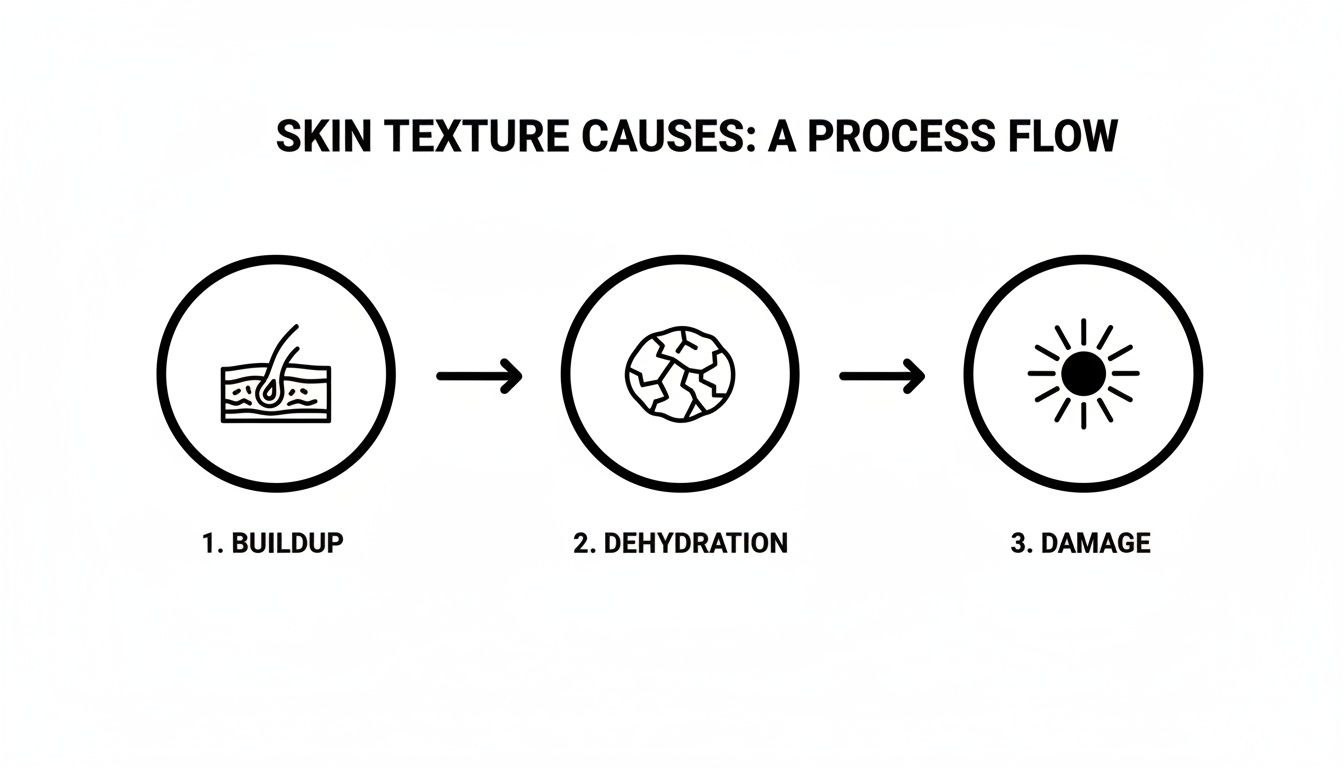
This breakdown really shows how dead skin buildup, dehydration, and environmental damage are all connected. You can't just tackle one problem; a holistic routine is the only way to restore and maintain a truly smooth skin surface.
Layering Hydration with Toners and Essences
Once your skin is clean, the immediate goal is to flood it with moisture. When skin cells are dehydrated, they shrink and collapse, making the surface look uneven and rough. This is where hydrating toners and essences are game-changers. They are the first wave of hydration and are absolutely fundamental to getting that plump, smooth "glass skin" look.
Forget the harsh, astringent toners you might remember from the past. Korean toners are watery, soothing formulas that balance your skin's pH and deliver that first hit of moisture. Essences are a bit more concentrated, packed with active ingredients that prep your skin for what comes next. Applying these to damp skin is a pro move to lock in even more hydration.
Targeting Texture with Potent Serums
Serums are the heavy hitters of your routine. They deliver a high concentration of specific ingredients to target your main concerns, and for skin texture, a few K-Beauty staples are particularly effective.
- Niacinamide: This all-star ingredient is brilliant for minimizing the look of enlarged pores, evening out skin tone, and strengthening the skin's surface. It's a must-have for achieving a smoother, more refined appearance.
- Snail Mucin: A true K-Beauty icon, snail mucin is fantastic for repairing the skin barrier, hydrating, and encouraging cell turnover. Its unique properties help smooth rough patches and can even soften the look of acne scars over time.
- Hyaluronic Acid: This is your hydration hero. As a humectant, it pulls moisture from the air into your skin, plumping up cells and instantly making fine lines and rough spots less noticeable.
The buzz around ingredients like Hyaluronic Acid is backed by real results. Its global market is projected to hit USD 14 billion by 2032. In clean K-Beauty formulas, it's often sourced from fermented soy or yeast and can famously hold up to 1,000 times its weight in water. According to clinical studies, this incredible capacity can lead to a 50% boost in skin plumpness and a 28% reduction in fine lines after just eight weeks. You can discover more insights about the growing skincare industry and its key ingredients.
Pro Tip: Gently pat your serums into the skin instead of rubbing. This simple technique helps the product absorb better and avoids unnecessary pulling, which can cause irritation over time.
Sealing It All In with a Barrier-Supporting Moisturizer
The final, essential step is to lock everything in with a good moisturizer. A strong, healthy skin barrier is your best defense against environmental stress and moisture loss-two major culprits behind uneven texture.
Look for moisturizers with ingredients like ceramides, which are lipids that naturally make up part of your skin’s protective layer. A well-formulated moisturizer doesn't just stop water from escaping; it also builds up your skin's resilience, leading to a smoother, healthier surface. This final step completes the foundational routine, setting your skin up for long-term success.
Mastering Gentle Exfoliation for a Polished Complexion
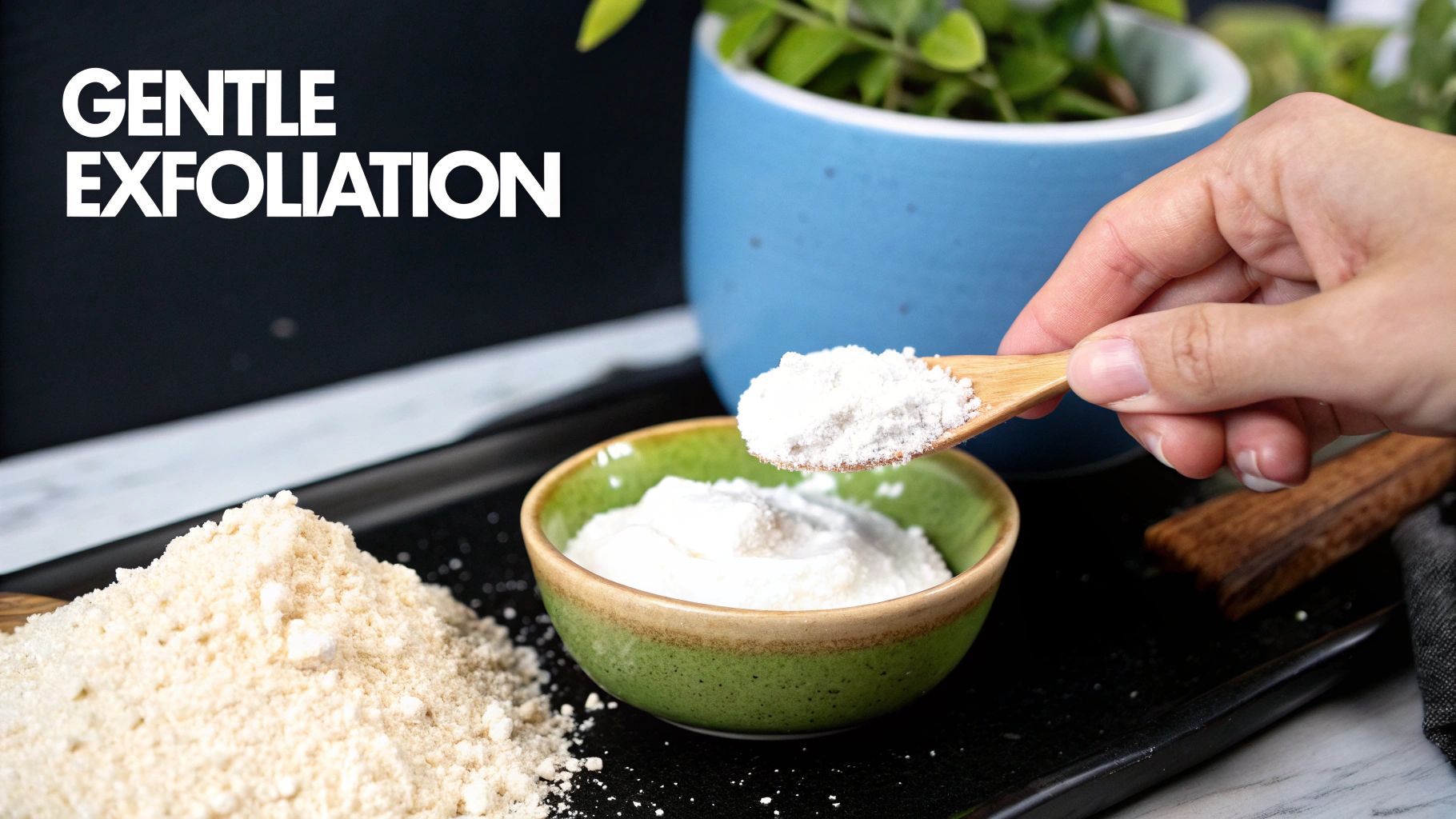
If there's one step that delivers the most visible results for a smooth, polished complexion, it's exfoliation. This is how you clear away old, dulling dead skin cells to let the fresh, radiant skin underneath finally shine through.
But let's be clear: we are not talking about the aggressive, gritty scrubs from years ago. Those often did more harm than good, creating micro-tears and wrecking the skin barrier-the complete opposite of the K-Beauty philosophy.
Real mastery comes from choosing the right type of exfoliation and the right frequency for your unique skin. The goal is never to strip the skin. It’s about giving its natural renewal process a gentle nudge, respecting its delicate ecosystem to get all the glow without any of the irritation.
Physical vs. Chemical Exfoliation: A K-Beauty Perspective
When we talk about exfoliation, there are two main paths you can take. Both are brilliant at improving skin texture naturally, but they work in completely different ways. Understanding this difference is the key to building a routine that works with your skin, not against it.
Physical Exfoliants: These use a fine, particle-based texture to manually buff away dead cells. In the world of K-Beauty, harsh materials like crushed nut shells are a huge no-no. Instead, the focus is on ultra-gentle, finely milled powders that polish without scratching.
- A Classic Example: Finely milled rice powder. It gives a soft, almost cloud-like exfoliation that smooths the skin’s surface without being abrasive, making it a safe bet even for sensitive types.
Chemical Exfoliants: These use acids or enzymes to dissolve the "glue" that holds dead skin cells together, allowing them to shed effortlessly. This method provides a much more even exfoliation across the entire surface of your face.
- A Gentle Example: Fruit-derived Alpha Hydroxy Acids (AHAs), like Glycolic Acid from sugarcane, work on the skin's surface to brighten and smooth. For an even gentler touch, enzymes from papaya or pineapple "digest" only the dead cells, leaving healthy ones alone.
In Korean skincare, the trend leans heavily towards gentle chemical exfoliation. Why? It offers controlled, uniform results that respect the skin barrier-and a healthy barrier is the foundation of resilient, glowing skin.
Finding Your Perfect Exfoliation Match
There's no one-size-fits-all answer here. The right method depends entirely on your skin's needs and how much it can handle. Think of this as your cheat sheet for making the best choice.
| Skin Type | Recommended Exfoliant | Why It Works |
|---|---|---|
| Dry or Sensitive Skin | Plant-based Enzymes (Papaya), Lactic Acid (a mild AHA), or gentle Rice Powder. | These are the least likely to cause irritation. Enzymes and Lactic Acid are fantastic because they exfoliate while also having hydrating properties. |
| Oily or Acne-Prone Skin | Salicylic Acid (BHA) or Glycolic Acid (AHA). | BHAs are oil-soluble, so they can get deep into pores to clear out gunk. AHAs are amazing for surface texture and fading post-acne marks. |
| Combination Skin | A combination approach. You could use an AHA toner on dry cheeks and a BHA on your T-zone. | This lets you target different concerns in different areas of your face for perfectly balanced results. |
| Mature Skin | Glycolic Acid (AHA). | This powerful AHA is celebrated for its ability to not only smooth texture but also stimulate collagen production, which helps with fine lines. |
The Golden Rule: How Often Should You Exfoliate?
Over-exfoliation is easily the most common mistake made by skincare enthusiasts, and it's a fast track to a damaged skin barrier, redness, and sensitivity. The signs are pretty obvious: your skin might look overly shiny (and not in a good way), feel tight, or suddenly start reacting to products it used to love.
To avoid this, just start slow. For most people, exfoliating one to three times per week is the sweet spot.
If you're using a potent exfoliating toner or serum, twice a week is often more than enough. If you prefer a gentle wash-off mask, you might use it just once a week as a special treat.
The most important thing is to listen to your skin. If it feels sensitive, take a break. Consistency over intensity is the real secret to achieving and maintaining that smooth, glass-like texture. Integrating a well-chosen exfoliating product into your routine is a foundational step toward unlocking your skin’s true radiance.
The Natural Ingredients That Actually Transform Skin Texture
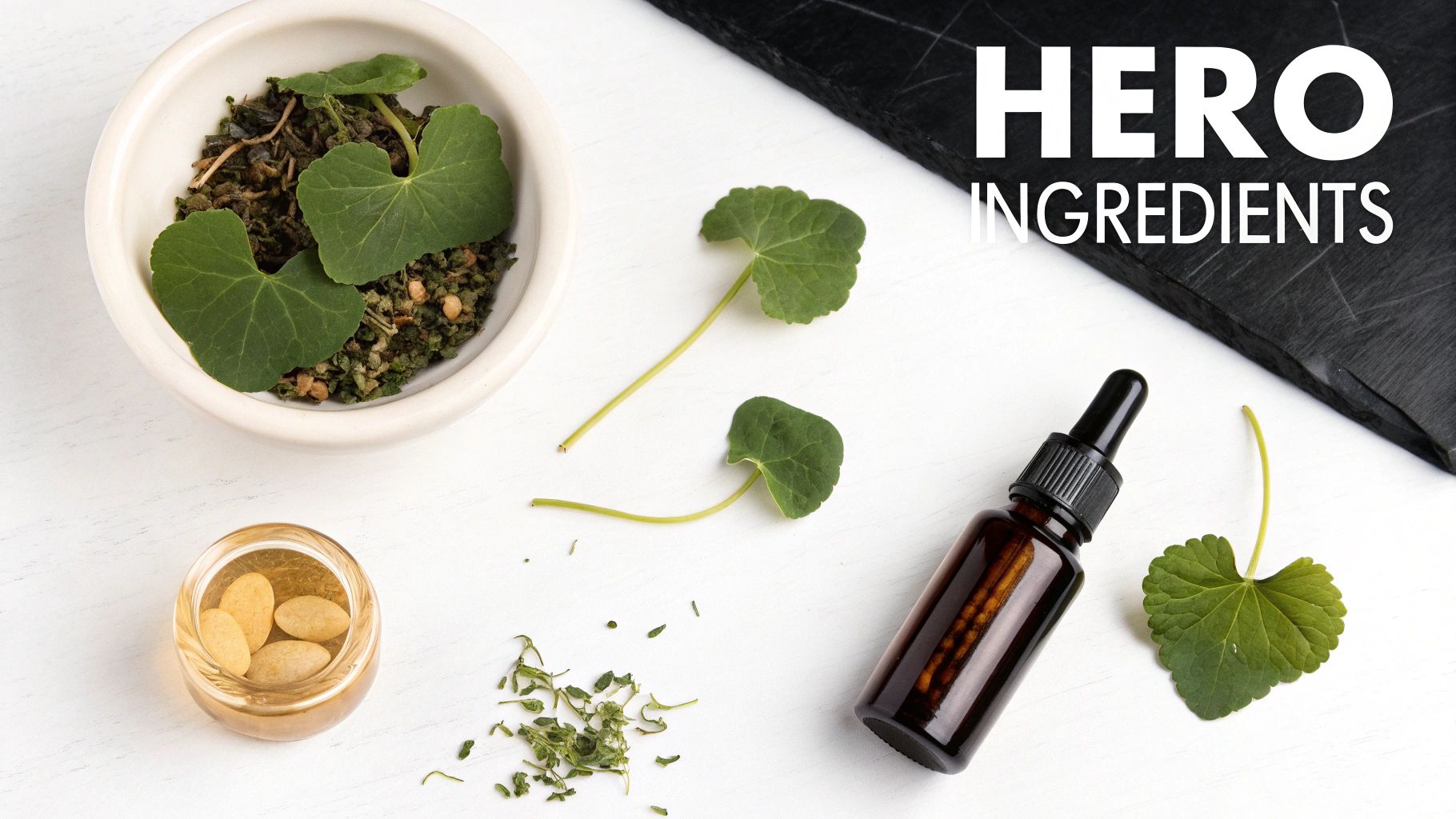
While a solid routine lays the groundwork, the real magic for smoothing things out happens inside your product bottles. Understanding the key players in Korean skincare empowers you to read ingredient lists like a pro, looking past the marketing hype to find formulas that deliver genuine, visible change.
These natural powerhouses are staples in K-Beauty for a reason: they work with your skin, tackling the root causes of roughness without adding irritation. Let's get to know the heroes you should be looking for to get that smooth, velvety finish.
Calm Inflammation with Centella Asiatica
You've probably seen it called Cica, Tiger Grass, or Gotu Kola. Whatever the name, Centella Asiatica is a soothing superstar. Inflammation is a sneaky cause of uneven texture, often showing up as persistent redness and tiny bumps that disrupt the skin's surface.
Cica is packed with active compounds like madecassosides, which are brilliant at calming irritation and repairing a damaged skin barrier. When your skin is calm and its defenses are strong, it can focus on renewal, leading to a smoother, more even appearance. If you're dealing with sensitive or reactive skin that feels rough to the touch, a Cica-infused serum or cream is a non-negotiable.
Refine Pores with Green Tea Extract
Green Tea is much more than just a calming drink; it's a potent antioxidant powerhouse for your skin. Its benefits are largely thanks to a high concentration of polyphenols, especially EGCG (epigallocatechin gallate).
These antioxidants help shield the skin from environmental stressors that lead to collagen breakdown and enlarged pores. Green Tea also has properties that can help balance oil production. This dual action-protecting skin structure and regulating sebum-makes it incredibly effective for refining the look of pores and creating a smoother canvas.
For many K-Beauty fans, the ingredient list is the deciding factor. The preference for gentle, effective botanicals is driving a massive industry shift. In fact, the global natural skincare market is projected to jump from USD 23.06 billion in 2025 to USD 36.32 billion by 2034. This growth is fueled by real results; studies show natural ingredients can improve skin texture by up to 30% in just four weeks, with over 70% of women in South Korea relying on botanicals like green tea. You can explore the full skincare market analysis to see how this consumer demand is shaping new products.
Fortify and Hydrate with Squalane
Don't confuse Squalane with squalene (with an "e"). Squalene is found naturally in our skin's oil but is unstable. Squalane is a hydrogenated, stable version that is an exceptional emollient. It’s incredibly lightweight and bio-compatible, meaning your skin recognizes and accepts it instantly.
Squalane’s main job is to moisturize and lock it in, all while supporting the skin's natural barrier. A healthy barrier is critical for a smooth texture because it prevents the water loss that leads to dehydration and roughness. Best of all, it’s non-comedogenic, making it a perfect hydrator for all skin types, from dry to oily, delivering a soft, supple feel without any greasiness.
The All-Rounder for Smoothness: Niacinamide
If you're looking for one ingredient that does a little bit of everything for skin texture, Niacinamide (Vitamin B3) is your answer. It's one of the most well-researched ingredients in skincare, celebrated for its wide-ranging benefits.
Here’s how Niacinamide helps you get a smoother complexion:
- Minimizes Pore Appearance: It helps improve skin elasticity, which can make stretched-out pores look smaller and tighter.
- Strengthens the Barrier: It boosts the production of ceramides, the lipids that form the skin’s protective layer, which reduces moisture loss.
- Regulates Oil Production: By balancing sebum, it helps prevent the clogged pores that lead to bumps in the first place.
- Reduces Redness: Its anti-inflammatory properties calm the skin, evening out both tone and texture.
By adding these powerhouse ingredients to your daily routine, you’re not just applying products; you’re giving your skin the specific tools it needs to repair, protect, and refine itself from the inside out. Choosing a serum or essence with these botanicals is one of the most direct ways to target the causes of uneven texture.
Once you’ve locked down your daily routine, you can start bringing in some more advanced techniques to really fast-track your way to a smoother complexion. These strategies are deeply rooted in Korean skincare wisdom and zero in on boosting hydration and circulation for that extra texture-smoothing punch. Think of these as powerful weekly or bi-weekly rituals that give your daily efforts a serious boost.
This is where you can truly make your routine your own. The world of personalized natural skincare is booming, with projections showing the market expanding from USD 22.5 billion to a massive USD 63.7 billion by 2034. This isn't just hype; it's driven by real results. A solid 68% of users see smoother skin after customizing their routines with at-home treatments. For instance, some studies have shown turmeric masks can reduce inflammation by up to 40%, while certain centella asiatica creams refined texture by 32% in Korean trials. You can read the full research on the personalized skincare market to see why everyone is leaning into this customized approach.
The K-Beauty '7 Skin Method' for Intense Hydration
One of the most legendary K-Beauty hacks for achieving that incredibly plump, dewy look is the '7 Skin Method'. The name is a little confusing-"skin" is a common term for toner in Korea. The technique is simple: you apply seven thin layers of a watery, hydrating toner or essence right after cleansing.
The logic behind it is pretty brilliant. Instead of slathering on one thick layer of moisturizer, you're slowly building up hydration with thin, watery layers. This allows your skin to drink it all in more effectively, plumping up skin cells from the inside out and instantly softening the look of fine lines and rough spots.
Want to try it? Grab a lightweight, alcohol-free toner. Pour a little into your palms, gently pat it onto your face until it's almost absorbed, and then immediately do it again, six more times. Your skin will feel deeply hydrated and bouncy-the perfect canvas for the rest of your routine.
DIY Masks for a Targeted Texture Boost
At-home masks are a fantastic way to give your skin a concentrated dose of good stuff. Using simple, natural ingredients you probably already have, you can whip up potent treatments that target specific texture issues without any weird additives.
Here are two of my favorite go-to recipes:
-
Soothing & Exfoliating Honey and Oatmeal Mask: This one is perfect for calming down irritated skin while gently buffing away dead cells. Just mix two tablespoons of finely ground oatmeal with one tablespoon of raw honey. Add a splash of water to get a paste-like consistency. Apply it to your face for 15 minutes, then rinse with lukewarm water, massaging in little circles as you go.
-
Brightening & Calming Yogurt and Turmeric Mask: If your texture issues are tied to inflammation or leftover post-acne marks, this mask is a game-changer. Combine two tablespoons of plain, full-fat yogurt (the lactic acid is a super gentle exfoliant) with half a teaspoon of turmeric powder. Turmeric is amazing for calming inflammation and brightening your overall complexion. Leave it on for 10-15 minutes before rinsing it off completely.
Important Tip: Always, always do a patch test before putting a new DIY mask all over your face, especially if your skin is sensitive. This quick check can save you from an unexpected reaction.
Incorporate Facial Massage for Better Circulation
Finally, don't underestimate the power of a good facial massage. Working a simple massage into your routine can do wonders for your skin's texture over time.
Massaging the skin gets the blood flowing, which means more oxygen and nutrients are delivered to your skin cells. This boost in circulation helps support the skin's natural renewal process. Just use your fingertips or a Gua Sha tool to make gentle, upward-lifting strokes for a few minutes each night when you apply your face oil or moisturizer. It feels amazing, helps your products absorb better, and promotes a smoother, healthier glow from within.
Common Questions About Improving Skin Texture
Starting a new routine to smooth out your skin naturally brings up a lot of questions. Knowing what to expect, how to mix and match products, and when you might need to call in a pro is just as important as the routine itself. Here are the answers to the questions we hear most often.
How Long Does It Realistically Take to See a Difference?
This is the number one question, and the honest answer is: be patient. While your skin might feel softer and look more hydrated within the first week, real textural improvements take time to show up.
You can usually expect to see a noticeable reduction in bumpiness and a more refined surface in about four to eight weeks. This gives your skin enough time to go through at least one full cell turnover cycle (which is about 28 days for most of us). That’s when the new, smoother skin cells you've been working so hard to nurture finally reach the surface.
For deeper texture issues, like the appearance of old acne scars, visible improvement will likely take several months of consistent care. Remember, consistency is always more important than intensity.
Can I Mix Different Natural Ingredients and K-Beauty Products?
Absolutely! In fact, layering is the heart of the Korean skincare philosophy. It's a smart way to tackle multiple concerns at once. For example, pairing a hydrating hero like Hyaluronic Acid with a barrier-supporter like Squalane creates a powerhouse duo for plump, resilient skin.
But you do need to be strategic, especially with active ingredients.
- Do Pair: Hydrators (like Hyaluronic Acid or Snail Mucin) with barrier builders (Ceramides, Squalane) and antioxidants (Green Tea, Vitamin C). This is a classic combo for healthy skin.
- Don't Pair (on the same day): A strong AHA toner with a physical scrub or another potent chemical exfoliant. That's a fast track to over-exfoliation and a damaged skin barrier.
A good rule of thumb is to introduce only one new active product at a time. This way, you can clearly see how your skin reacts and pinpoint the source of any irritation before it becomes a real problem.
Are There Any Natural Ingredients I Should Be Cautious With?
Yes. It's a huge misconception that "natural" always means gentle or safe for everyone. Your unique skin chemistry is the deciding factor in how it will react to different ingredients.
Some popular natural ingredients can be surprisingly potent or even sensitizing. For instance, many essential oils, while beneficial for some, can be a major source of irritation for others. And please, steer clear of DIY recipes calling for raw lemon juice-its high acidity can seriously disrupt your skin's delicate pH and make you much more sensitive to the sun.
This is exactly why a patch test is non-negotiable. Before slathering a new product all over your face, test it on a small, hidden area like behind your ear or on your inner arm. Wait 24 hours and check for any reaction.
When Should I See a Dermatologist for My Skin Texture?
A consistent, gentle, and natural skincare routine can work wonders for a huge range of textural concerns. But sometimes, at-home care just isn't enough, and it's important to know when to call in a professional.
Consider booking an appointment with a dermatologist if you're dealing with:
- Deep, pitted, or "ice pick" acne scars that aren't improving with topical treatments.
- Persistent cystic acne that causes painful, under-the-skin bumps.
- Suspected rosacea or eczema, which often cause stubborn redness and roughness.
A dermatologist can offer advanced treatments like professional-grade chemical peels, microneedling, or laser therapy. These procedures work on a much deeper level than topical products ever could, delivering more dramatic results for severe and stubborn texture issues.
At Mirai Skin, we believe that achieving smoother skin starts with understanding its needs and nourishing it with authentic, high-quality ingredients. Explore our curated collection of Korean skincare essentials to build a routine that will help you reveal your most radiant complexion.