That luminous, translucent "glass skin" finish isn't just about layering hydrating serums. A significant part of achieving that coveted glow comes down to one crucial, often misunderstood step in an authentic K-beauty routine: exfoliation.
But when we say exfoliation, we're not talking about aggressive, gritty scrubs. The best Korean exfoliator is built on a philosophy of sophisticated, gentle renewal that prioritizes skin health. Think of this guide as your expert map to navigating the world of K-beauty exfoliants, helping you find the perfect, results-driven match for your skin.
Your Journey to Glass Skin Starts Here
Korean skincare treats exfoliation as a precise art, not a brute-force attack. While many Western methods have historically leaned on intense peels or abrasive particles, the K-beauty approach is all about consistent, gentle renewal. This protects your vital skin barrier while still effectively sloughing away the dead cells that lead to dullness, rough texture, and congestion. The goal isn't instant gratification-it's achieving lasting radiance without irritation.
This thoughtful, gentle-but-effective approach is catching on globally. We're seeing a worldwide shift toward smarter, less aggressive skincare, and the demand for these sophisticated formulas is skyrocketing.
The market for Korean exfoliators and scrubs hit USD 18.77 million in 2024 and is on track to reach an incredible USD 33.17 million by 2033. This boom is powered by South Korea's role as a skincare innovation hub, where exfoliation is a non-negotiable part of the iconic 10-step routine. You can dig into more of the data on this K-beauty market trend.
What Makes Korean Exfoliation Different
The real magic is in the philosophy and the formulation. Instead of just stripping away the top layer of skin, Korean exfoliators are almost always formulated with hydrating and soothing ingredients to support the skin during the renewal process. It’s less like sanding down a piece of wood and more like carefully polishing a precious gem.
This guide will help you decode the science behind the most popular ingredients and build a routine that delivers visible, long-term results. We’ll walk you through:
- The primary exfoliation modalities: physical, chemical, and enzymatic.
- Key active ingredients that do the heavy lifting, like AHA, BHA, and PHA.
- How to match the right product to your specific skin type and concerns.
- The proper application techniques for maximum benefits and zero irritation.
Consider us your expert skincare concierge. We're here to help you move past the confusion and find the best Korean exfoliator to truly transform your complexion.
Understanding the Three Paths to Smoother Skin
To find the best Korean exfoliator for your routine, you first need to understand how they work. There are three distinct paths to that smooth, radiant complexion, and each one offers a unique journey for your skin. Selecting the right one is the foundational step toward getting that coveted glass-skin glow without disrupting your skin's delicate balance.
Navigating these options is simpler than it sounds. K-beauty exfoliation falls neatly into three main categories: physical, chemical, and enzymatic. Each method has its own mechanism of action for removing dull, dead skin cells, and each is better suited for different skin types and concerns.
To make things easy, here’s a quick breakdown of how these three methods compare.
Exfoliation Methods at a Glance
| Exfoliator Type | How It Works | Best For Skin Types | Common Ingredients |
|---|---|---|---|
| Physical | Manually buffs away dead skin cells through gentle friction. | Oily, Combination, Normal | Cellulose, Rice Bran, Sugar |
| Chemical | Uses acids to dissolve the desmosomes (the "glue") holding dead skin cells together. | Most skin types, especially acne-prone or textured. | AHA, BHA, PHA |
| Enzymatic | Uses natural enzymes to selectively break down keratin in dead skin cells. | Sensitive, Reactive, Dry, Compromised | Papain (Papaya), Bromelain (Pineapple) |
This table gives you the basics, but let's dive a little deeper into what makes each approach unique.
Physical Exfoliants: The Gentle Polishers
Physical exfoliants are likely what first come to mind when you hear "exfoliate"-products that manually remove dead skin through gentle friction. K-beauty has reinvented this category, moving far beyond the harsh, gritty scrubs of the past.
Instead of rough, abrasive particles, the most popular Korean physical exfoliants are peeling gels. These are genius. They use ingredients like plant-derived cellulose that clumps together as you massage it into your skin. These soft clumps then grab onto dead skin cells and impurities, rolling them away without scratching or irritating the fresh skin underneath. It’s a sophisticated method for gently buffing a surface to a brilliant shine.
Chemical Exfoliants: The Smart Solvents
Chemical exfoliants are the true powerhouses of modern skincare. They use gentle acids-like AHA, BHA, and PHA-to dissolve the bonds holding dead skin cells to the surface. There’s zero scrubbing involved; these ingredients work on a microscopic level to accelerate cell turnover.
Think of them as intelligent solvents that precisely target and break down buildup. Because they don’t rely on friction, they provide a much more even and uniform exfoliation across your entire face. This approach is incredibly effective for tackling concerns like uneven texture, clogged pores, and hyperpigmentation, all while being surprisingly gentle.
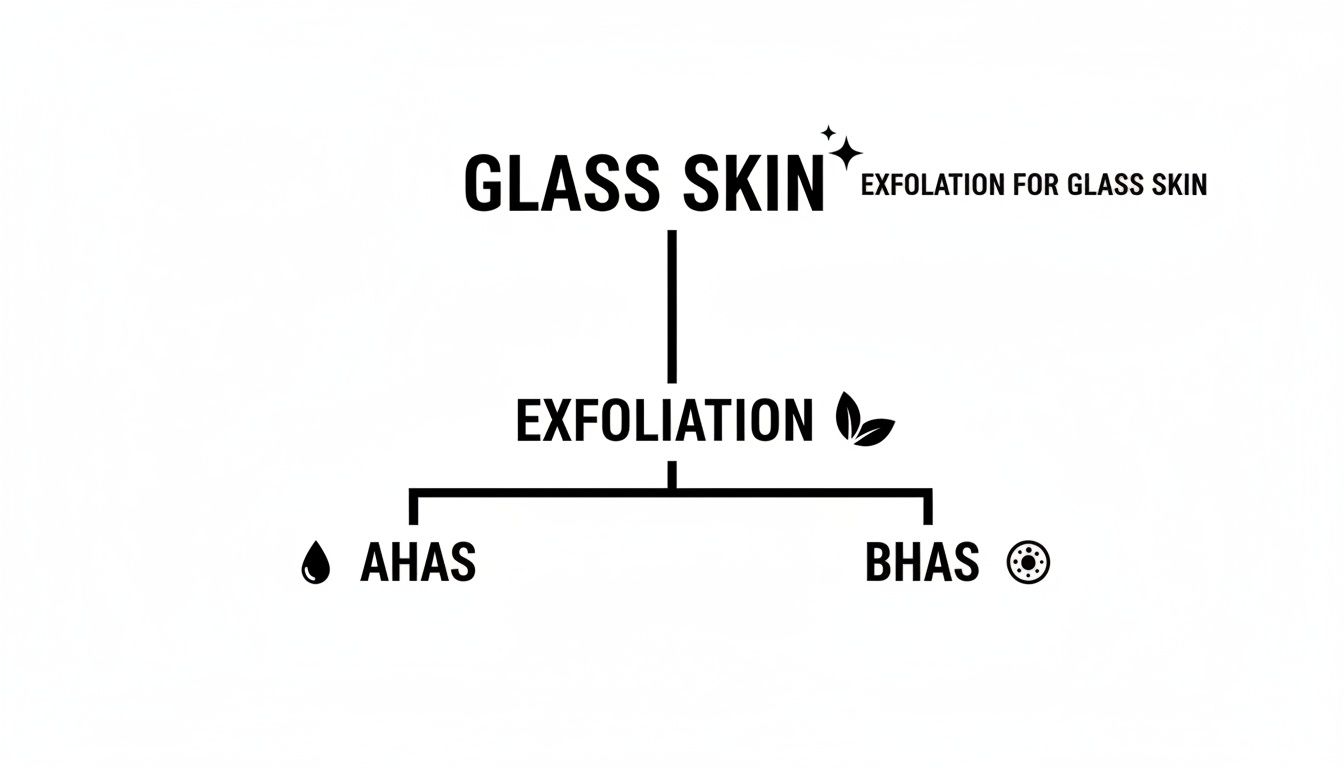
As the diagram below shows, effective exfoliation with acids like AHAs and BHAs is a non-negotiable step toward achieving that flawless, "glass skin" look.
 glass skin.">
This visual makes it clear: proper exfoliation is a core pillar supporting that ultimate goal of clear, luminous skin.
Enzymatic Exfoliants: The Targeted Pac-Men
The third-and most gentle-path involves enzymatic exfoliants. These formulas harness the power of natural fruit enzymes, often from sources like papaya (papain) or pineapple (bromelain). They are the gentlest of the gentle.
Imagine these enzymes as tiny Pac-Men that selectively nibble away only at the dead, built-up skin cells, leaving healthy, living cells completely untouched.
This highly targeted action makes them an amazing choice for extremely sensitive, reactive, or compromised skin that can't handle even the mildest acids or any physical friction.
By understanding these three distinct approaches, you're now equipped to choose a method that not only delivers incredible results but also respects and supports your skin's unique needs. Next, we'll get into the specific ingredients that make these products work so well.
Decoding the Skincare Alphabet: AHA, BHA, and PHA
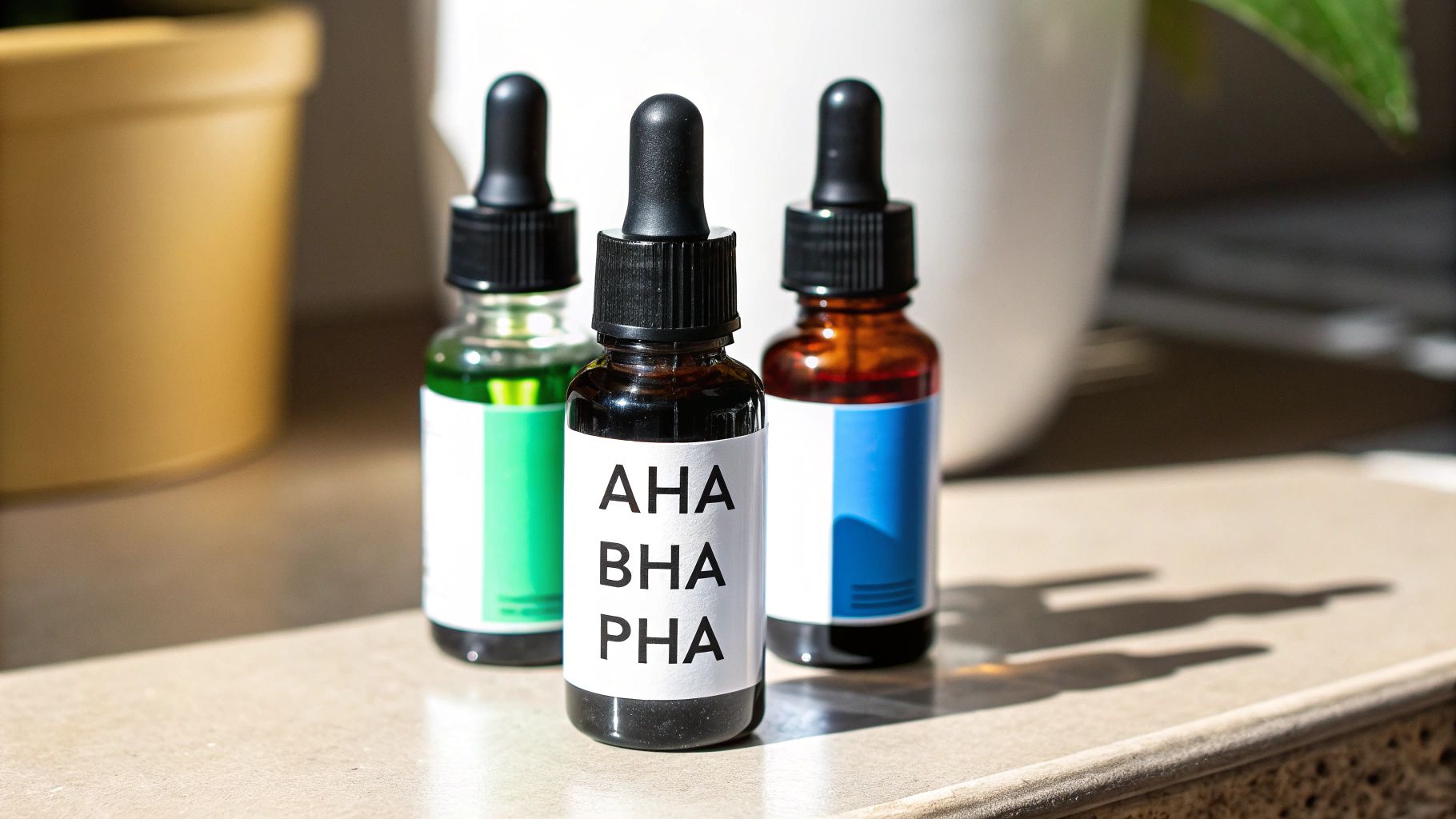
Chemical exfoliants are the powerhouse ingredients behind some of K-beauty’s most effective formulas. Often called "alphabet acids," these brilliant ingredients work by dissolving the glue that holds dead skin cells together, revealing fresher, brighter skin underneath without any harsh scrubbing.
Learning to navigate this alphabet-AHA, BHA, and PHA-is the secret to finding a targeted treatment that works for your specific skin concerns.
This precise, gentle-yet-powerful approach is central to the Korean skincare philosophy. It’s also a huge reason for its global success. The demand for these sophisticated formulas is massive-in fact, the global exfoliators market is projected to grow by USD 708.8 million between 2024 and 2029.
In the APAC region, K-beauty products have already captured 35% of the premium segment since 2021, driven largely by these intelligent ingredients. You can learn more about the growth of the global exfoliator market and see just how big this trend is.
AHA: The Surface-Level Refinishers
First up are Alpha Hydroxy Acids, or AHAs. These are water-soluble molecules, which means they work their magic primarily on the surface of your skin. Think of them as expert polishers for the outermost layer of your complexion.
Because they excel at surface renewal, AHAs are fantastic for tackling concerns like:
- Dullness and uneven tone: By sweeping away old, discolored cells, they bring a more luminous look to your skin.
- Rough or bumpy texture: They smooth things over for a softer, more refined feel.
- Fine lines: With consistent use, they can help soften the appearance of superficial lines by encouraging cell turnover.
The most common AHAs you'll find in Korean skincare are Glycolic Acid (the smallest and most potent) and Lactic Acid, which is a bit gentler and also has hydrating properties.
BHA: The Deep-Pore Specialists
Next, we have Beta Hydroxy Acids, or BHAs. Unlike their water-loving AHA cousins, BHAs are oil-soluble. This is their superpower.
Being oil-soluble allows them to bypass the oils on your skin's surface and travel deep inside your pores to clear out the gunk-sebum, dead skin, and other debris-that leads to congestion and breakouts. If AHAs are surface polishers, BHAs are the specialized keys that unlock and de-clog your pores from the inside out.
The most well-known BHA is Salicylic Acid. Its amazing ability to reduce excess oil and calm inflammation makes it the undisputed champion for anyone with oily, combination, or acne-prone skin. It’s a must-have ingredient when searching for the best Korean exfoliator to tackle breakouts.
Using a BHA-based product, like a toner or a cleanser, is a direct path to clearer pores and fewer blemishes. It’s an essential tool for keeping your complexion balanced and clear.
PHA: The Gentle Giants of Exfoliation
Finally, let's talk about Polyhydroxy Acids, or PHAs. These are the newest generation of chemical exfoliants, and they're celebrated for being incredibly gentle.
PHAs have a much larger molecular structure compared to AHAs and BHAs. This size difference is key-it means they can't penetrate the skin as deeply, so they work exclusively on the very top layer without causing the irritation that stronger acids sometimes can.
This makes them the perfect choice for anyone with:
- Sensitive or reactive skin: They give you effective exfoliation with a minimal risk of redness or stinging.
- Dry skin: PHAs are also humectants, meaning they attract water to the skin, providing a hydrating boost as they exfoliate.
- A compromised skin barrier: For skin that's recovering or easily stressed, PHAs offer a way to gently exfoliate without causing more trouble.
Ingredients like Gluconolactone and Lactobionic Acid are common PHAs that deliver smoothness and radiance while conditioning the skin at the same time. They're proof that powerful results don't have to come at the cost of your skin's comfort.
Finding the Best Korean Exfoliator for Your Skin Type
Now that we've covered the different types of exfoliants and the key players like AHAs, BHAs, and PHAs, it's time to connect that knowledge directly to your skin. Finding the best Korean exfoliator isn't about grabbing the trendiest bottle; it's about making an informed choice based on your unique skin biology. This is where theory meets real-world results.
Think of it like choosing the right tool for a specific job. You wouldn't use a sledgehammer on a delicate sculpture. Using the wrong formula can lead to irritation and a compromised barrier, but the right one can unlock a new level of radiance and health.
For Oily and Acne-Prone Skin
If your skin produces excess oil and is prone to clogged pores or breakouts, BHA (Salicylic Acid) is your undisputed champion. Its oil-solubility allows it to penetrate deep into your pores to dissolve the stubborn mix of sebum and dead skin cells that leads to blackheads and pimples. It’s a precision cleaner for your pores, getting right to the source of the problem.
A BHA-based cleanser or toner, like the SKIN1004 Madagascar Centella Tea-Trica BHA Foam, is perfect for managing oil and keeping pores clear without stripping your skin. This targeted approach helps calm active breakouts and prevent new ones from forming.
For Dry and Dehydrated Skin
For those with dry or parched skin, the goal is to gently exfoliate without compromising the moisture barrier. That means harsh, gritty scrubs are off the table. Instead, look for gentle AHAs like Lactic Acid. It not only buffs away surface flakes but also doubles as a humectant, pulling moisture into the skin.
PHAs are another fantastic choice for dry skin. Their larger molecules mean they work exclusively on the surface, which minimizes any potential for irritation. Even better, they have hydrating properties that help strengthen your skin's moisture barrier while they smooth things over.
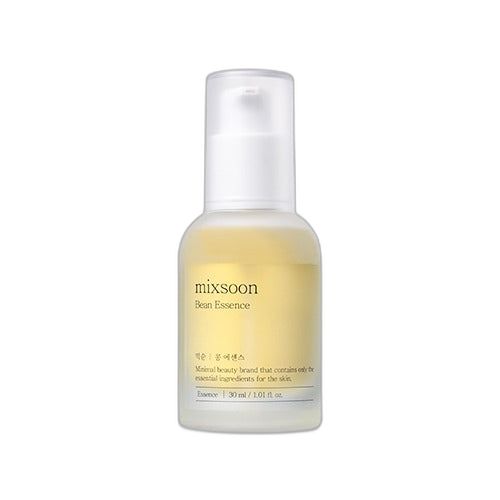
An essence or serum-style exfoliant, such as the Mixsoon Bean Essence, provides that gentle renewal while locking in moisture. Your skin is left feeling soft and supple, never tight or uncomfortable.
For Combination Skin
Dealing with combination skin means you need a balanced strategy for both oily and dry areas. You have two excellent options. The first is to find a multi-acid formula that blends AHA, BHA, and PHA, like the popular Some by Mi AHA BHA PHA 30 Days Miracle Toner. This lets you address oiliness in the T-zone and dryness on the cheeks all with a single product.
The second option is spot-treating. Use a BHA product just on congested areas like your nose and chin, and a gentle PHA or AHA on the drier parts of your face. This customized method ensures every part of your skin gets exactly what it needs.
For Sensitive and Rosacea-Prone Skin
When your skin is sensitive, exfoliation must be approached with extreme care. This is where the gentle giants, PHAs, truly shine. They offer effective surface renewal with a very low risk of irritation, making them the perfect match for reactive skin.
Enzymatic exfoliants are another fantastic option. They use fruit-derived enzymes to selectively dissolve dead skin cells without any acidic action, offering the mildest form of exfoliation possible. The S.Nature Aqua Oasis Toner, with its blend of PHA and papaya enzymes, is a perfect example of a formula designed to be both effective and incredibly soothing.
For Mature and Textured Skin
As skin matures, cell turnover naturally slows down, which can lead to dullness, uneven texture, and more noticeable fine lines. AHAs are the gold standard for tackling these concerns. By accelerating cell turnover, they help smooth the skin's surface, fade the appearance of hyperpigmentation, and promote a firmer, more youthful glow. Glycolic and Lactic Acids are especially effective at revealing a brighter, more polished complexion.
This focused, ingredient-first approach is a hallmark of K-beauty's global appeal. It's no surprise the Asia-Pacific region is projected to command 46.50% of the global body scrub revenue in 2026, with South Korea leading the charge. Domestically, their scrub market alone was valued at USD 18.77 million in 2024 and is set to grow significantly, outpacing global averages. You can see more data on the booming body scrub market on futuremarketinsights.com. These numbers highlight the immense trust consumers place in these thoughtfully formulated products.
How to Exfoliate for Maximum Results and Zero Irritation
Acquiring a high-quality Korean exfoliator is the first step, but unlocking its full potential is all about proper application. The right technique is what delivers that coveted glass-skin glow without ever compromising your skin’s delicate barrier. Consider this the user manual for achieving incredible results with zero drama.
The first golden rule is frequency. When it comes to exfoliation, more is definitely not better. How often you should exfoliate depends on your skin type and the product's potency.
For formulas with higher acid concentrations, starting with once or twice a week is a smart, effective approach. Milder products, like some gentle PHA toners, might be suitable for more frequent use, but it's always best to start slow and assess your skin's tolerance.
The most important thing is to listen to your skin. Redness, unusual tightness, a waxy shine, or sudden sensitivity are signs your skin needs a break. Pull back immediately and focus on hydration and barrier repair.
Timing and Placement in Your Routine
To maximize efficacy, timing is everything. The optimal time to exfoliate is almost always during your nighttime routine. This allows the active ingredients a full, uninterrupted night to work their magic without interference from UV radiation, while your skin is naturally in its repair and regeneration cycle.
Here’s exactly where it fits into your multi-step K-beauty ritual:
- First Cleanse: Start with an oil-based cleanser to dissolve makeup, sunscreen, and daily grime.
- Second Cleanse: Follow up with a water-based foam or gel cleanser for a truly clean canvas.
- Exfoliate: Now is the moment. Apply your chosen exfoliator to clean, completely dry skin. This crucial step clears the way for subsequent products to penetrate more effectively.
- Hydrate & Treat: Immediately follow with your hydrating toners, essences, serums, and moisturizers. Freshly exfoliated skin has enhanced absorption capabilities, making your other products work even better.
The Non-Negotiable Rules of Exfoliation
Adhering to a few simple rules can be the difference between a healthy, radiant glow and a red, irritated complexion.
Essential Do's:
- Always Patch Test: Before full application, test a new product on a small, discreet patch of skin (like behind your ear) to rule out adverse reactions.
- Follow with Hydration: Your skin requires immediate hydration post-exfoliation. Replenish it with soothing and hydrating ingredients like hyaluronic acid, ceramides, or panthenol.
- Wear Sunscreen Daily: This is critical. Exfoliation exposes new, delicate skin cells that are highly susceptible to sun damage. Protect your results and your skin's health with a broad-spectrum SPF of 30 or higher every single morning, without exception.
Critical Don'ts:
- Never Exfoliate Damaged Skin: Do not exfoliate if your skin is sunburnt, has open wounds, or is already irritated. Allow it to heal completely first.
- Don't Mix Strong Actives: Avoid using your exfoliator on the same night as other potent actives like retinol, especially when first introducing them.
- Don't Scrub Too Hard: If you're using a physical type like a peeling gel, be gentle. Let the formula do the work-aggressive rubbing is a direct path to irritation.
Your Top Korean Exfoliator Questions, Answered
To conclude, let's address some of the most common questions that arise on the exfoliation journey. Use this as your go-to guide for navigating the finer details, troubleshooting issues, and using your new best Korean exfoliator with complete confidence.
Can I Use an Exfoliator with Retinol or Vitamin C?
Combining powerful active ingredients requires a strategic approach. As a general rule, it's best to avoid using strong exfoliants like AHAs or BHAs on the same night you use retinol. Co-application can over-stress the skin and lead to a damaged barrier.
The simplest strategy is to alternate your nights. Use your exfoliator one evening, and your retinol product the next.
For Vitamin C, which is best used in your morning routine for its antioxidant benefits, you can safely use your exfoliator at night. This temporal separation allows each ingredient to perform optimally without causing irritation. The golden rule? Always listen to your skin and pull back if you notice any sensitivity.
Over-exfoliation is a real concern, but the signs are easy to spot once you know what you're looking for. Key indicators include unusual redness, a tight or 'squeaky' feeling, sudden sensitivity to products you normally love, and a strange, waxy-looking shine.
How Do I Know If I Am Over-Exfoliating My Skin?
If you spot the signs mentioned above, you might even notice an increase in breakouts, as a compromised skin barrier cannot effectively protect itself.
The solution is simple: pause all exfoliating products immediately.
Shift your focus to a gentle, soothing routine packed with barrier-repairing ingredients like ceramides, panthenol, or snail mucin. Give your skin a complete break until it feels calm and balanced again before slowly reintroducing exfoliation.
What Is the Difference Between a Peeling Gel and a Scrub?
Both provide physical exfoliation, but their mechanisms are worlds apart. A classic scrub uses abrasive particles like sugar or ground seeds to manually buff away dead cells, which can be harsh and cause micro-tears.
A K-beauty peeling gel, on the other hand, uses gentle ingredients like cellulose that pill up when massaged onto the skin.
These soft, eraser-like clumps adhere to dead skin cells and impurities, rolling them away without the aggressive scratching of a traditional scrub. This makes peeling gels a much safer and more sophisticated choice for sensitive, delicate, or acne-prone skin.
At Mirai Skin, we are passionate about bringing you the most effective and authentic K-beauty products to support your unique skincare journey. Explore our curated collections to find your perfect match. Find your next holy grail product at https://miari-skin.com.