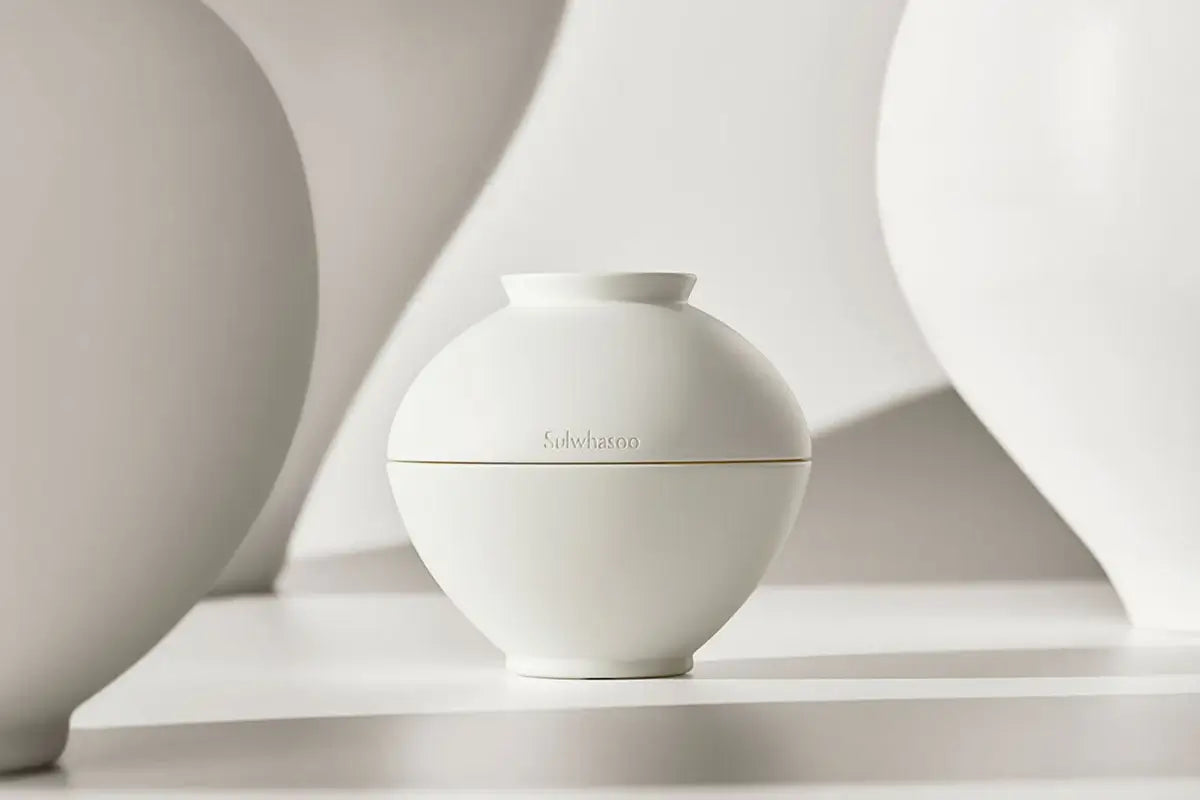
There's a particular confidence that comes from a brand putting its absolute best into a single product and saying, "This is what we're about." The Sulwhasoo Concentrated Ginseng Renewing Cream is that product for Sulwhasoo. It sits at the top of their lineup — their most researched, most concentrated, most premium offering. It's a cream that promises to harness decades of Korean ginseng science to fight the signs of aging. I've been testing the 30ml jar for over four weeks now, and I want to give you a genuinely honest assessment: what this cream does well, where it falls short, and whether the luxury price point translates to luxury results. First Impressions The unboxing experience sets a tone. The jar is heavy, a rich dark red with gold accents and a weighty lid that closes with a satisfying click. It comes with a small spatula for hygienic dispensing, which is a detail I always appreciate with jar packaging. The entire presentation says "this is serious skincare," and say what you will about luxury packaging — it does change how you experience a product. When you feel like you're using something special, you're more consistent with it, and consistency is what drives results. Scooping out the cream for the first time, I was struck by the texture. It's rich but not heavy — a dense, velvety consistency that's more substantial than a typical moisturizer but less occlusive than cold cream or sleeping masks. The color is a soft, warm gold, which is unusual. And the scent is distinctly Sulwhasoo — that signature herbal-medicinal aroma of ginseng root, warm and earthy and complex. It's stronger here than in their lighter products, which makes sense given the higher concentration of ginseng extracts. I personally enjoy it; it makes the routine feel like a ritual. But if herbal scents aren't your thing, this one is particularly pronounced. On application, the cream spreads easily and warms into the skin beautifully. It melts on contact and absorbs more readily than its rich appearance would suggest. My skin immediately felt deeply nourished and slightly firmer — that taut, well-fed feeling you get from a truly high-quality moisturizer. Key Ingredients This cream is built around Sulwhasoo's most concentrated ginseng technology: Concentrated Ginseng Extract (Ginsenoside Compound K) — The metabolized form of ginsenoside that studies have linked to improved collagen synthesis, enhanced skin elasticity, and antioxidant protection. Sulwhasoo has spent decades refining how they process and extract these compounds for maximum skin benefit. Ginseng Berry Extract — Derived from the fruit of the ginseng plant rather than the root, these berries contain a unique profile of antioxidants. Research suggests they support skin firmness and vitality. Red Ginseng Saponin — A processed form of ginseng root that undergoes steaming to create additional bioactive compounds not present in raw ginseng. It's associated with anti-inflammatory and anti-aging benefits. Shea Butter and Squalane — Proven emollients that provide lasting moisture and support the skin barrier. They give this cream its rich, nourishing texture. Adenosine — A well-established anti-wrinkle ingredient approved by Korean FDA for its ability to smooth fine lines. The formula is dense with actives — this isn't a cream that relies on one star ingredient and pads out the rest with fillers. Every layer of the composition seems purposeful. How I Used It I used this as my final moisturizing step in my evening routine, after cleansing, toning, and applying my treatment serums. A small scoop (about the size of a large pea) was enough for my entire face and neck. I warmed the cream between my palms for a few seconds, then pressed it into my skin using gentle upward motions rather than rubbing or pulling. This method helps it absorb evenly without tugging at the skin. In the morning, I used a lighter moisturizer instead, finding the Ginseng Cream a bit too rich for under makeup and sunscreen. This is purely a personal preference — some people use it morning and evening without issue. But for my combination skin, the richness sat better as a nighttime treatment where it had hours to fully absorb and work. I was deliberate about using the spatula every time. Jar packaging exposes product to air and bacteria from fingers, and with something this concentrated and expensive, you want to preserve its integrity. Small detail, but worth mentioning. Results After 4 Weeks Week 1: The most immediate benefit was moisture. My skin felt deeply hydrated in a way that lasted through the night and into the next morning. When I woke up, my skin still felt supple and nourished rather than the usual morning dryness I sometimes experience. There was also a subtle firming effect — my skin felt tighter and more elastic after application, though this was likely temporary plumping from the rich emollients rather than actual structural change. Week 2: The hydration benefits continued to compound. My skin looked plumper overall, with a healthy, slightly luminous quality that persisted throughout the day even under my lighter morning moisturizer. Fine lines around my eyes looked less noticeable, which I attribute partly to the deep hydration keeping that thin skin plumped. My overall complexion appeared more rested and vibrant, even on days when I definitely was not well-rested. Week 3: This is where I started noticing what I'd call "real" anti-aging effects beyond hydration. The texture of my skin improved noticeably — it felt smoother and more refined when I touched my cheeks and forehead. Some expression lines on my forehead that had become increasingly visible looked genuinely softened. My skin had a resilience to it that was new — it bounced back more readily and just looked healthier overall. Week 4: By the end of the month, the cumulative improvement was significant. My skin looked more youthful in a way I can best describe as "well-maintained" — not dramatically different, but consistently better. The firmness improvement was the most notable change: my jawline and cheeks looked subtly lifted and more defined. Fine lines were visibly softened, and my overall radiance was at its best level in months. What it didn't do: It didn't erase deep wrinkles or turn back the clock ten years. No cream can do that, regardless of price. It also didn't address hyperpigmentation or dark spots in any meaningful way — that's not really its purpose. And at this price point, I wish it had delivered results slightly faster, though I understand that genuine anti-aging changes take time. Who Should Try This (And Who Shouldn't) Great for: People in their mid-30s and beyond who are seeing early to moderate signs of aging — fine lines, loss of firmness, dullness, and dehydration. It's particularly excellent for dry and normal skin types that crave rich nourishment. If you love the ritual aspect of skincare and can appreciate hanbang (Korean herbal medicine) formulations, this is one of the finest expressions of that tradition available. Think twice if: You have oily or acne-prone skin — the rich texture may be too heavy and could potentially contribute to congestion. If you're in your early 20s with minimal aging concerns, this is more product than you need right now, and your money is better spent on sunscreen and a good basic routine. And if the price is a stretch for your budget, there are genuinely effective anti-aging creams at lower price points. Good skincare shouldn't create financial stress. Pros & Cons Pros: Genuinely impressive firming and fine-line smoothing results after 3-4 weeks Exceptionally rich, nourishing texture that absorbs better than expected Deep, lasting hydration that persists overnight Decades of proprietary ginseng research backing the formula Luxurious experience that makes consistent use enjoyable A small amount goes a long way — the 30ml jar lasts 2-3 months Cons: Premium price point — there's no way around the fact that this is an investment Too rich for oily skin types or for daytime use under makeup for most people Strong herbal ginseng scent won't appeal to everyone Jar packaging, while beautiful, is less hygienic than a pump (spatula helps but isn't perfect) Results take 3+ weeks to really show — patience is required The Verdict: 4.4 / 5 The Sulwhasoo Concentrated Ginseng Renewing Cream is one of those rare luxury products where the formula genuinely justifies the premium. The firming, smoothing, and nourishing results are real and visible after a month of use. The texture is impeccable. The experience of using it is genuinely enjoyable. And the ginseng science behind it is more substantial than most luxury skincare brands can claim. It's not for everyone — the price, the richness, and the strong herbal scent all narrow its ideal audience. But for those in its target demographic (aging concerns, dry-to-normal skin, appreciation for luxury formulations), this cream delivers on its promises in a way that earns respect. It's the kind of product that makes you understand why Sulwhasoo has become K-beauty's most revered luxury brand. Explore the full Sulwhasoo collection or browse our moisturizer range to find your ideal match. Frequently Asked Questions Is Sulwhasoo Concentrated Ginseng Cream suitable for oily skin? Generally, no. The cream is quite rich and is formulated primarily for dry to normal skin types. If you have oily skin, the texture may feel too heavy and could contribute to excess shine or congestion. Sulwhasoo offers lighter ginseng-based products (like the First Care Activating Serum) that deliver some of the same ginseng benefits in a more suitable texture for oily skin. How long does the 30ml jar of Sulwhasoo Ginseng Cream last? With nightly use only (which is how I recommend using it), the 30ml jar lasts approximately 2-3 months. You only need about a pea-sized amount per application, and the concentrated formula means a little delivers substantial results. This extended use time helps offset the premium price point significantly. Can I use Sulwhasoo Ginseng Cream with retinol? Yes, and this is actually an excellent combination. The cream's rich, nourishing formula helps buffer some of the dryness and irritation that retinol can cause. Apply your retinol product first, let it absorb, then follow with the Ginseng Cream as your final step. The emollient texture helps seal in the retinol while providing its own anti-aging benefits. At what age should I start using Sulwhasoo Ginseng Cream? Most people will see the greatest benefit starting in their mid-to-late 30s, when early signs of aging like fine lines, loss of firmness, and increased dryness become more noticeable. There's no strict age requirement, but if you're in your early 20s with no aging concerns, your budget is better spent on foundational products like sunscreen, a good cleanser, and a basic moisturizer. Related Reading best Korean sunscreens best retinol serums Korean cleansers
Read moreThere are products that people buy, and then there are products that people believe in. The Sulwhasoo First Care Activating Serum falls squarely into the second category. Now in its sixth generation, this serum reportedly sells one bottle every 10 seconds in Korea. It's Sulwhasoo's signature product — the one that built the brand into K-beauty's most prestigious luxury house. Those are impressive numbers and a weighty legacy. But does the formula actually justify the price tag that comes with luxury positioning? I tested the latest version — the "VI" — for six full weeks to find out whether this is a genuinely superior serum or an elegant bottle of good marketing. First Impressions Let me start with the obvious: the presentation is beautiful. The bottle is a warm amber-coral glass with clean lines and a satisfying weight in the hand. The dropper dispenses product smoothly with good control. Everything about the packaging communicates quality and intentionality. Sulwhasoo understands that luxury skincare is partly an experience, and they've nailed that aspect. The serum itself is a slightly golden, translucent liquid — thicker than water but thinner than most serums. It has a distinctive herbal-floral scent that's unmistakably Sulwhasoo. It's a complex aroma: warm, slightly sweet, with notes of ginseng and traditional Korean herbal medicine. If you've used any Sulwhasoo product before, you'll recognize it immediately. I found it pleasant and grounding, almost meditative during application. Some people find it too strong or too "medicinal" — fragrance is deeply personal, and this one is divisive. There's no way to know if you'll love it or hate it until you try it. On application, the texture absorbs remarkably quickly. Within seconds, it sinks in completely, leaving skin feeling smooth and slightly plumped but with zero residue. There's no tacky film, no greasy layer, no waiting around for it to dry. It's one of the most elegant textures I've encountered in a serum. Key Ingredients Sulwhasoo's entire philosophy centers on Korean ginseng, and this serum is the embodiment of that approach. The hero ingredient is their proprietary JAUM Activator, now in its most advanced formulation: Korean Ginseng (Ginsenoside complex) — Sulwhasoo has invested decades of research into ginseng's anti-aging properties. Ginsenosides are bioactive compounds shown in studies to support collagen synthesis, improve circulation, and provide antioxidant protection. The company uses multiple forms of processed ginseng to deliver a broad spectrum of these compounds. Compound K (a metabolized ginsenoside) — This is a more bioavailable form of ginsenoside that penetrates skin more effectively. It's one of Sulwhasoo's key differentiators from generic ginseng extracts. Five Traditional Korean Herbs — The JAUM complex includes peony, lotus, Solomon's seal, white lily, and rehmannia root. These are traditional hanbang (Korean herbal medicine) ingredients chosen for their synergistic balancing and nourishing properties. Niacinamide and Adenosine — Standard but effective actives for brightening and anti-aging support. The formula is alcohol-free in this latest version, which is a welcome change from earlier generations. The overall composition feels like a well-researched, thoughtfully balanced formula rather than a one-note product riding a single trendy ingredient. How I Used It This is designed as a "first care" product, meaning it goes on immediately after cleansing and toning, before any other serums or treatments. The idea is that it primes and activates the skin so that everything applied afterward works more effectively. It's a "booster" concept that's common in Korean skincare. My routine: double cleanse, hydrating toner, then 2-3 drops of the First Care Activating Serum pressed gently into my face and neck. I'd let it absorb for about 30 seconds, then continue with my treatment serum, eye cream, and moisturizer. I used it both morning and evening for six weeks. One observation: a little goes a long way. Two drops covered my entire face easily. The 60ml bottle, despite being a luxury product, actually lasts a surprisingly long time — I estimate it would last about 3-4 months with twice-daily use, which changes the cost-per-use calculation significantly. Results After 4 Weeks (and Beyond) Week 1: The immediate effects were textural. My skin felt smoother, more supple, and had a quality that I can only describe as "well-nourished." It's a subtle difference, not dramatic — more like the shift from skin that's just clean to skin that's been properly cared for. My other products did seem to absorb more readily with this underneath, though it's hard to quantify that objectively. Week 2: The smoothness continued to build. I noticed my skin looked more balanced overall — areas that tended toward oiliness weren't as oily, and areas that tended toward dryness weren't as dry. My complexion had a consistent, healthy quality to it that was evident even before applying makeup. Some mild unevenness in my skin tone appeared slightly improved. Week 3-4: This is where the real value became apparent. My skin had a genuine radiance that felt different from the surface-level glow you get from a good moisturizer. It looked healthier from within — firmer, more luminous, more resilient. A few fine lines around my eyes appeared softer (not gone, but less pronounced). My overall complexion looked more even-toned and vibrant. Friends started asking what I'd changed about my skincare, which is always a telling sign. Weeks 5-6: The improvements plateaued in a good way — meaning they held steady. My skin continued to look consistently healthy, radiant, and well-conditioned. I particularly noticed that my skin handled environmental stress better. On days when I was tired, dehydrated, or stressed, my skin still looked decent rather than reflecting every poor choice I'd made. What it didn't do: It's not going to replace a retinoid for deep wrinkle treatment. It won't clear acne or fade significant hyperpigmentation on its own. It's not a targeted treatment — it's a foundation product that makes everything else work better while providing its own layer of nourishment and protection. Think of it as the difference between cooking in a well-seasoned cast iron pan versus a cheap nonstick: the pan doesn't make you a better cook, but it makes everything you cook turn out a little better. Who Should Try This (And Who Shouldn't) Great for: Anyone in their late 20s and beyond who wants a sophisticated, research-backed anti-aging serum that focuses on overall skin health rather than one specific concern. It's particularly excellent for dull or fatigued skin that needs revitalization. If you appreciate hanbang (traditional Korean herbal medicine) ingredients and don't mind investing in luxury skincare, this is one of the best options in that space. Think twice if: You're looking for aggressive results on a specific concern like acne, deep wrinkles, or dark spots — dedicated treatments will serve you better. Also, if you're fragrance-sensitive, the distinctive herbal scent may be a deal-breaker. And if your budget is tight, there are effective serums at lower price points that may make more sense for you right now. Luxury skincare is wonderful when you can afford it comfortably; it's not worth financial stress. Pros & Cons Pros: Genuinely improves overall skin quality — radiance, texture, balance, and resilience Elegant, fast-absorbing texture with zero residue Decades of proprietary ginseng research behind the formula Enhances the effectiveness of the rest of your routine A little goes a long way — the 60ml bottle lasts 3-4 months Alcohol-free in the latest VI formulation Cons: High price point, even by luxury skincare standards The distinctive herbal fragrance is polarizing — you'll either love it or find it too strong Results are holistic rather than targeted — less satisfying if you want visible transformation of a specific concern The "first care activator" concept requires faith in a step that's hard to isolate and measure The Verdict: 4.5 / 5 The Sulwhasoo First Care Activating Serum VI is the real thing. It's not an overnight miracle — it's a long-game product that genuinely improves your skin's overall health, radiance, and resilience over weeks of consistent use. The ginseng-based formula is backed by serious research, the texture is impeccable, and the cumulative results are the kind that make people ask what you've been doing differently. Is it worth the luxury price? If you value overall skin quality and you're at a point where your skin needs nourishment rather than aggressive treatment, yes — especially considering how long a bottle actually lasts. It's one of those rare luxury products where the formula earns the price tag alongside the packaging. Discover more from our Sulwhasoo collection or browse our full range of serums. Frequently Asked Questions When do I apply Sulwhasoo First Care Activating Serum in my routine? Apply it immediately after cleansing and toning, before any other serums or essences. It's designed as a "first care" step that primes your skin and enhances absorption of everything that follows. Think of it as step one of your treatment phase, not a replacement for your other serums. Is Sulwhasoo First Care Activating Serum worth the price? From a cost-per-use perspective, it's more reasonable than the sticker price suggests. The 60ml bottle lasts 3-4 months with twice-daily use because you only need 2-3 drops per application. That brings the daily cost down significantly. Whether it's "worth it" depends on your priorities and budget — the results are real but gradual, and there are effective serums at lower price points if budget is a primary concern. Can I use this serum if I have oily or acne-prone skin? Yes, the lightweight texture absorbs quickly and won't clog pores or add oiliness. However, if you have active acne, this serum isn't a treatment for that — you'll still need your targeted acne products. It works well as a nourishing foundation step underneath acne treatments. Some oily-skinned users find it helps balance their skin over time. What's the difference between Sulwhasoo First Care Activating Serum versions V and VI? The VI version features an upgraded JAUM Activator formula with improved ginsenoside delivery and the addition of Compound K for better bioavailability. Notably, the VI is alcohol-free, addressing a common complaint about earlier versions. The texture is slightly more refined, and users generally report improved absorption and less fragrance intensity compared to version V. Related Reading best Korean eye creams best Korean anti-aging products
Read moreCertain products earn a reputation that precedes them, and the d'Alba Italian White Truffle Vital Spray Serum is firmly in that category. Over 20 million bottles sold. A cult following among Korean flight attendants who reportedly use it to combat the bone-dry cabin air at 35,000 feet. Viral fame across social media. When a product accumulates that kind of word-of-mouth momentum, I'm always curious whether the formula justifies the hype — or whether it's mostly marketing magic. I spent four weeks with this spray serum, using it in every context I could think of: post-cleansing, midday refresher, pre-makeup, and even on flights. Here's the full breakdown. First Impressions The bottle is elegant in a restrained way — matte white with gold accents, and a fine mist spray nozzle at the top. It feels premium without being ostentatious. At 100ml, it fits easily into a travel bag or a desk drawer, which is clearly intentional given its positioning as an on-the-go product. The first spray genuinely surprised me. The mist is exceptionally fine — one of the finest I've encountered in a skincare spray. It disperses into a soft, even cloud that settles on your face without any large droplets or wet patches. Most spray products I've tried produce something closer to a light squirt gun; this one produces an actual mist. That distinction matters more than you'd think, because a finer mist means more even distribution and less product pooling in certain areas. The scent is subtle and slightly sweet — a delicate floral-herbal note that disappears within seconds. It doesn't linger or compete with any other products in your routine, which I prefer. The texture on skin feels like a very light, slightly dewy veil. Not sticky, not greasy, just a clean layer of hydration. Key Ingredients The star ingredient here is Italian white truffle extract (Tuber Magnatum Pico), which is one of the rarest and most expensive fungi in the culinary world. In skincare, white truffle extract is valued for its amino acid content, antioxidant properties, and its ability to support skin hydration and radiance. It's not a miracle ingredient — no single extract is — but it does bring a unique profile of fatty acids and antioxidants that complement a hydration-focused formula well. Supporting the truffle extract, the formula includes: Niacinamide — Brightens, supports the skin barrier, and helps regulate oil production. A gold-standard ingredient with mountains of research behind it. Sodium Hyaluronate — A smaller-molecule form of hyaluronic acid that draws and holds moisture in the skin. Glycerin — A reliable humectant that keeps skin from losing moisture throughout the day. Adenosine — An anti-aging ingredient clinically shown to help smooth fine lines over time. The ingredient list is surprisingly clean for a product in this format. No heavy silicones, no alcohol, and the formula strikes a good balance between serum-like actives and mist-friendly lightweight hydration. It's essentially a serum that happens to be delivered as a spray. How I Used It The beauty of a spray serum is its versatility, and I tested it multiple ways: Primary use (post-cleansing serum step): After cleansing and toning, I sprayed 3-4 pumps onto my face from about 15cm away, let it sit for a few seconds, then gently pressed it into my skin with my palms before moving on to moisturizer. This became my default evening and morning routine. Midday refresh: Over makeup, a quick 2-3 sprays from arm's length gave my skin a dewy refresh without disturbing my base. I found this genuinely useful during dry afternoon hours in air-conditioned offices. Pre-makeup primer alternative: Sprayed and patted in before makeup application, it created a smooth, hydrated canvas that helped my foundation sit more naturally. I used it twice daily as my main serum step and added midday refreshes 3-4 times per week when my skin felt tight or dull. Results After 4 Weeks Week 1: The immediate hydration effect was noticeable from day one. My skin felt plumper and looked slightly more luminous after each application. This isn't a deep treatment effect — it's the surface-level hydration doing its job. But it was pleasant and consistent. Week 2: I started to notice a cumulative dewiness to my skin that wasn't just post-application. My complexion in the morning, before applying anything, looked slightly healthier and more hydrated than it had before I started. The niacinamide was likely beginning to contribute to a more even tone as well — some mild redness along my cheeks appeared softer. Week 3: The "glow" people talk about with this product became real for me around this point. Not a greasy shine, but a genuine healthy luminosity, particularly noticeable in natural light. My makeup was sitting better overall, and I was using less concealer because my skin just looked more even and alive. Week 4: By the end of the month, the improvements stabilized. My skin maintained that consistent healthy-looking dewiness, mild redness had calmed further, and the overall texture was smooth and well-hydrated. Where this product truly excelled was in convenience — it made maintaining well-hydrated skin nearly effortless. What it didn't do: This is not a treatment product. It won't address acne, deep wrinkles, hyperpigmentation, or any specific skin concern that requires targeted actives at higher concentrations. It's a hydration and glow product, and within that lane, it performs exceptionally well. Just don't ask it to be something it isn't. Who Should Try This (And Who Shouldn't) Great for: Anyone who wants effortless hydration with a natural glow finish. It's particularly well-suited for dry-to-normal skin types, people who work in air-conditioned environments, frequent travelers, and anyone who finds traditional serums too heavy or time-consuming. If your main concern is dullness or dehydration, this is a standout option. Think twice if: You have very oily, acne-prone skin and need oil control rather than added dewiness. The hydrating, glow-enhancing nature of this product could feel like too much for skin that's already producing excess shine. It's also not the right pick if you need a serum that addresses specific concerns like dark spots, deep wrinkles, or active breakouts — for those, you'll want something more targeted in your routine. Pros & Cons Pros: Exceptionally fine mist spray delivers even, mess-free application Versatile — works as a serum step, midday refresher, or pre-makeup prep Noticeable glow and hydration improvement within 2 weeks Clean ingredient list with real actives (niacinamide, adenosine) Travel-friendly format that fits any routine Elegant, lightweight texture — no stickiness or greasiness Cons: Not a treatment product — won't address acne, wrinkles, or pigmentation on its own The 100ml size goes faster than you'd expect with twice-daily use (about 5-6 weeks) The "white truffle" ingredient, while pleasant, is more of a marketing highlight than a dermatological powerhouse May add too much dewiness for oily skin types The Verdict: 4.3 / 5 The d'Alba Italian White Truffle Vital Spray Serum is one of those products that makes you rethink what a serum can be. The spray format isn't gimmicky — it's genuinely more convenient, more pleasant to use, and delivers hydration and glow with minimal effort. The formula is solid, the results are real (within its lane), and I understand exactly why flight attendants and skincare enthusiasts have made this a cult favorite. It doesn't try to be a treatment powerhouse, and that's fine. What it does — deliver effortless daily hydration and a natural, healthy glow — it does better than almost anything else I've tried in this format. If you're looking for a product that makes good skin look great with minimal fuss, this spray serum absolutely earns its reputation. Explore our full serum collection or discover more from d'Alba to find your perfect match. Frequently Asked Questions Can I use the d'Alba spray serum over makeup? Yes, and this is actually one of its best uses. The ultra-fine mist settles gently without disturbing makeup underneath. Hold the bottle about 20cm from your face and spray 2-3 times, then let it air-dry rather than patting it in. It refreshes your skin and revives your makeup's finish without causing streaks or patchiness. Is the d'Alba spray serum enough hydration on its own, or do I still need a moisturizer? For most skin types, you'll still want a moisturizer on top, especially at night. The spray serum is a lightweight hydration layer — think of it as replacing your serum step, not your moisturizer. In humid summer conditions, some people with oily skin might find it sufficient on its own under sunscreen, but for most people and most climates, pair it with a cream or gel moisturizer for complete hydration. How long does one bottle of the d'Alba spray serum last? With twice-daily use (3-4 sprays each time), the 100ml bottle lasted me about 5-6 weeks. If you're also using it for midday refreshes, expect closer to 4 weeks. One bottle goes further than you might think because the fine mist disperses the product efficiently, but it's not as long-lasting as a traditional dropper serum where you control each drop. What skin type is the d'Alba spray serum best for? It works best for dry, normal, and combination skin types. Dry skin benefits most from the hydration boost and dewy finish. Normal and combination skin get a nice glow without heaviness. Very oily skin types may find it adds too much dewiness, though some oily-skinned users enjoy it in drier months. It's lightweight enough that most people can find a place for it in their routine. Related Reading best Korean sunscreens best Korean anti-aging products
Read moreI'll be honest: when a product promises to transform your skin in 30 days, I roll my eyes a little. Marketing teams love a bold claim, and "miracle" is one of those words that usually means "we ran out of better adjectives." But the Some By Mi AHA BHA PHA 30 Days Miracle Toner has built a genuinely massive following in the K-beauty world, and it kept showing up in my research often enough that I finally grabbed a bottle to see what all the fuss was about. After four full weeks of daily use, here's my unfiltered take on whether this triple-acid exfoliating toner lives up to its cult reputation. First Impressions The packaging is straightforward — a clear 150ml bottle with a twist cap and a clean green-and-white label. Nothing luxurious, but nothing cheap-feeling either. It looks like what it is: a no-frills workhorse product that's putting its budget into the formula, not the box. I appreciated that. When I first dispensed it onto a cotton pad, the texture surprised me. It's noticeably thicker than most toners I've used — somewhere between a traditional watery toner and a lightweight essence. It has a very slight herbal scent, earthy and a bit medicinal, which fades almost immediately. If you're sensitive to fragrance, this one is mild enough that it shouldn't bother you. My initial impression of applying it was that it felt cooling and slightly tingly on my skin, but not in a stinging or uncomfortable way. More of a "something is happening" sensation. For context, I have combination skin with an oily T-zone and occasional breakouts along my jawline and chin — exactly the kind of skin this toner is marketed toward. Key Ingredients What makes this toner stand out from the hundreds of other K-beauty toners on the market is its triple-acid approach. The formula combines three types of chemical exfoliants: AHA (Glycolic Acid) — A water-soluble acid that works on the skin's surface to dissolve dead cells, improve texture, and brighten dull patches. It's the most well-researched exfoliating acid out there. BHA (Salicylic Acid) — An oil-soluble acid that can penetrate into pores, making it particularly effective for blackheads, congestion, and acne. This is the ingredient most people with breakout-prone skin are here for. PHA (Gluconolactone) — A gentler, larger-molecule acid that exfoliates without penetrating as deeply, while also acting as a humectant. It's the "safety net" of the trio, adding exfoliation without as much irritation risk. Beyond the acids, the formula includes tea tree extract (antibacterial and calming), niacinamide (brightening, pore-refining), and a selection of botanical extracts including centella asiatica. The pH sits around 5.5, which is interesting — that's higher than the optimal range for strong acid exfoliation (which is typically pH 3-4), meaning this toner takes a gentler daily-use approach rather than delivering aggressive chemical peeling. That's actually a smart formulation choice for something designed to be used every day. How I Used It I followed the standard K-beauty approach: after double cleansing in the evening, I soaked a cotton pad with the toner and swept it across my entire face, paying extra attention to my T-zone and jawline. I started with every-other-day use for the first week, then moved to nightly application for the remaining three weeks. In the morning, I used a simpler hydrating toner instead. I always followed up with a lightweight hydrating serum and moisturizer, and — this part is non-negotiable when you're using any acid product — I was religious about SPF 50 every single morning. AHA in particular increases photosensitivity, so skipping sunscreen while using this toner would undo everything you're working toward. One thing I liked: the slightly viscous texture meant the product stayed on the cotton pad rather than dripping everywhere. A small detail, but it made the application process feel more controlled and less wasteful. Results After 4 Weeks Week 1: Nothing dramatic. My skin felt slightly smoother after each application, and I noticed my usual morning oiliness was a touch more controlled. No irritation, redness, or purging at this point. Week 2: This is where I noticed the first real change. A couple of small closed comedones on my forehead that had been sitting there stubbornly for weeks started flattening out. My skin had a slightly more refined texture when I ran my fingers across my cheeks. I did get one small breakout on my chin, which could have been a mild purge or just my normal cycle — hard to say definitively. Week 3: The texture improvement became genuinely noticeable. My skin looked smoother, more even-toned, and had a subtle healthy quality to it that wasn't there before. The congestion around my nose and chin was visibly reduced. I also noticed my other skincare products seemed to absorb more readily, which makes sense — removing that dead cell buildup lets everything else penetrate better. Week 4: By the end of the month, my overall skin clarity had improved meaningfully. Pores on my nose appeared slightly smaller (likely from being decongested rather than actually shrinking), my tone was more even, and I was getting fewer of those annoying small bumps along my hairline. Was it a "miracle"? That's still a stretch. But was the improvement real and visible? Absolutely. What it didn't do: it didn't eliminate my hormonal jawline breakouts entirely, it didn't erase any acne scars or dark marks in just 30 days (those take months of consistent use to fade), and it didn't make my pores disappear. Setting realistic expectations matters with any skincare product. Who Should Try This (And Who Shouldn't) Great for: People with oily or combination skin dealing with congestion, blackheads, rough texture, or mild-to-moderate acne. It's also a solid choice if you're new to chemical exfoliation and want something that won't destroy your moisture barrier on day one. The gentle pH makes it much more forgiving than stronger acid treatments. Think twice if: You have dry, sensitive, or eczema-prone skin. Even though the pH is mild, daily acid use can be too much for reactive skin types. Also, if you're already using prescription retinoids or strong active serums (like a standalone AHA or BHA at higher concentrations), layering this toner on top could lead to over-exfoliation. More acids doesn't always mean better skin — sometimes it just means a damaged barrier and a lot of regret. Pros & Cons Pros: Triple-acid formula covers surface exfoliation, pore decongestion, and gentle resurfacing Noticeable texture and clarity improvement within 2-3 weeks Gentle enough for daily use on most skin types Excellent price-to-performance ratio — 150ml lasts 6-8 weeks with nightly use Helps other products absorb better Cons: "30 Days Miracle" branding oversells what the product can realistically achieve in one month Won't address deep acne scars or severe cystic acne on its own The herbal scent, though mild, may not appeal to everyone Requires committed daily sunscreen use (which you should be doing anyway) The Verdict: 4.2 / 5 The Some By Mi AHA BHA PHA 30 Days Miracle Toner isn't a miracle, but it is a genuinely effective daily exfoliating toner that delivers real results at a fair price. The triple-acid approach works well for congestion and texture, the formula is gentle enough for consistent use, and the improvements I saw were cumulative and lasting. It's earned its place in the K-beauty hall of fame for good reason. If you're dealing with dull, congested, or breakout-prone skin and want an uncomplicated exfoliating step that just works, this is one of the best options in its price range. Just don't expect literal miracles in 30 days — expect gradual, honest improvement. And that's more than enough. Browse our full toner collection or explore more from Some By Mi to find the right match for your skin. Frequently Asked Questions Can I use the Some By Mi Miracle Toner every day? Yes, most people with oily or combination skin can use it daily. However, I'd recommend starting with every other day for the first week to see how your skin responds. If you notice any tightness, flaking, or redness, scale back to 2-3 times per week. The gentle pH of 5.5 makes daily use feasible for most skin types, but everyone's tolerance is different. Does the Some By Mi Miracle Toner cause purging? It can. Because it contains AHA and BHA, which increase skin cell turnover, some people experience a brief purging period (small breakouts in areas where they normally break out) during the first 1-2 weeks. This is different from a reaction — purging is temporary and means the acids are working. If breakouts appear in unusual areas or persist beyond 3-4 weeks, that may be irritation rather than purging, and you should stop use. Should I use this toner in the morning or at night? I recommend nighttime use. Since the AHA component increases sun sensitivity, applying it in the evening gives the acids time to work overnight. If you do use it in the morning, SPF 50 sunscreen is absolutely mandatory. Either way, daily sunscreen is a must whenever you're using acid-based products. Can I use the Some By Mi toner with retinol or vitamin C? You can, but with caution. I wouldn't layer this toner directly with a retinol product or a strong vitamin C serum in the same routine, as that can overwhelm your skin. Instead, alternate — for example, use this toner on some nights and your retinol on other nights. If your skin is experienced with actives and tolerates them well, you might be able to combine them, but introduce the combination slowly. Related Reading best Korean sunscreens best Korean vitamin C serums best retinol serums
Read moreDark spots are the bane of my existence. Post-inflammatory hyperpigmentation from old breakouts, a couple of sun spots from years of inconsistent sunscreen use, and general unevenness that foundation can only do so much about. I've tried vitamin C serums, alpha arbutin, azelaic acid — the whole roster. So when the Anua Niacinamide 10% + TXA 4% Dark Spot Correcting Serum showed up with its bold claim of tackling pigmentation with a niacinamide-and-tranexamic-acid combo, I was interested but cautious. After six weeks of consistent use (I extended my testing because pigmentation takes time), here's where I landed. First Impressions The 30ml bottle is a standard glass dropper design — clean, no-frills, with the same Anua aesthetic I've come to expect. The dropper works well, dispensing a consistent amount each time without suction issues. The bottle is opaque enough to protect the active ingredients from light degradation, which tells me someone was thinking about formula stability. The serum itself has a slightly viscous, almost gel-like texture. It's not watery like some niacinamide serums I've used, but it's not thick either. Falls somewhere in the middle. It's colorless and clear, with absolutely no scent that I could detect. None. This is as fragrance-free as it gets. First application: 3-4 drops spread easily across my face. It absorbed in about 15 seconds without any tackiness or pilling. Under moisturizer, it disappeared completely. No white cast, no residue, no interaction issues. I've used niacinamide products that ball up under other products — this one doesn't. That was a promising start. Key Ingredients Breakdown This serum runs on a two-engine approach to pigmentation: Niacinamide at 10%: This is a well-researched concentration. Niacinamide (vitamin B3) has solid evidence for reducing melanin transfer to skin cells, which means it can help prevent new dark spots from forming and gradually fade existing ones. At 10%, it's potent enough to deliver results without the irritation that some people experience at higher concentrations. It also helps with pore appearance, oil regulation, and overall skin barrier function — so you're getting side benefits beyond pigmentation. Tranexamic Acid (TXA) at 4%: This is the ingredient that makes this serum stand out from the dozens of niacinamide serums on the market. Tranexamic acid works by inhibiting the pathways that trigger melanin overproduction. Originally used in medicine to control bleeding, dermatological research has shown it to be effective for melasma and post-inflammatory hyperpigmentation when applied topically. The 4% concentration here is within the range shown to be effective in studies. The combination of niacinamide and TXA attacks pigmentation from two different angles — niacinamide blocks melanin transfer, while TXA reduces melanin production. In theory, this dual approach should be more effective than either ingredient alone. Supporting ingredients include panthenol for soothing and moisture, sodium hyaluronate for hydration, and allantoin for calming. The formula doesn't contain any known irritants — no fragrance, no alcohol, no essential oils. It's designed to be used alongside other actives without causing problems. How I Used It I used this serum twice daily — morning and evening — as my primary active serum step. I paused my vitamin C serum during the testing period to isolate the results. Morning routine: Gentle cleanser Anua Heartleaf Toner Anua Niacinamide + TXA Serum — 3-4 drops, pressed into skin Lightweight moisturizer SPF 50 sunscreen (non-negotiable when treating pigmentation) Evening routine: Double cleanse Toner Anua Niacinamide + TXA Serum — 3-4 drops Moisturizer I want to emphasize: if you're using any brightening product and not wearing sunscreen religiously, you're wasting your time. Sun exposure triggers melanin production, which directly works against everything this serum is trying to do. SPF is mandatory, not optional. Results After 4 Weeks (Extended to 6) Pigmentation is slow to fade. Anyone telling you a serum will erase dark spots in a week is lying to you. I extended my testing to six weeks because four weeks isn't enough to properly evaluate a brightening product. Here's my honest timeline: Week 1-2: No visible change in pigmentation. However, my overall skin tone looked slightly more even, and my pores appeared slightly refined. That's the niacinamide doing its thing. My skin also felt smoother — not from exfoliation, just from the hydration and barrier support the formula provides. Week 3-4: This is when I started noticing real changes. A cluster of PIH marks on my left cheek from a breakout two months earlier had visibly lightened. Not disappeared — lightened. The edges were softer, and the overall darkness had reduced by maybe 30-40%. I took comparison photos, and the difference was clear under the same lighting. Week 5-6: Continued improvement on the PIH marks. The spots that were lighter to begin with had faded to the point where I could barely see them without close inspection. Darker, more established spots had lightened further but were still visible. One stubborn sun spot on my right cheekbone showed minimal change — it's been there for years, and I think it needs something stronger (like professional treatment) to fully resolve. Overall skin brightness: Beyond specific spots, my skin generally looked brighter and more radiant by week four. The kind of difference where people ask if you've changed something in your routine. That general luminosity boost is likely from the niacinamide improving overall skin function. What it didn't do: It didn't eliminate deep, established sun damage. It didn't work on my oldest hyperpigmentation marks that have been around for years. And it didn't make my skin sensitivity-free — on two occasions, I applied it right after over-exfoliating, and I felt a mild stinging that lasted about 30 seconds. Not the serum's fault, but worth noting for sensitive types. Who Should (and Shouldn't) Use This This serum is excellent for: Post-inflammatory hyperpigmentation from acne or irritation General skin tone unevenness and dullness People looking for a gentler alternative to hydroquinone or high-concentration vitamin C Those who want a brightening serum that won't irritate sensitive skin Anyone wanting niacinamide's pore-refining benefits alongside brightening Manage your expectations if: You have deep, long-established sun damage or melasma — this will help but may not fully resolve it You want overnight results — pigmentation takes months to properly address You're not willing to commit to daily SPF — without sunscreen, this is pointless You need treatment-grade intervention — severe pigmentation may require prescription products or in-office procedures Pros and Cons Pros Dual-action niacinamide + tranexamic acid formula targets pigmentation from two angles 10% niacinamide is effective without being irritating for most skin types Visible improvement in PIH within 3-4 weeks General skin brightness improvement even beyond specific spots No fragrance, no alcohol — gentle enough for daily use Absorbs cleanly without tackiness or pilling Pairs well with other products — no layering issues Pore-refining side benefits from the niacinamide Cons 30ml is a small bottle — at twice-daily use, it lasts about 5-6 weeks Results on old, established pigmentation are modest Can cause mild stinging on compromised skin (not an issue for intact barriers) Takes a full month before visible brightening results appear Won't fully replace professional treatments for severe pigmentation The Verdict Rating: 4.4 / 5 stars The Anua Niacinamide 10% + TXA 4% Dark Spot Correcting Serum is one of the better pigmentation-targeting serums I've used at this price point. The niacinamide-TXA combo is genuinely effective for post-inflammatory hyperpigmentation and overall skin tone evening. It's gentle, it layers well, and it delivers visible results within a reasonable timeframe — as long as you're realistic about what a topical serum can achieve. It's not going to replace laser treatments or prescription hydroquinone for severe pigmentation. But for the average person dealing with post-acne marks, minor sun spots, and general dullness? This is a strong contender. The fact that it also refines pores and improves skin texture through the niacinamide is a genuine bonus. Will I repurchase? Yes. I've already ordered another bottle. For the combination of efficacy, gentleness, and price, it's hard to find better value in a brightening serum. It's earned a permanent spot in my routine alongside SPF and a good vitamin C. Shop Anua Niacinamide + TXA Dark Spot Serum | Build a full brightening routine at Mirai Skin. Frequently Asked Questions Can I use the Anua Niacinamide serum with vitamin C? Yes, despite the old myth that niacinamide and vitamin C can't be combined, modern formulations work fine together. However, for simplicity, many people prefer using vitamin C in the morning and niacinamide in the evening. You can also alternate days if your skin is on the sensitive side. How long does it take to see results from this serum? Expect to see improvements in overall skin tone and brightness within 2-3 weeks. For specific dark spots, most people see noticeable fading starting around week 3-4. Stubborn or old spots may take 2-3 months of consistent use. Always use SPF alongside this serum. Is tranexamic acid safe for daily use? Yes. Topical tranexamic acid at 2-5% concentrations has a strong safety profile for daily use. It's well-tolerated by most skin types, including sensitive skin. Unlike some other brightening agents, it doesn't increase photosensitivity, though SPF is still essential for treating pigmentation. Can I use this serum if I have sensitive skin? For most people with sensitive skin, yes. The formula is free from fragrance, alcohol, and essential oils. Niacinamide at 10% is generally well-tolerated. However, if your skin barrier is currently compromised (from over-exfoliation or irritation), introduce it gradually — start with once daily and build up to twice daily once you confirm no irritation. Related Reading best Korean sunscreens best Korean vitamin C serums Korean cleansers
Read moreIf there's one product category that K-beauty truly owns, it's the double cleanse — and the Banila Co Clean It Zero Cleansing Balm is arguably where the modern cleansing balm craze started. This product has sold millions of units worldwide, won countless awards, and remains a fixture in Korean skincare routines. I spent four weeks using it every night to determine whether this OG cleansing balm still holds up against the newer competition. Here's everything I found. First Impressions The pink jar feels solid and well-made. Inside, the balm sits as a firm, sherbet-like solid — it has a satisfying texture that's clearly different from an oil cleanser or a cream cleanser. The spatula is a thoughtful inclusion for keeping things clean. Scooping out a small amount, I was struck by how the product transforms on contact with skin. The solid balm melts almost instantly into a smooth, lightweight oil as your body heat warms it up. There's something satisfying about that transformation — it feels like the product is activating. The scent is very subtle, almost fragrance-free, which surprised me in a good way. Many cleansing balms I've tried are heavily perfumed. My first cleanse with it removed a full face of makeup — foundation, concealer, mascara, and sunscreen — with about 60 seconds of gentle massaging. When I added water to emulsify, it turned into a milky liquid that rinsed off cleanly without any greasy residue. My skin felt clean but not stripped. That's the gold standard for a first-step cleanser, and Clean It Zero hit it right away. Key Ingredients Banila Co formulated this balm with a focused ingredient list that prioritizes effective cleansing without irritation: Cetyl Ethylhexanoate: The primary cleansing agent — an ester-based oil that dissolves makeup, sunscreen, and sebum efficiently. It's lighter and less pore-clogging than many traditional cleansing oils. Hot Spring Water: Provides mineral-rich hydration during the cleansing step. This is an underrated ingredient that helps prevent the dryness that aggressive cleansing can cause. Acerola Extract (Vitamin C): A natural antioxidant derived from acerola cherries. It provides brightening support even during the cleansing step, though the contact time is brief. Tocopheryl Acetate (Vitamin E): Conditions and protects the skin's moisture barrier during cleansing. It works alongside the acerola extract as an antioxidant team. Arachidyl Glucoside & related emulsifiers: These are what allow the balm to emulsify with water and rinse cleanly. Without good emulsifiers, cleansing balms leave a film — this one doesn't, which speaks to the quality of the emulsification system. The formula is free of parabens, sulfates, and alcohol. For a first-step cleanser that contacts your skin briefly, the ingredient list is clean and purposeful. How I Used It I used Clean It Zero every evening as the first step of my double cleanse for the full four weeks. My routine was consistent: dry hands, dry face. I scooped out about a quarter-sized amount with the spatula, warmed it between my palms for a second, then massaged it across my entire face in circular motions for about 60-90 seconds. I focused extra time on my T-zone (where sunscreen and oil tend to accumulate), around my eyes (mascara and eye makeup), and along my jawline and hairline (where makeup often gets missed during cleansing). Then I added a splash of water to emulsify the balm into a milky consistency and rinsed thoroughly. After Clean It Zero, I followed with a water-based second cleanser to complete the double cleanse. On some evenings I tested Clean It Zero alone (without a second cleanser) to see if it could work as a standalone. I tested it against various makeup and sunscreen products: waterproof mascara, long-wear liquid foundation, heavy mineral sunscreen, and the TIRTIR cushion foundation I'd been wearing. Results After 4 Weeks Week 1: The cleansing performance was rock-solid from day one. Waterproof mascara? Dissolved in under a minute of gentle massaging. SPF50 mineral sunscreen? Gone without scrubbing. The emulsification was clean every time — no oily residue left behind after rinsing. My skin felt balanced and comfortable post-cleanse, never that tight, squeaky-clean feeling that means you've over-cleansed. Week 2: I started noticing something interesting: the pores on my nose appeared smaller. This wasn't the balm "shrinking" pores (nothing does that), but rather the consistent, thorough oil cleansing was keeping them cleaner. Sebaceous filaments that normally darken by midday were less visible. The gentle massage seemed to be helping draw out congestion without harsh extraction. Week 3: I tested it as a standalone cleanser on a few evenings when I hadn't worn much makeup — just sunscreen and a light tint. Used alone, it left my skin feeling clean but not deeply cleansed enough for my preference. I'd still recommend following with a water-based cleanser for the most thorough results. Where it shined solo was on lazy evenings — it's better than a micellar water wipe and far less effort than a multi-step removal routine. Week 4: My skin's overall clarity had improved. I attribute this partly to consistent double cleansing rather than Clean It Zero alone, but the product made the double cleanse routine enjoyable rather than tedious. The jar was about two-thirds full after a month of nightly use, suggesting the 100ml size offers good value. No breakouts, no irritation, no issues with clogged pores — just clean, happy skin. Who Should Use It Anyone who wears makeup or sunscreen daily and needs an effective first-step cleanser People new to the double cleansing method who want a foolproof entry point Those with sensitive skin who need a gentle, non-stripping makeup remover Anyone who finds oil cleansers too messy or hard to rinse People whose pores are prone to congestion from makeup and sunscreen buildup Who Should Think Twice If you don't wear makeup or sunscreen, a cleansing balm may be unnecessary — a single water-based cleanser might be enough If you strongly prefer pump-bottle oil cleansers for speed and convenience, the jar format is slightly less practical If you're looking for a cleanser with active treatment ingredients (acids, retinol), this is a straightforward cleansing product Pros & Cons Pros Removes all types of makeup and sunscreen thoroughly — including waterproof formulas Satisfying solid-to-oil texture transformation on contact Clean emulsification — rinses without leaving oily residue Gentle and non-stripping, even for sensitive skin Free of parabens, sulfates, and alcohol 100ml jar lasts well over a month with nightly use Spatula included for hygienic scooping Cons Jar format is less convenient than pump bottles for travel Not effective as a standalone cleanser for deep cleansing — best as step one of a double cleanse The gentle formula means stubborn, multi-layered waterproof eye makeup may need a second pass Product can soften or partially melt in very hot environments The Verdict: 4.0 / 5 The Banila Co Clean It Zero Cleansing Balm is a classic for a reason. It does one thing — remove makeup and sunscreen — and it does it better than most products in the category. The solid-to-oil transformation is genuinely pleasant to use, the emulsification is among the cleanest I've experienced, and the formula is gentle enough that even reactive skin types can use it nightly without concern. Is it the most exciting product in your routine? No, and it's not trying to be. It's the reliable workhorse that makes the rest of your skincare more effective by ensuring your skin is properly clean before treatments, serums, and moisturizers go on. In that role, Clean It Zero is nearly unbeatable. The reason I give it a 4.0 rather than higher is that the cleansing balm market has grown significantly since this product launched, and some newer options offer similar performance with added features (larger sizes, pump packaging, specialized formulas for different skin concerns). Clean It Zero remains an excellent choice — especially for beginners — but it's no longer the only strong option in the category. For your first step into Korean skincare, starting with a proper cleanse is arguably the most impactful thing you can do. Check out the full Banila Co collection and the rest of our best sellers at Mirai Skin. Frequently Asked Questions Do I need to double cleanse if I use the Banila Co Clean It Zero? If you wore makeup or sunscreen during the day, yes — following Clean It Zero with a water-based cleanser gives you the most thorough cleanse. The balm dissolves oil-based impurities (makeup, SPF, excess sebum), and the second cleanser handles water-based impurities (sweat, dirt, remaining residue). On bare-skin days without SPF, Clean It Zero alone may suffice. Can the Banila Co Clean It Zero remove waterproof mascara? Yes. I tested it against several waterproof mascaras, and it dissolved them with about 60 seconds of gentle circular massage on the eye area. For very heavy, multi-coat waterproof mascara, you may want to hold the balm on your lashes for 15-20 seconds before massaging to give it time to break down the formula. Always be gentle around the delicate eye area. Is the Banila Co Clean It Zero safe for sensitive or acne-prone skin? The Original formula is suitable for most skin types, including sensitive skin. It's free of parabens, sulfates, and alcohol, and the pH-balanced, gentle formula is designed not to disrupt your skin barrier. For acne-prone skin, the key is to rinse thoroughly and always follow with a proper second cleanser to ensure no residue remains that could contribute to clogged pores. How long does a jar of Banila Co Clean It Zero last? With nightly use (one application per evening), the 100ml jar lasts approximately 6-8 weeks. If you use it twice daily (morning and evening), expect about 4 weeks. A little goes a long way — about a quarter-sized scoop is enough for a full face of makeup removal. The jar format with spatula also helps you control portions and avoid waste. Related Reading best Korean sunscreens best retinol serums Korean skincare routine
Read moreCleansers are the unsung heroes of any skincare routine. Nobody posts their face wash on social media for clout, but use the wrong one and everything else in your routine fights an uphill battle. The Round Lab 1025 Dokdo Cleanser has been steadily gaining cult status in K-beauty circles, praised for being gentle enough for the most reactive skin while still actually cleaning your face. That's a balance most cleansers get wrong. After four weeks of using it as my sole morning and evening cleanser, I can tell you whether that reputation holds up — and where it falls short. First Impressions The packaging is clean and ocean-themed — a nod to the Dokdo deep sea water that gives this cleanser its name. It's a 150ml squeeze tube, sturdy and practical. Nothing about it screams luxury or hipness; it looks like a serious skincare product that doesn't need bells and whistles. Squeezing out the first amount, the texture is a low-foam gel — semi-translucent, very slightly thick, almost like a diluted hair gel. It's not a rich cream cleanser and it's not a foaming face wash. It occupies this middle ground that I've come to associate with well-formulated Korean cleansers. Lathered in my hands with water, it produced a soft, thin lather — nothing like the thick foam of a sulfate-based cleanser. First wash felt incredibly gentle. Almost too gentle, honestly. I found myself wondering, "Did this actually clean anything?" But my skin felt clean to the touch without any tightness, which was a good sign. No fragrance that I could detect. Key Ingredients The "1025" refers to the Ulleungdo deep sea water sourced from 1,025 meters below the surface near Dokdo Island in Korea. This isn't a gimmick — deep sea water at that depth is rich in minerals (magnesium, calcium, potassium, and zinc) that have been shown in dermatological studies to support skin hydration and barrier function. It's a meaningful ingredient, not just a marketing story. The formula also includes panthenol for soothing and moisture retention, hyaluronic acid for hydration (unusual in a cleanser, and welcome), and betaine as a gentle surfactant that cleans without stripping. The pH is formulated to be slightly acidic (around 5.5-6.0), matching the skin's natural pH — which is important because many cleansers are too alkaline and compromise the acid mantle. What's notably absent: sulfates (SLS/SLES), parabens, artificial fragrance, essential oils, and alcohol. The ingredient list is clean without being performatively minimalist. Every ingredient serves either a cleansing or a skin-caring function. How I Used It I used the Dokdo Cleanser twice daily — once in the morning on bare skin, and once in the evening as my second cleanser (after an oil cleanser for makeup and sunscreen removal). I dispensed about a nickel-sized amount, worked it into a lather in my wet hands, then massaged it across my face for about 30-45 seconds before rinsing with lukewarm water. For testing purposes, I also tried it a few times as my only evening cleanser (no double-cleanse) to see how it handled light makeup and sunscreen on its own. My skin during testing: combination, occasionally reactive, with some mild redness on the cheeks. I was also using a vitamin C serum and a lightweight moisturizer in my routine. Results After 4 Weeks Gentleness: This is where the Dokdo Cleanser absolutely excels and earns its reputation. In four weeks of twice-daily use, my skin never once felt stripped, tight, or dry after washing. Not once. For someone with combination skin that's prone to post-cleanse tightness, that's remarkable. The days I used a harsher cleanser as a comparison (week 3, for science), I immediately noticed the difference — the Dokdo formula was clearly much kinder to my skin. Cleansing ability: Here's the honest truth — as a sole cleanser for heavy makeup and waterproof sunscreen, it's not quite enough. I could feel a slight film remaining when I tried to use it without oil cleansing first on heavy makeup days. However, as a second cleanser (after oil cleansing) or as a morning cleanser, it's perfect. It removes light residue, overnight products, and natural sebum without issue. Skin condition: Over the four weeks, my overall skin condition improved noticeably. The mild redness on my cheeks calmed down — I attribute this partly to the gentle, pH-balanced formula not aggravating it twice a day. My skin's texture felt smoother, and my other products (vitamin C, moisturizer) seemed to perform better on properly cleansed but not stripped skin. Hydration: My face felt more hydrated post-cleanse than with any previous cleanser I've used. The hyaluronic acid and deep sea minerals genuinely seem to leave something beneficial behind, even in a rinse-off product. I know that sounds counterintuitive, but the difference was noticeable. Breakouts: I had one small blemish during week 2, which I attribute to hormonal timing rather than the cleanser. Overall, my skin was clearer and calmer than usual over the testing period. Who Should (and Shouldn't) Use This Ideal for: Sensitive skin types — this might be the gentlest effective cleanser I've ever used. People with dry or dehydrated skin who find most cleansers stripping. Anyone practicing a double-cleanse method who needs a reliable, gentle second step. People dealing with redness, irritation, or compromised barriers who need to minimize aggravating factors. It's also great as a morning cleanser for literally any skin type. Less ideal for: If you wear heavy, full-coverage makeup daily and want a single-step cleanse, this won't cut it alone — you'll need an oil cleanser first. People with very oily skin who prefer that "squeaky clean" feeling may find this underwhelming (though that squeaky feeling is actually your barrier being stripped, but I understand the preference). If you want a cleanser with active ingredients like salicylic acid or glycolic acid built in, this isn't that product. Pros & Cons Pros: Exceptionally gentle — no stripping, tightness, or dryness whatsoever pH-balanced formula (5.5-6.0) that respects the skin's acid mantle Deep sea mineral water provides genuine hydrating and skin-supporting benefits Contains hyaluronic acid and panthenol — unusual and valuable in a cleanser No fragrance, sulfates, or common irritants Skin redness and irritation visibly calmed over 4 weeks Works for virtually all skin types as a morning or second cleanser Cons: Insufficient alone for removing heavy makeup or waterproof sunscreen Low-foam texture may feel "not enough" for those used to rich lathers 150ml tube size means frequent repurchases with twice-daily use No active treatment ingredients — it's purely a cleanser The Verdict: 4.5/5 The Round Lab 1025 Dokdo Cleanser earns a strong 4.5 out of 5. In a category where most products are either too harsh or too gentle, this one threads the needle almost perfectly. It genuinely cleans without stripping, leaves skin hydrated rather than tight, and uses meaningful ingredients — not gimmicks — to support skin health. The half-point deduction is for its limitations as a standalone makeup remover, which is honestly an unfair expectation for a water-based cleanser anyway. If you've ever thought your cleanser might be part of your skin problems rather than the solution, try this one. It changed my perspective on what a good cleanser should feel like. Browse our cleanser collection for more options, but for sheer gentleness and skin respect, the Dokdo formula sets the standard. Frequently Asked Questions Can the Round Lab Dokdo Cleanser remove makeup on its own? For light makeup and non-waterproof sunscreen, it does a reasonable job. For heavy, full-coverage makeup or waterproof products, I recommend using an oil cleanser first and following with the Dokdo Cleanser as your second step. It excels in the double-cleanse method. Is the Round Lab Dokdo Cleanser good for acne-prone skin? Yes. Its pH-balanced, gentle formula is unlikely to irritate acne-prone skin or strip the barrier (which can actually worsen acne). It doesn't contain salicylic acid or other acne-fighting actives, but it provides a clean canvas for those products to work on afterward. What does the 1025 Dokdo deep sea water actually do for skin? The deep sea water is sourced from 1,025 meters below the surface near Dokdo Island and is naturally rich in minerals like magnesium, calcium, potassium, and zinc. Research shows these minerals support skin hydration, strengthen the barrier, and can help calm inflammation. It's a meaningful active ingredient, not just a marketing element. How does the Round Lab Dokdo Cleanser compare to CeraVe or La Roche-Posay gentle cleansers? All three are excellent gentle cleansers, but they differ in approach. CeraVe includes ceramides, La Roche-Posay uses thermal water, and Round Lab uses deep sea mineral water. The Dokdo Cleanser has a slightly more hydrating post-wash feel in my experience, with a lower-foam texture. If you've been happy with CeraVe or LRP, this is a K-beauty alternative worth trying for the mineral water benefits and hyaluronic acid inclusion. Related Reading best Korean sunscreens best Korean vitamin C serums Korean cleansers
Read moreI've been using the Anua Heartleaf 77% Soothing Toner for months now and genuinely like it. So when I got my hands on the Anua Heartleaf 77 Clear Pad, the question wasn't whether Anua makes good heartleaf products — I already knew the answer to that. The question was whether these pre-soaked toner pads could justify their existence when the liquid version is already so good. After a month of daily use, I have a definitive answer. And it's more complicated than I expected. First Impressions The packaging is a round, twist-open tub containing 70 pads soaked in 150ml of toner solution. The tub is compact — smaller than I expected — and travels well. Each pad sits in the jar with plenty of liquid; they're saturated, not just damp. That's important. Some toner pad brands skimp on the soaking solution, and you end up with dry pads at the bottom of the jar. Not the case here. Pulling out the first pad, the texture is immediately different from what I expected. One side is embossed — textured with a raised pattern — and the other is smooth. This dual-texture design is intentional: the embossed side is for gentle exfoliation, the smooth side is for patting in the toner. It's a thoughtful detail. The pads are thicker than most toner pads I've used. They feel substantial on the fingers, not flimsy. The scent is identical to the liquid toner — that barely-there herbal note from the heartleaf extract. On first swipe across my cheek, the pad glided smoothly. No pulling, no scratching. The embossed side felt like a very gentle physical exfoliation — not abrasive, just... textured. Like dragging a soft microfiber cloth across your skin. Key Ingredients Breakdown The formula is similar to the liquid toner but not identical. You get the same 77% heartleaf (Houttuynia Cordata) extract as the soothing base. The anti-inflammatory and antibacterial properties carry over from the liquid version. That's the foundation. What's different is the addition of mild AHA/BHA blend. There's a gentle concentration of fruit-derived acids and salicylic acid that gives these pads a light exfoliating function that the liquid toner doesn't have. It's not enough to call this a dedicated exfoliating product — you won't feel any tingling — but it's enough to contribute to gradual smoothing over time. You'll also find panthenol for soothing, allantoin for calming irritation, and glycerin for basic hydration. The formula maintains the same clean approach as other Anua products: no fragrance, no denatured alcohol, no essential oils. The key difference between these pads and the liquid toner is that extra exfoliating element. The pads are soothing and lightly exfoliating. The liquid toner is soothing only. That distinction matters for deciding which one fits your routine. How I Used It I used one pad per session, once daily in the evening. Here was my approach: After cleansing, I pulled one pad from the jar Wiped the embossed (textured) side across my entire face, focusing on my T-zone, chin, and areas prone to congestion Flipped the pad and used the smooth side to pat the remaining essence into my skin Waited about 30 seconds for absorption Continued with serum, moisturizer, and other PM steps On weekends, I sometimes used them in the morning too, as a quick toner-and-light-exfoliation step when I didn't feel like doing a full routine. This is honestly where the pads shine — they're incredibly convenient for lazy mornings or when you're traveling. I deliberately used the pads on different weeks than heavy exfoliation (no retinol or strong acid toners during the same evening) to avoid overdoing it. Even though the exfoliating acids in these pads are mild, stacking them with other actives felt unnecessary. Results After 4 Weeks Skin texture: This is the biggest win for the Clear Pads over the liquid toner. By the end of week two, my skin felt noticeably smoother. Not dramatically different, but the kind of smoothness you notice when you run your fingers across your forehead and there's less roughness. The mild exfoliation, combined with the physical texture of the pad itself, provides a gentle resurfacing effect that the liquid toner simply can't match. Redness and calming: Comparable to the liquid toner. The heartleaf extract does its job regardless of the delivery format. My redness-prone cheeks stayed calm throughout the testing period. No flare-ups, no increased sensitivity from the mild exfoliating acids. Pore appearance: Slight improvement, particularly around my nose. The combination of chemical and physical exfoliation seemed to keep my pores looking cleaner than the liquid toner alone. This wasn't dramatic, but it was noticeable when I compared photos from week one to week four. Convenience factor: This is where these pads are unbeatable. Grab a pad, swipe, flip, pat, done. My toner step went from a 60-second process (pour, pat, wait) to about 20 seconds. When you're tired at night and debating whether to skip your routine, the ease of these pads might keep you honest. Hydration: Adequate but not as good as multiple layers of the liquid toner. One pad delivers a set amount of product. With the liquid, I could do 2-3 layers for deeper hydration. If hydration is your priority, the liquid wins. Who Should (and Shouldn't) Use This These pads are perfect for: People who want soothing AND mild exfoliation in one step Travelers or anyone who values convenience in their routine Those with slightly congested or textured skin who want gentle resurfacing Lazy-routine lovers who need a quick toner step Anyone curious about toner pads as a format Stick with the liquid toner if: You want maximum hydration and like to layer your toner You have very sensitive skin that might react to even mild exfoliation You prefer more product per dollar — the liquid toner is more economical You already use strong exfoliating actives and don't need more Pros and Cons Pros Dual-textured pads — embossed for exfoliation, smooth for patting 77% heartleaf extract for genuine soothing and calming benefits Mild AHA/BHA for gentle exfoliation without irritation Noticeably smoother skin texture after 2 weeks Incredibly convenient — 20-second toner step Well-saturated pads that don't dry out in the jar No fragrance, alcohol, or essential oils 70 pads per jar means over 2 months of daily use Cons Less hydrating than multiple layers of the liquid toner More expensive per-use than the liquid toner The mild exfoliating acids might not suit ultra-sensitive skin Can't customize the amount of product per application Generates more waste than a bottle of liquid toner The Verdict Rating: 4.0 / 5 stars The Anua Heartleaf 77 Clear Pad is a very good product that occupies a slightly different space than the liquid toner. It's not a replacement — it's a complement, or an alternative depending on your priorities. If you want soothing plus mild exfoliation plus unbeatable convenience, these pads deliver. If you want maximum hydration and value for money, the liquid toner is still the better buy. Will I repurchase? I'll keep both in my rotation. The pads for weeknights when I'm tired, for travel, and for mornings when I want a quick routine. The liquid toner for evenings when I want to layer hydration and do a more thorough routine. They complement each other rather than compete. Shop Anua Heartleaf 77 Clear Pad | Compare with the Anua Heartleaf 77% Soothing Toner at Mirai Skin. Frequently Asked Questions Are the Anua Clear Pads better than the liquid toner? Neither is objectively better — they serve different purposes. The pads offer convenience and mild exfoliation that the liquid doesn't. The liquid toner offers better hydration and more flexibility in application. Many people use both, alternating based on what their skin needs that day. Can I use the Anua Clear Pads every day? Yes, for most skin types. The exfoliating acids are mild enough for daily use. However, if you have very sensitive skin or are already using strong actives like retinol or prescription treatments, you might want to start with every other day and see how your skin responds. Which side of the Anua toner pad do I use first? Use the embossed (textured) side first to gently exfoliate and wipe away residue. Then flip to the smooth side and pat the remaining essence into your skin. This two-step approach maximizes the benefit from each pad. How long do the Anua Clear Pads last once opened? The jar should be used within 6-12 months of opening. Keep the lid tightly sealed between uses to prevent the pads from drying out. If stored properly, the pads at the bottom will be just as saturated as the ones on top. With daily use, the 70 pads last about 2-2.5 months. Related Reading best retinol serums
Read moreFew K-beauty products have gone as viral as the TIRTIR Mask Fit Red Cushion. TikTok blew this thing up, with millions of views showing its coverage, shade range, and that satisfying puff application. But viral fame and actual quality aren't always the same thing. I wore this cushion foundation daily for four weeks across different weather conditions to find out if the hype translates to real-world performance. First Impressions The compact is well-designed — a red case with a mirror inside and a solid, airtight seal that keeps the cushion from drying out. It feels sturdy without being heavy, and it's slim enough to carry in a small makeup bag. The cushion puff included is the standard air puff type, soft and dense. When I first pressed the puff into the cushion, the formula picked up evenly and felt smooth. Applying it to my face, I was immediately impressed by the coverage. One layer gave me a solid medium coverage that blurred pores and evened out my skin tone without looking cakey. The finish was natural — not matte, not dewy, somewhere in the middle that most people would call "skin-like." That's a hard finish to achieve, and TIRTIR nailed it on first impression. The SPF40 PA++ is a genuine bonus. It won't replace your standalone sunscreen, but having that additional UV protection built into your base makeup adds peace of mind for daily wear. Key Ingredients For a makeup product, the ingredient list shows some genuine skincare consideration: Titanium Dioxide & Zinc Oxide: The mineral UV filters providing the SPF40 PA++ protection. These physical filters sit on top of the skin and deflect UV rays, making them suitable for sensitive skin types that react to chemical sunscreen filters. Niacinamide: A multitasker that helps brighten skin tone and control oil production over time. Having it in a foundation means your makeup is subtly treating your skin while you wear it. Centella Asiatica Extract: The CICA component that soothes skin and helps with redness. Useful for those who find that wearing makeup all day can irritate their skin. Hyaluronic Acid: Keeps the formula comfortable and prevents that dry, tight feeling some foundations cause after several hours of wear. Adenosine: An anti-aging ingredient that helps with fine lines. It's a subtle addition, but it shows TIRTIR thinking beyond just coverage. How I Used It Every morning for four weeks, I applied the TIRTIR Red Cushion as my base makeup. My routine was: skincare, SPF (always — never rely on makeup SPF alone), then the cushion. I applied it with the included puff using a pressing motion rather than swiping, building coverage in areas where I needed it and using a lighter touch where I didn't. I tested it in various conditions: humid days, dry indoor-heated office environments, a few rainy commutes, and some long 10-12 hour days. I also tested it with and without setting powder and primer to see how it performed in different combinations. For shade reference, I tried one of the lighter-medium shades. The shade range is genuinely impressive at 45 options — this is not a cushion that only works for a narrow range of skin tones. Results After 4 Weeks Week 1: The application was consistently excellent. The coverage hit that sweet spot where my skin looked naturally even without the "foundation face" effect. I noticed minimal transfer — a slight mark on my phone screen, but far less than liquid foundations I've used. Without setting powder, it lasted about 6 hours before I noticed shine on my T-zone. With a light dusting of powder, that extended to 8+ hours. Week 2: I pushed it on a particularly long day — 12 hours from morning to evening dinner. By hour 10 without touch-ups, it had faded somewhat but didn't look patchy or separated. The natural finish meant that even as it wore down, it looked like skin rather than crumbling makeup. A quick touch-up with the cushion at hour 6 extended the wear beautifully. This impressed me. Week 3: I noticed the cushion itself still had plenty of product left, which is a good sign for longevity of the compact. The formula hadn't oxidized or changed color during wear, which is a common issue with cushion foundations. My shade stayed true from morning to evening. Also worth noting: my skin didn't break out from daily cushion use, which I attribute to the non-comedogenic formula and the skincare ingredients working in the background. Week 4: Consistent performance. My favorite discovery was using it without primer on days when I was in a rush — it still performed admirably, which speaks to the formula's quality. The finish remained flattering in photos (no flashback from the mineral SPF, which I specifically tested), and the compact still had weeks of product remaining. Who Should Use It Anyone who wants medium, buildable coverage with a natural, skin-like finish People looking for a cushion with genuine shade diversity — 45 shades is category-leading Those who want added SPF protection in their base makeup Anyone who finds liquid foundation too heavy or time-consuming People with normal to combination skin who want a low-maintenance base makeup Who Should Think Twice If you have very oily skin, you'll need setting powder — the cushion alone won't control significant oil production If you need full, heavy coverage to cover severe acne scarring or hyperpigmentation, you may need to layer this more than some prefer If you're looking for a strongly matte or strongly dewy finish, this "natural" finish falls in between and won't satisfy either extreme Pros & Cons Pros Beautiful, natural-looking coverage that builds without caking Industry-leading 45-shade range — genuinely inclusive SPF40 PA++ with mineral filters that don't cause flashback Impressive 8+ hour wear with setting powder (6 without) Skincare-infused formula with niacinamide, CICA, and hyaluronic acid Compact, portable packaging with good cushion saturation No oxidation — shade stays true throughout the day Cons Oily skin types will still need setting powder for all-day wear Full coverage seekers may find medium coverage insufficient Puff application has a learning curve if you're used to brushes or sponges At 18g, refills will eventually be needed (though product lasts well) The Verdict: 4.5 / 5 The TIRTIR Mask Fit Red Cushion deserves its viral status. That's not something I say often about TikTok-famous products, but this cushion foundation backs up the hype with genuine quality. The coverage is impressive without being heavy, the shade range is legitimately inclusive, and the wear time holds up through real daily use — not just in controlled content-creation conditions. Where it stands out most is the finish. That "I'm not wearing foundation" look is exactly what most people want from everyday base makeup, and TIRTIR achieves it effortlessly. Add in the skincare ingredients and SPF, and you have a product that's treating your skin while making it look good. The value proposition is strong. It's not perfect — very oily skin types need support, and full-coverage seekers may want more. But for the vast majority of people looking for an everyday base, this is one of the best cushion foundations available in the K-beauty space. Explore more Korean complexion products and best sellers at Mirai Skin. Frequently Asked Questions What skin type is the TIRTIR Mask Fit Red Cushion best for? It works best for normal, dry, and combination skin types. The natural finish complements these skin types without requiring much extra effort. If you have oily skin, it still performs well, but you should use a mattifying primer and setting powder to extend wear time and control shine throughout the day. Does the TIRTIR Red Cushion cause flashback in photos? No. Despite containing mineral UV filters (titanium dioxide and zinc oxide), I specifically tested this in flash photography and did not experience noticeable flashback. The particles are finely milled enough to avoid that white-cast-in-photos problem that some mineral SPF products cause. Your photos should look natural. How many shades does the TIRTIR Red Cushion come in? The TIRTIR Mask Fit Red Cushion is available in 45 shades, making it one of the most inclusive shade ranges in Korean cushion foundations. The range covers fair through deep skin tones with various undertones. Checking the shade range before purchasing is recommended, as shade names in K-beauty may differ from Western beauty conventions. How long does the TIRTIR Red Cushion compact last before running out? With daily use (one application per day), the 18g cushion lasted me well over a month and still had product remaining. If you do touch-ups during the day, expect about 4-6 weeks of regular use. Refill cushions are available, so you don't need to repurchase the entire compact each time. Related Reading best Korean sunscreens best Korean anti-aging products
Read moreWelcome to our Reviews section where we go beyond the labels.
Here, we write in depth, experience-based reviews of some of the most popular skincare and beauty products on the market. Whether it’s a viral Korean serum or a cult favorite lip mask, we test, analyze, and share our honest impressions so you can shop with more confidence and clarity.
Our goal is to help you understand what works, for whom, and why — no fluff, no jargon, just real insights from people who love skincare as much as you do.
Your cart is currently empty.
Not sure where to start?
Try these collections: