
Every skincare community has that one product that people recommend with almost religious devotion. In Korean skincare circles, the ILLIYOON Ceramide Ato Concentrate Cream is exactly that product. Dermatologists recommend it. Parents use it on their babies. People with eczema swear by it. And it costs a fraction of what most ceramide creams charge. I spent four weeks testing whether this cult favorite deserves its near-universal praise, and I have a lot to report.
First Impressions
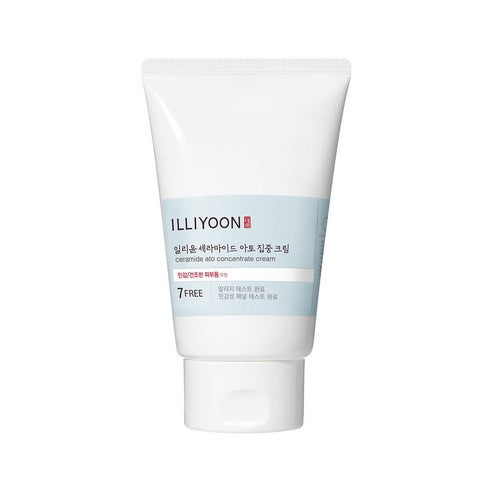
First thing you notice: the size. 200ml is enormous for a face cream. This isn't a dainty jar that sits elegantly on your vanity, it's a workhorse tube that looks like it belongs in a family bathroom. And honestly? That's part of its charm. The packaging is practical, not aspirational. Squeeze tube with a flip cap, nothing more.
The cream itself is white, moderately thick, and completely unscented. I mean truly unscented, not "lightly fragranced" or "naturally scented." There is no smell at all. For a product marketed for sensitive and atopic skin, this is exactly right. Spreading it on my hand for the first time, I was surprised by how smoothly it glided despite its thickness. It has an almost silky slip to it that you don't typically get from thick ceramide creams.
After the first application, my skin felt deeply moisturized but not suffocated. No greasiness, no residue on my pillowcase that night. Just soft, comfortable skin. A strong start.
Key Ingredients
ILLIYOON developed what they call Ceramide Capsule Technology, ceramides encapsulated in a delivery system designed to release gradually and penetrate more effectively than free-form ceramides. Whether the encapsulation makes a measurable difference versus standard ceramide formulations is debatable, but the concept is sound.
The formula centers on ceramide NP, one of the key ceramides naturally found in healthy skin barriers. Supporting this are cholesterol and fatty acids, which together with ceramides form the three essential components of the skin's lipid barrier. This 1:1:1 ratio approach is considered the gold standard in dermatological barrier repair.
There's also sunflower seed oil for additional emollience, panthenol for soothing, and shea butter for occlusive moisture. The full ingredient list is surprisingly short and clean, no fragrance, no colorants, no essential oils, no parabens. It's been tested for safety on atopic dermatitis patients and is cleared for use on infants, which tells you a lot about how gentle this formula is.
How I Used It
Given its versatility, I tested this cream in multiple ways. For the first two weeks, I used it as my nightly face moisturizer, the final step after cleansing, toner, and serum. For weeks three and four, I expanded the test: I used it on my face at night, on my hands throughout the day (winter dryness was wrecking them), and on some dry patches on my elbows and shins.
For my face, I used about a pea-sized amount. For body use, I was more generous. The 200ml tube held up remarkably well, after four weeks of heavy use across face and body, I still had about half the tube left. The value proposition is genuinely remarkable.
I specifically avoided using any other ceramide products during testing to isolate the results.
Results After 4 Weeks
Week 1: Immediate and noticeable hydration. My skin felt more comfortable within two days. The dry patches on my cheeks that usually appear in winter started softening. My hands, which had been cracking at the knuckles, started healing. No breakouts on my face, which was my main concern with a cream this rich.
Week 2: My skin's texture improved significantly. The rough, almost sandpaper-like feel I get on my cheeks during cold months smoothed out. When I'd splash water on my face, it beaded up more, a sign that the lipid barrier was functioning better. My hands were almost fully healed.
Week 3: I started getting comments. My partner asked what I'd changed because my skin looked "healthier." The dry patches on my elbows, which I'd honestly given up on, were noticeably softer. My face had a subtle, healthy bounce to it.
Week 4: Peak results. My skin barrier felt the strongest it has in months. I reintroduced my retinol (which I'd paused before testing), and my skin handled it without the usual dryness and flaking. The cream had clearly done its job in fortifying my barrier. The body areas I'd been treating were all significantly improved.
I want to be transparent about what this cream didn't do: it didn't brighten my skin, it didn't fade dark spots, and it didn't reduce fine lines. This is a moisturizer, not a treatment. But as a moisturizer, it's one of the most effective I've ever used at any price point.
Who Should Use It
- Anyone with dry, very dry, or atopic skin
- Parents looking for a safe moisturizer for babies and children
- People with eczema or dermatitis who need a gentle, fragrance-free option
- Budget-conscious shoppers who want professional-grade ceramide therapy
- Anyone needing a face AND body moisturizer (this does both)
- Winter skin sufferers dealing with cracking, flaking, and tightness
Who Should Skip It
- Oily, acne-prone skin that reacts badly to rich creams, test-patch first
- Anyone looking for anti-aging or brightening, add separate treatments for that
- People who want elegant, Instagram-worthy packaging, this is function over form
Pros & Cons
Pros
- Exceptional barrier repair at a fraction of competitor prices
- 200ml size means incredible value, lasts months for face-only use
- Truly fragrance-free and tested for atopic skin
- Safe for babies, children, and the most sensitive skin types
- Ceramide capsule technology for sustained release
- Works beautifully for both face and body
- Dermatologist-recommended in Korea
Cons
- Utilitarian packaging that won't win any design awards
- May be too rich for oily skin in hot, humid climates
- No additional active ingredients, purely a moisturizer
- Can leave a slight shine on the face if over-applied during the day
The Verdict: 4.5/5
The ILLIYOON Ceramide Ato Concentrate Cream gets a confident 4.5 out of 5 and might just be the best value in skincare. When Korean dermatologists recommend a product for eczema patients and parents trust it on their newborns, that tells you everything about its gentleness and efficacy. The ceramide technology works, the price is accessible, and the 200ml size is generous to the point of being almost absurd. The half-point deduction is purely for the fact that it's "just" a moisturizer, but what a moisturizer it is. If I could only keep one cream in my entire skincare collection, this would be a serious contender.
Find this and more dermatologist-favorite products in our skincare collections.
Frequently Asked Questions
Is ILLIYOON Ceramide Ato Cream safe for babies?
Yes. This cream has been dermatologically tested for use on infants and children with atopic dermatitis. Its fragrance-free, minimal-ingredient formula is specifically designed for the most sensitive skin. Many Korean parents use it as their baby's daily moisturizer.
Can I use this cream on my face and body?
Absolutely, and that's one of its biggest strengths. The formula works equally well on facial skin, hands, elbows, and any dry body areas. The 200ml size makes it practical for full-body use without running out quickly.
How does ILLIYOON compare to CeraVe moisturizing cream?
Both target barrier repair with ceramides, but ILLIYOON uses encapsulated ceramide technology for sustained release. Many users find ILLIYOON absorbs more elegantly and feels less heavy than CeraVe. ILLIYOON also has a shorter, cleaner ingredient list. Both are excellent options, but ILLIYOON edges ahead on texture and formulation refinement.
Will this cream clog pores or cause breakouts?
While no product is guaranteed non-comedogenic for everyone, this cream is well-tolerated by most skin types. It's been tested on atopic and sensitive skin without causing breakouts. That said, if you're very acne-prone, start by using it only at night and monitoring your skin for the first week.