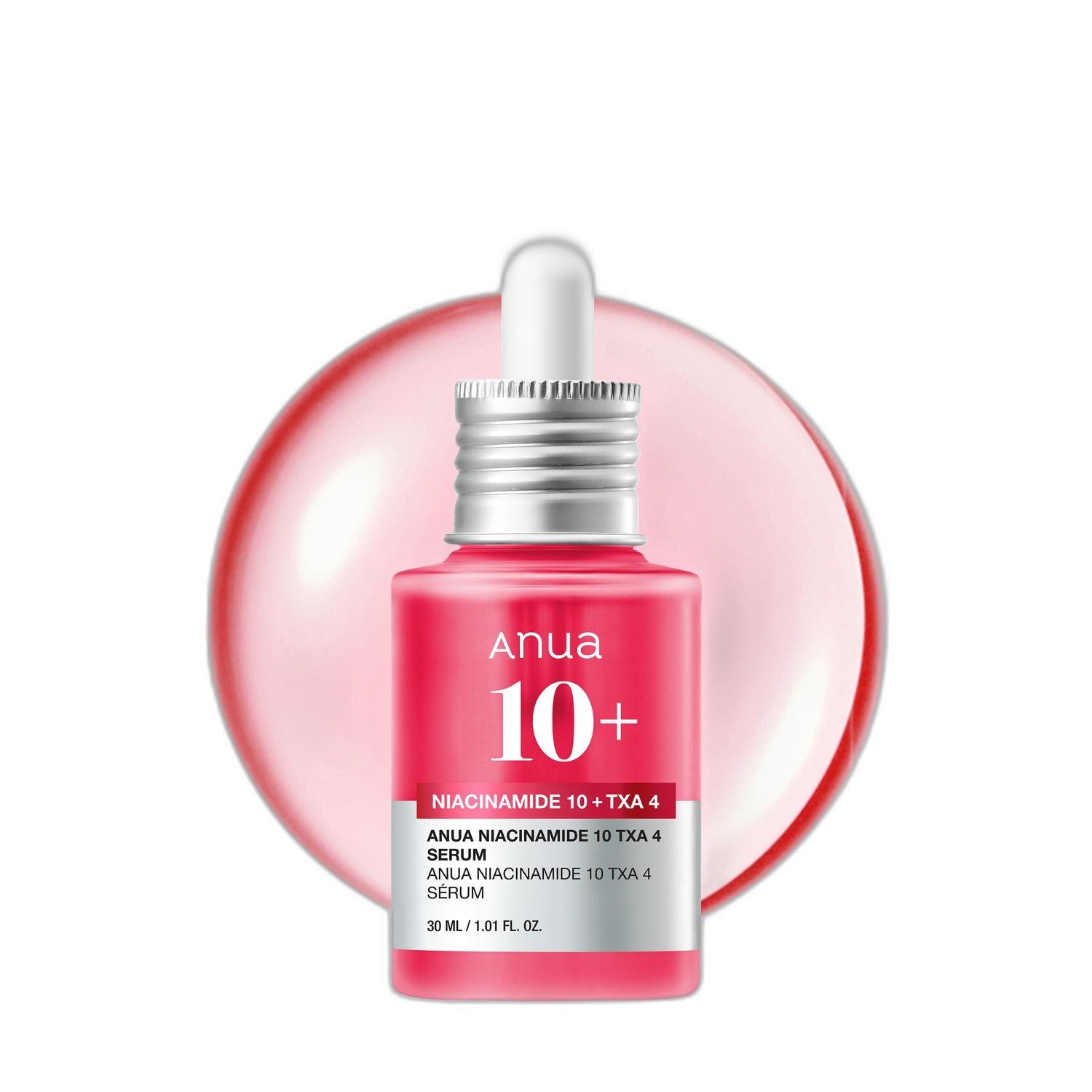

Dark spots are the bane of my existence. Post-inflammatory hyperpigmentation from old breakouts, a couple of sun spots from years of inconsistent sunscreen use, and general unevenness that foundation can only do so much about. I've tried vitamin C serums, alpha arbutin, azelaic acid, the whole roster. So when the Anua Niacinamide 10% + TXA 4% Dark Spot Correcting Serum showed up with its bold claim of tackling pigmentation with a niacinamide-and-tranexamic-acid combo, I was interested but cautious. After six weeks of consistent use (I extended my testing because pigmentation takes time), here's where I landed.
First Impressions
The 30ml bottle is a standard glass dropper design, clean, no-frills, with the same Anua aesthetic I've come to expect. The dropper works well, dispensing a consistent amount each time without suction issues. The bottle is opaque enough to protect the active ingredients from light degradation, which tells me someone was thinking about formula stability.
The serum itself has a slightly viscous, almost gel-like texture. It's not watery like some niacinamide serums I've used, but it's not thick either. Falls somewhere in the middle. It's colorless and clear, with absolutely no scent that I could detect. None. This is as fragrance-free as it gets.
First application: 3-4 drops spread easily across my face. It absorbed in about 15 seconds without any tackiness or pilling. Under moisturizer, it disappeared completely. No white cast, no residue, no interaction issues. I've used niacinamide products that ball up under other products, this one doesn't. That was a promising start.
Key Ingredients Breakdown
This serum runs on a two-engine approach to pigmentation:
Niacinamide at 10%: This is a well-researched concentration. Niacinamide (vitamin B3) has solid evidence for reducing melanin transfer to skin cells, which means it can help prevent new dark spots from forming and gradually fade existing ones. At 10%, it's potent enough to deliver results without the irritation that some people experience at higher concentrations. It also helps with pore appearance, oil regulation, and overall skin barrier function, so you're getting side benefits beyond pigmentation.
Tranexamic Acid (TXA) at 4%: This is the ingredient that makes this serum stand out from the dozens of niacinamide serums on the market. Tranexamic acid works by inhibiting the pathways that trigger melanin overproduction. Originally used in medicine to control bleeding, dermatological research has shown it to be effective for melasma and post-inflammatory hyperpigmentation when applied topically. The 4% concentration here is within the range shown to be effective in studies.
The combination of niacinamide and TXA attacks pigmentation from two different angles, niacinamide blocks melanin transfer, while TXA reduces melanin production. In theory, this dual approach should be more effective than either ingredient alone.
Supporting ingredients include panthenol for soothing and moisture, sodium hyaluronate for hydration, and allantoin for calming. The formula doesn't contain any known irritants, no fragrance, no alcohol, no essential oils. It's designed to be used alongside other actives without causing problems.
How I Used It
I used this serum twice daily, morning and evening, as my primary active serum step. I paused my vitamin C serum during the testing period to isolate the results.
Morning routine:
- Gentle cleanser
- Anua Heartleaf Toner
- Anua Niacinamide + TXA Serum, 3-4 drops, pressed into skin
- Lightweight moisturizer
- SPF 50 sunscreen (non-negotiable when treating pigmentation)
Evening routine:
- Double cleanse
- Toner
- Anua Niacinamide + TXA Serum, 3-4 drops
- Moisturizer
I want to emphasize: if you're using any brightening product and not wearing sunscreen religiously, you're wasting your time. Sun exposure triggers melanin production, which directly works against everything this serum is trying to do. SPF is mandatory, not optional.
Results After 4 Weeks (Extended to 6)
Pigmentation is slow to fade. Anyone telling you a serum will erase dark spots in a week is lying to you. I extended my testing to six weeks because four weeks isn't enough to properly evaluate a brightening product. Here's my honest timeline:
Week 1-2: No visible change in pigmentation. However, my overall skin tone looked slightly more even, and my pores appeared slightly refined. That's the niacinamide doing its thing. My skin also felt smoother, not from exfoliation, just from the hydration and barrier support the formula provides.
Week 3-4: This is when I started noticing real changes. A cluster of PIH marks on my left cheek from a breakout two months earlier had visibly lightened. Not disappeared, lightened. The edges were softer, and the overall darkness had reduced by maybe 30-40%. I took comparison photos, and the difference was clear under the same lighting.
Week 5-6: Continued improvement on the PIH marks. The spots that were lighter to begin with had faded to the point where I could barely see them without close inspection. Darker, more established spots had lightened further but were still visible. One stubborn sun spot on my right cheekbone showed minimal change, it's been there for years, and I think it needs something stronger (like professional treatment) to fully resolve.
Overall skin brightness: Beyond specific spots, my skin generally looked brighter and more radiant by week four. The kind of difference where people ask if you've changed something in your routine. That general luminosity boost is likely from the niacinamide improving overall skin function.
What it didn't do: It didn't eliminate deep, established sun damage. It didn't work on my oldest hyperpigmentation marks that have been around for years. And it didn't make my skin sensitivity-free, on two occasions, I applied it right after over-exfoliating, and I felt a mild stinging that lasted about 30 seconds. Not the serum's fault, but worth noting for sensitive types.
Who Should (and Shouldn't) Use This
This serum is excellent for:
- Post-inflammatory hyperpigmentation from acne or irritation
- General skin tone unevenness and dullness
- People looking for a gentler alternative to hydroquinone or high-concentration vitamin C
- Those who want a brightening serum that won't irritate sensitive skin
- Anyone wanting niacinamide's pore-refining benefits alongside brightening
Manage your expectations if:
- You have deep, long-established sun damage or melasma, this will help but may not fully resolve it
- You want overnight results, pigmentation takes months to properly address
- You're not willing to commit to daily SPF, without sunscreen, this is pointless
- You need treatment-grade intervention, severe pigmentation may require prescription products or in-office procedures
Pros and Cons
Pros
- Dual-action niacinamide + tranexamic acid formula targets pigmentation from two angles
- 10% niacinamide is effective without being irritating for most skin types
- Visible improvement in PIH within 3-4 weeks
- General skin brightness improvement even beyond specific spots
- No fragrance, no alcohol, gentle enough for daily use
- Absorbs cleanly without tackiness or pilling
- Pairs well with other products, no layering issues
- Pore-refining side benefits from the niacinamide
Cons
- 30ml is a small bottle, at twice-daily use, it lasts about 5-6 weeks
- Results on old, established pigmentation are modest
- Can cause mild stinging on compromised skin (not an issue for intact barriers)
- Takes a full month before visible brightening results appear
- Won't fully replace professional treatments for severe pigmentation
The Verdict
Rating: 4.4 / 5 stars
The Anua Niacinamide 10% + TXA 4% Dark Spot Correcting Serum is one of the better pigmentation-targeting serums I've used at this price point. The niacinamide-TXA combo is genuinely effective for post-inflammatory hyperpigmentation and overall skin tone evening. It's gentle, it layers well, and it delivers visible results within a reasonable timeframe, as long as you're realistic about what a topical serum can achieve.
It's not going to replace laser treatments or prescription hydroquinone for severe pigmentation. But for the average person dealing with post-acne marks, minor sun spots, and general dullness? This is a strong contender. The fact that it also refines pores and improves skin texture through the niacinamide is a genuine bonus.
Will I repurchase? Yes. I've already ordered another bottle. For the combination of efficacy, gentleness, and price, it's hard to find better value in a brightening serum. It's earned a permanent spot in my routine alongside SPF and a good vitamin C.
Shop Anua Niacinamide + TXA Dark Spot Serum | Build a full brightening routine at Mirai Skin.
Frequently Asked Questions
Can I use the Anua Niacinamide serum with vitamin C?
Yes, despite the old myth that niacinamide and vitamin C can't be combined, modern formulations work fine together. However, for simplicity, many people prefer using vitamin C in the morning and niacinamide in the evening. You can also alternate days if your skin is on the sensitive side.
How long does it take to see results from this serum?
Expect to see improvements in overall skin tone and brightness within 2-3 weeks. For specific dark spots, most people see noticeable fading starting around week 3-4. Stubborn or old spots may take 2-3 months of consistent use. Always use SPF alongside this serum.
Is tranexamic acid safe for daily use?
Yes. Topical tranexamic acid at 2-5% concentrations has a strong safety profile for daily use. It's well-tolerated by most skin types, including sensitive skin. Unlike some other brightening agents, it doesn't increase photosensitivity, though SPF is still essential for treating pigmentation.
Can I use this serum if I have sensitive skin?
For most people with sensitive skin, yes. The formula is free from fragrance, alcohol, and essential oils. Niacinamide at 10% is generally well-tolerated. However, if your skin barrier is currently compromised (from over-exfoliation or irritation), introduce it gradually, start with once daily and build up to twice daily once you confirm no irritation.