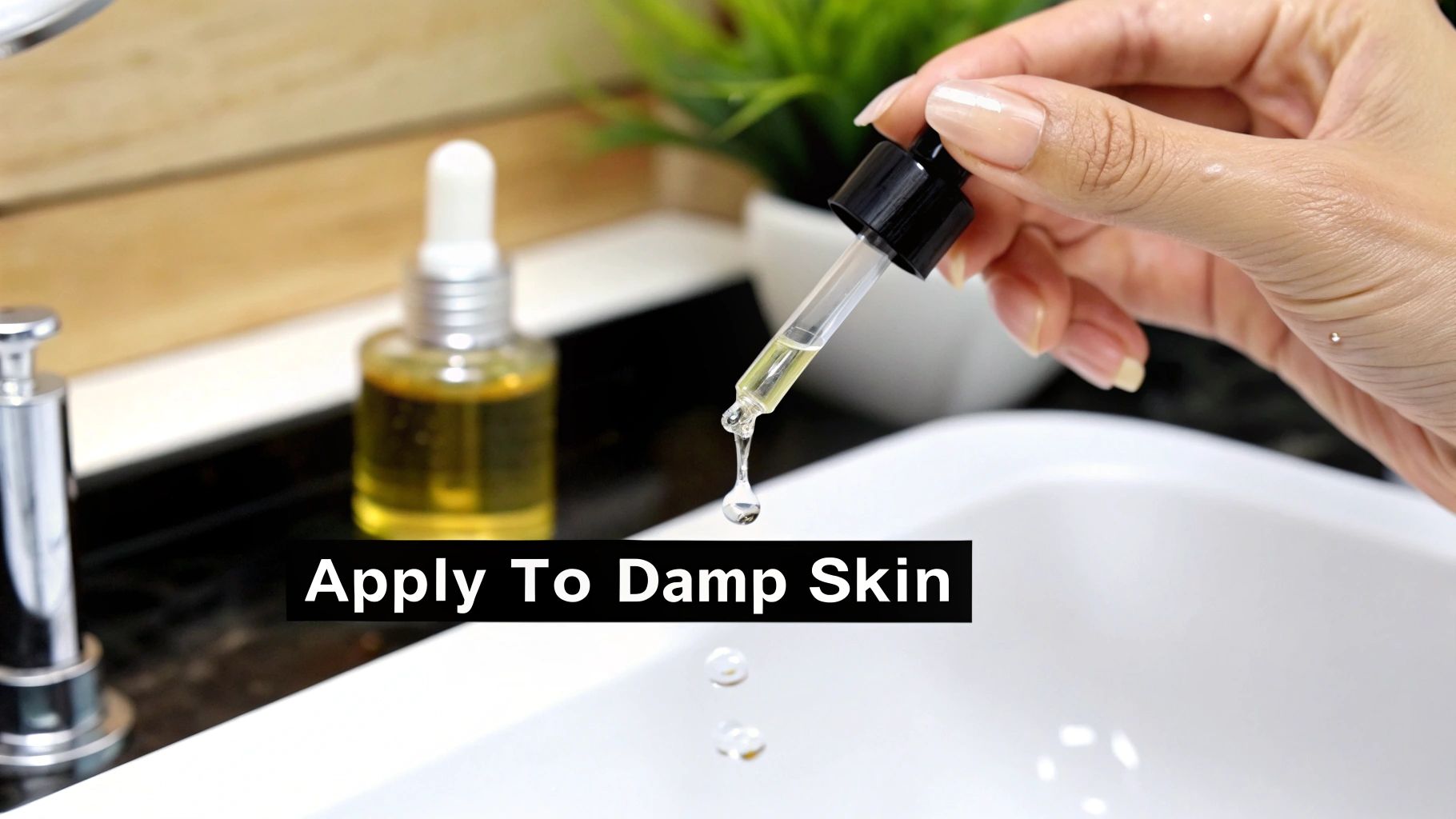
If you’re looking for the short answer, here it is: always apply a pea-sized amount of serum to damp skin. It should go on right after cleansing and toning, but always before your moisturizer. This sequence is the cornerstone of any effective K-Beauty routine-it’s the key to ensuring those potent, concentrated ingredients are fully absorbed and can deliver visible results.
Your Guide to Unlocking a Serum's Full Potential
Welcome to what is arguably the most crucial step in any authentic Korean skincare routine: the serum. This is where highly concentrated actives like Retinol, Niacinamide, and Snail Mucin deliver targeted results-but only if applied correctly. At Mirai Skin, we believe in empowering you with the knowledge to move past the guesswork and build a confident, effective ritual that makes every single drop count.
The global demand for these powerhouse formulas is impossible to ignore. The facial serum market hit an incredible USD 5.86 billion in 2024 and is on track to nearly double to USD 10.32 billion by 2033. A huge driver of this growth comes from markets like Asia-Pacific, where K-Beauty dominates and serums claim a massive 35.28% market share. You can read the full research about the facial serum market to see just how fast it's expanding.
Why Correct Application Is Everything
Here's a simple way to think about it: imagine your skin is a sponge. A completely dry sponge resists water, but a damp one soaks it up instantly. Your skin works the exact same way.
Applying serum to slightly damp skin-like right after you've used a toner or essence-dramatically boosts absorption. This simple technique, which is central to the Mirai Skin philosophy and a core tenet of K-Beauty, ensures those powerful active ingredients penetrate deeply instead of just sitting on the surface.
Before we dive into the details, here's a quick cheat sheet to get you started.
The Serum Quick-Start Guide
| Step | Action | Why It Matters |
|---|---|---|
| Start Damp | Apply serum to skin that is slightly damp from toner or essence. | Damp skin is more permeable, allowing the active ingredients to absorb more efficiently for maximum impact. |
| Less is More | Use only a pea-sized amount (or 2-3 drops) for your entire face. | Serums are concentrated. Using too much can cause irritation and is a waste of a precious formula. |
| Pat, Don't Rub | Gently pat or press the serum into your skin until it’s absorbed. | Patting is a gentler K-Beauty method that aids absorption without stretching or pulling delicate facial skin. |
| Wait a Minute | Allow the serum to fully absorb for about 60 seconds before the next step. | This prevents pilling and ensures each product can work effectively without interference. |
| Seal It In | Always follow up with a moisturizer to lock in the serum and hydrate your skin. | Moisturizer creates a protective barrier, sealing in the serum’s benefits and preventing transepidermal water loss. |
This table covers the fundamentals, but mastering serum application means understanding the nuances. Now, let’s explore the methods that will have you using any serum like a seasoned K-Beauty expert. We'll explore:
- The correct amount of product to use for potent formulas.
- The best application techniques for maximum benefit.
- How to layer serums with other products in your routine.
By mastering the fundamentals of serum application, you're not just using a product; you're performing a ritual that amplifies its effectiveness, making every drop work harder to achieve that coveted radiant glow.
Mastering Your Serum Application Technique
We’ve covered the what and why of serums. Now let's get into the how-because proper technique is what elevates a routine from good to truly great. This is where you turn a simple step into a mindful K-Beauty ritual that delivers tangible results.
It all starts before the dropper even gets near your face. Clean hands and a freshly cleansed, toned face are absolutely non-negotiable.
Applying serum onto skin that isn't properly prepped is like trying to paint over a dusty wall. The product just sits on top instead of sinking in. Your toner or essence is key here, leaving your skin perfectly pH-balanced and slightly damp for what's next.
The Power of a Damp Canvas
Here’s the secret that unlocks a serum's full potential: always apply it to slightly damp skin.
Picture your skin as a sponge. A dry sponge repels water, but a damp one soaks it up instantly. Your skin works the same way. For Mirai Skin clients chasing that authentic K-Beauty glow, applying 2-4 drops of serum onto a clean, damp face is the most important step. In fact, formulation science shows this simple trick can boost absorption by up to 90% compared to putting it on dry skin.
This deeper penetration means powerful actives like Niacinamide or Hyaluronic Acid can get where they need to go to make a real difference. With consistent use (twice a day, right before your moisturizer), the results speak for themselves. Studies have shown 75% user satisfaction in achieving a radiant glow after just two weeks and up to a 28% reduction in fine lines in 12 weeks with Hyaluronic Acid formulas. You can dig into more of these market trends and find info on product effectiveness on Grand View Research.
Pat, Press, and Pause
Now for the application itself. The biggest mistake most people make is aggressively rubbing their serum in. Your facial skin is delicate, and all that tugging can contribute to premature aging and irritation over time. The K-Beauty method is much gentler and far more effective: pat and press.
- Dispense: Put a few drops onto your fingertips or dot them directly onto your cheeks and forehead.
- Distribute: Gently glide the serum across your face using light, sweeping motions. Don’t drag the skin.
- Press: Use your palms to gently press the serum into your skin. The warmth from your hands and the light pressure help the product absorb beautifully without stressing your skin barrier.
Pro Tip: Don't forget your neck and décolletage! These areas are often overlooked but show signs of aging just as quickly as our faces. Always use gentle, upward strokes when applying products to your neck.
After you've patted the serum in, just pause. Give it a solid 60 seconds to fully sink in before you even think about reaching for your moisturizer. This waiting period is critical. It prevents that annoying "pilling" effect-where products ball up on your skin-and ensures each layer of your routine can work without interference. That small moment of patience allows the serum to penetrate deeply, setting the stage for your moisturizer to lock in all that concentrated goodness.
The Art of Layering Serums and Other Skincare
A complete K-Beauty routine can feel like you're conducting an orchestra of different products. To get a harmonious result, you have to understand how each product works with the others. Effective layering is the key to making sure every formula performs at its peak without being blocked or neutralized.
The golden rule is simple: go from the thinnest to the thickest consistency. This ensures that lightweight, water-based formulas like essences and serums can penetrate the skin before heavier creams create an occlusive barrier on top. Just think of it like dressing for cold weather-you wouldn't put your light t-shirt on over a bulky sweater.
This is the fundamental process for integrating a serum into your routine. Here’s a quick visual guide showing where a serum fits in.
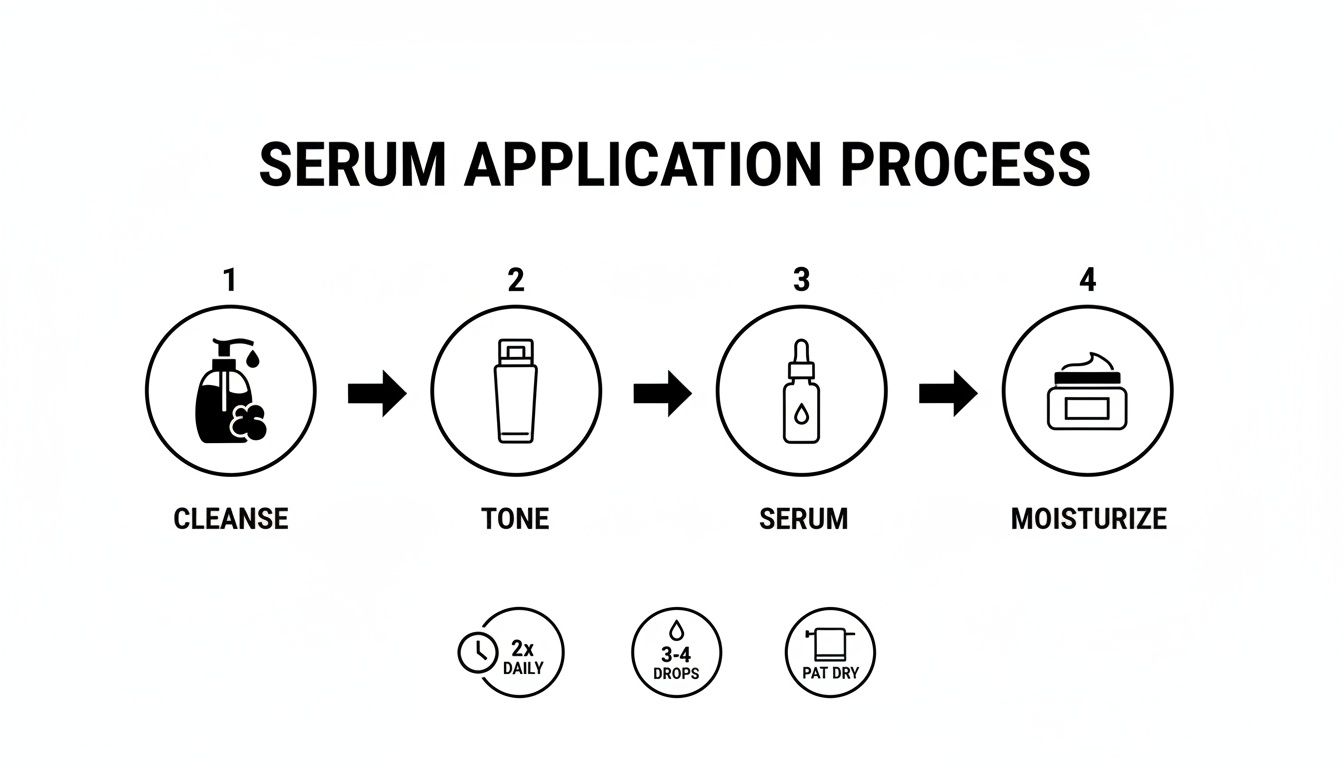
As you can see, the serum step comes right after cleansing and toning but always before moisturizing. This sequence is non-negotiable if you want to get the most out of your high-performance ingredients.
Building Your Morning and Evening Routines
Your skin’s needs change from morning to night, so your serum choices should, too. Your morning routine is all about protection-shielding your skin from environmental stressors like UV rays and pollution. Your evening routine, on the other hand, is focused on repair and regeneration.
For instance, a Vitamin C serum is an absolute daytime powerhouse. Its antioxidant properties help neutralize free radicals from sun exposure, essentially giving your sunscreen a helpful boost. Applying it in the morning under your SPF is a classic K-Beauty strategy for brighter, more resilient skin.
Conversely, ingredients like Retinol are best saved for your nighttime ritual. Retinoids can make your skin more sensitive to the sun, and they work best overnight when your skin is already in its natural repair cycle.
A well-structured routine isn't about using more products; it's about using the right products at the right time. Your AM routine should protect, while your PM routine should correct and repair.
Here’s a practical look at how you can structure your day and night routines to incorporate different serums effectively.
AM vs PM Serum Routine Example
| Routine Step | Morning (AM) Routine | Evening (PM) Routine |
|---|---|---|
| Cleanse | Gentle Foaming or Gel Cleanser | Double Cleanse (Oil Cleanser + Water-Based Cleanser) |
| Tone | Hydrating Toner | Exfoliating or Hydrating Toner (Alternate) |
| Serum | Vitamin C Serum (for antioxidant protection) | Retinol or Peptide Serum (for repair & anti-aging) |
| Eye Cream | Lightweight Eye Gel | Rich, Nourishing Eye Cream |
| Moisturize | Lightweight Moisturizer | Heavier Night Cream or Sleeping Mask |
| Protect | Sunscreen (SPF 30+) | - |
This table shows how a protective serum fits into your morning lineup, while a corrective one works best at night, allowing each product to do its job without interference.
How to Layer Multiple Serums
So, what if you want to tackle multiple concerns at once? Layering serums is a fantastic way to customize your routine, but you need to do it thoughtfully. You can absolutely layer two, or even three, serums as long as their ingredients are compatible.
Always follow that thinnest-to-thickest rule. A watery, hydrating serum with Hyaluronic Acid should always go on before a slightly thicker, gel-like serum containing Niacinamide. Give each serum about 60 seconds to absorb before applying the next one. This little pause prevents pilling and ensures each active has time to penetrate the skin.
For example, a fantastic combination for tackling dullness and dehydration would be:
- Apply a Hyaluronic Acid serum to damp skin to draw in moisture.
- Wait a minute for it to absorb.
- Pat on a Niacinamide serum to brighten skin and refine pores.
- Finish with your moisturizer to seal it all in.
However, some ingredients just don't play well together. You should generally avoid layering strong actives like Retinol with Vitamin C or exfoliating acids (AHAs/BHAs) in the same routine. This combination can lead to irritation and over-exfoliation. Instead, alternate them on different nights to get the benefits of both without compromising your skin barrier.
Tailoring Application to Your Favorite Ingredients
Not all serums play by the same rules. To truly get the most out of your products, you must understand that the star ingredients often dictate the best application strategy.
Tailoring your technique to these powerful actives is what separates a good routine from a great one. Let's break down the specific tips for some of K-Beauty's most beloved heroes.
For Vitamin C Enthusiasts
Think of Vitamin C as your morning MVP. Its main job in an AM routine is to act as a powerful antioxidant, fighting off the free radicals generated by UV rays and pollution you encounter all day. It’s like an extra layer of defense that works beautifully with your sunscreen.
Applying it in the morning to clean, dry skin ensures you get this protective shield when you need it most. Also, remember that Vitamin C is notoriously unstable. Keep the bottle sealed tight and store it somewhere cool and dark to protect its potency from light and air.
The Hyaluronic Acid Rule
For Hyaluronic Acid (HA) to work its hydrating magic, applying it to damp skin is non-negotiable. Seriously. HA is a humectant, which means it pulls moisture from its surroundings and holds on tight-up to 1,000 times its weight in water, in fact.
If you put it on bone-dry skin, it might actually pull moisture from the deeper layers of your skin, leaving you even drier. But by applying it to a face that’s been misted with water or is still damp from your toner, you give the HA molecules external moisture to grab onto. This is how you get that instant, plumped-up look from the surface.
By understanding the unique needs of each ingredient, you transform your serum step from a simple application into a strategic move. This is how you unlock targeted, visible results and make every drop of your investment count.
Navigating Retinol Application
Retinol is a total game-changer for skin texture and signs of aging, but it demands a careful, patient approach. First things first: it is a strictly nighttime ingredient. Retinoids can make your skin more sensitive to the sun, and they do their best work while your skin is in its natural repair cycle overnight.
When you're just starting, your skin might go through a "retinization" period. This adjustment phase can involve some temporary flaking or purging as your skin cell turnover kicks into high gear. To manage this:
- Start Slow: Begin by using your retinol serum just 2-3 nights per week. Don't rush it.
- Build Up: As your skin builds tolerance over a few weeks, you can gradually increase the frequency to every other night, and eventually nightly if your skin is happy.
- Buffer if Needed: If your skin is on the sensitive side, try applying a light layer of moisturizer before your retinol. This creates a buffer that can minimize irritation without blocking the benefits.
Most importantly, diligent sunscreen use the next day is mandatory. Retinol can increase photosensitivity, so a broad-spectrum SPF 30 or higher is your new best friend.
Maximizing Niacinamide and Snail Mucin
Two other K-Beauty staples, Niacinamide and Snail Mucin, are much more flexible and easygoing.
Niacinamide is a versatile workhorse that helps with everything from pore size to skin tone, and you can use it morning or night without any issues. Snail Mucin is a hydrating and repairing hero, perfect for calming irritated skin. Feel free to apply it in both your AM and PM routines to boost moisture and support your skin barrier.
Common Serum Mistakes to Avoid
Even the most incredible, high-tech serum won't live up to its promises if a few simple habits are getting in the way. If you've ever felt like your results just aren't matching the hype, this troubleshooting guide is for you. We'll walk through the most common mistakes and how to fix them. You’d be surprised how a few tiny tweaks can completely change your skin's outcome.
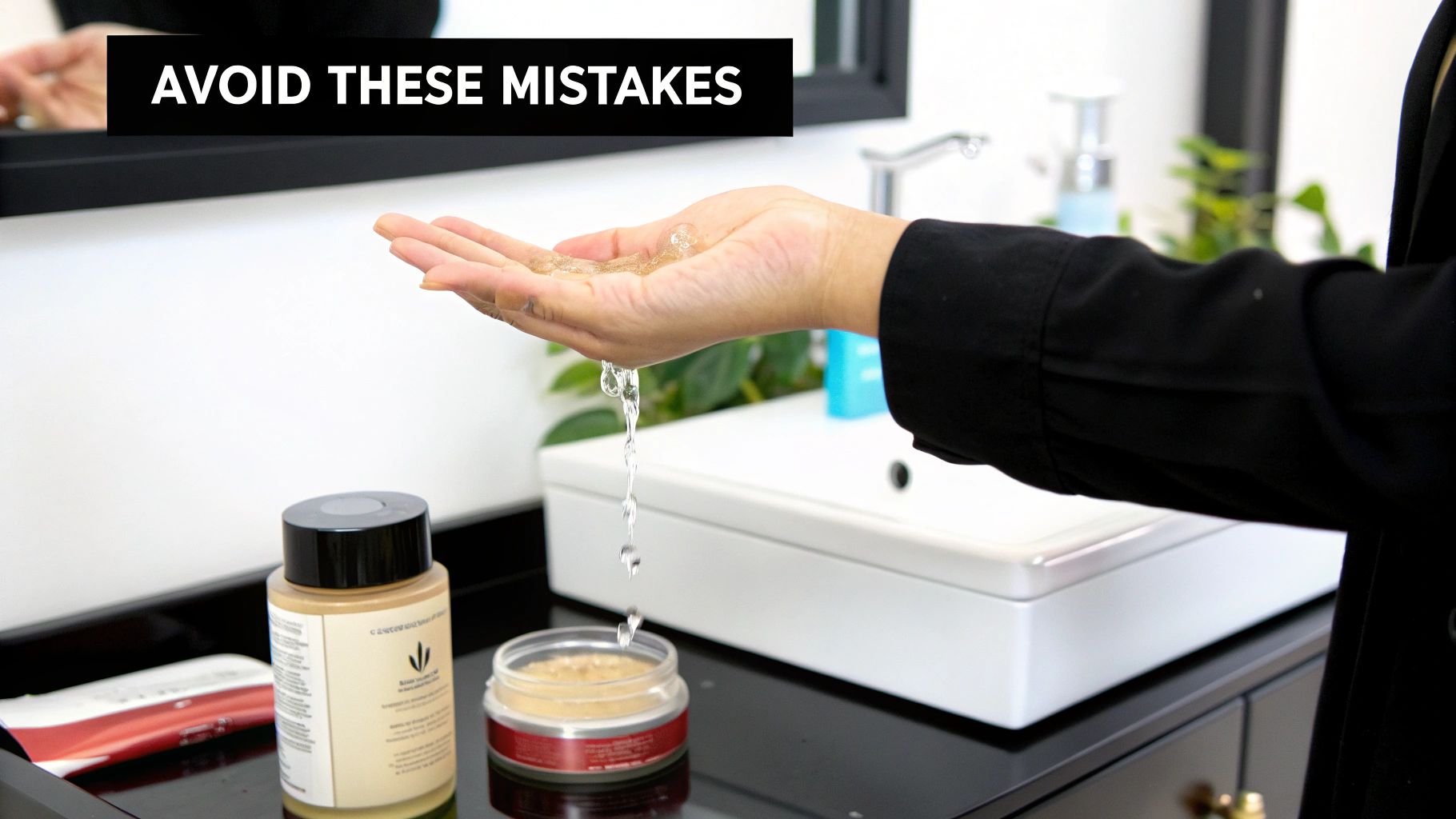
Often, the problem isn't the serum itself but the canvas it's applied to. One of the biggest errors is putting serum on bone-dry skin, which seriously limits how well it can sink in.
This one mistake can be the difference between a product that truly works and one that just sits on the surface feeling sticky. Think of your skin like a sponge-a damp one absorbs water way better than a dry, hard one. A hydrated, receptive surface is the key to helping those active ingredients penetrate deeply where they're needed most.
Using Too Much or Too Little
When you're figuring out how do you use serum, getting the amount right is everything. More is definitely not better. Serums are highly concentrated, so slathering them on won't speed up your results. It just wastes product and can leave your skin feeling congested or tacky.
But on the flip side, being too stingy means your skin isn't getting enough of the good stuff to actually make a difference. The sweet spot is usually right here:
- For liquid serums: 2-3 drops is almost always enough for your entire face and neck.
- For gel or cream serums: A single pea-sized amount is the perfect measure.
This ensures you get an even, effective layer without overwhelming your skin barrier.
Forgetting Consistency and Patience
Skincare is a marathon, not a sprint. A huge pitfall is being inconsistent-using a serum here and there and expecting a major transformation. Active ingredients need time and regular application to really get to work on a cellular level.
Dedication is the only path to true, lasting results. Committing to your routine every single day, morning and night, allows the ingredients to accumulate in your skin and deliver the benefits you're looking for.
Think of it like watering a plant. A little bit of water every day works far better than a massive flood once a week. Be patient, stick with it, and that glow you're after will follow.
Overlooking Patch Tests and Expiration Dates
We get it-when you get a new, exciting formula, you want to put it on your face immediately. But skipping the patch test is a risky move, especially with powerful actives like Retinol or Vitamin C.
Always test a new product on a hidden spot, like behind your ear or on your inner wrist. Give it 24-48 hours to see if any irritation pops up.
And finally, don't ignore that little open-jar symbol on the packaging (the PAO, or Period After Opening). Active ingredients break down over time and lose their punch. Using an expired serum isn't just a waste of time; it can actually cause irritation. By dodging these common slip-ups, you'll make sure your routine is as effective as it can possibly be.
Got Questions About Serums? We’ve Got Answers.
Even after you’ve nailed the basics, a few questions always seem to come up. It's totally normal. Here are some of the most common ones we hear from the Mirai Skin community, with straight-to-the-point answers to help you feel confident in your routine.
Think of this as your quick-reference guide to clear up any lingering doubts.
Can You Use a Serum Around Your Eyes?
This is such a great question, and the honest answer is: it depends. The skin around your eyes is the thinnest on your entire face, making it extra delicate and prone to irritation. Many facial serums, especially those packed with strong actives like high-concentration Vitamin C or Retinol, are simply too potent for this fragile area.
It's almost always safer to stick with a dedicated eye cream that's been formulated specifically for the orbital region. But if your serum is a gentle, straightforward hydrating formula (think Snail Mucin or a basic Hyaluronic Acid), you can usually get away with carefully patting a tiny amount around the orbital bone. Just be sure to avoid getting too close to your lash line.
How Long Does It Really Take to See Results?
In skincare, patience isn't just a virtue; it's a necessity. While a good hydrating serum can give you an immediate dewy, plumped-up look, true cellular change takes time. The results you see will depend heavily on the ingredients and your skin’s natural turnover cycle-which is about 28 days for younger skin but slows down as we get older.
- Hydrating Serums (Hyaluronic Acid): You'll often feel a difference in skin plumpness and see a dewy glow within just a few days.
- Brightening Serums (Niacinamide, Vitamin C): To see a visible improvement in skin tone and dark spots, you'll need to be consistent for 4-8 weeks.
- Anti-Aging Serums (Retinol, Peptides): Changes in fine lines and skin firmness typically become noticeable after 8-12 weeks of dedicated use.
The cosmetic serum market is absolutely booming-it’s projected to hit USD 4.25 billion by 2025, with anti-aging formulas making up a huge 35.12% of sales in 2024. This shows just how much we all want results! With the right product and consistent layering, users often report seeing a 15-20% reduction in pigmentation within 28 days. You can discover more insights about the cosmetic serum market and see the trends for yourself.
Remember: Consistency is far more important than intensity. Using a serum every single day is what builds lasting, visible results over time.
What Should You Do if a Serum Causes Irritation?
First thing's first: don't panic. If your skin starts stinging, turning red, or peeling, stop using the product immediately. It's time to give your skin a little break.
For a few days, strip your routine back to the bare essentials: a gentle cleanser, a simple moisturizer, and sunscreen. This helps your skin barrier recover without any further stress.
Once your skin has completely calmed down, you can try reintroducing the serum very slowly. Instead of daily use, try it just once or twice a week to see if your skin can build up a tolerance. If the irritation comes back, that specific formula just isn't the right match for your skin-and that's okay.
Ready to find the perfect serum to elevate your K-Beauty ritual? Explore the curated collection of authentic, results-driven serums at Mirai Skin. Discover formulas tailored to every skin concern and unlock your most radiant complexion.
Shop All Serums at Mirai Skin